Counterbalanced Semi-Electric Stacker – Modern Warehouses
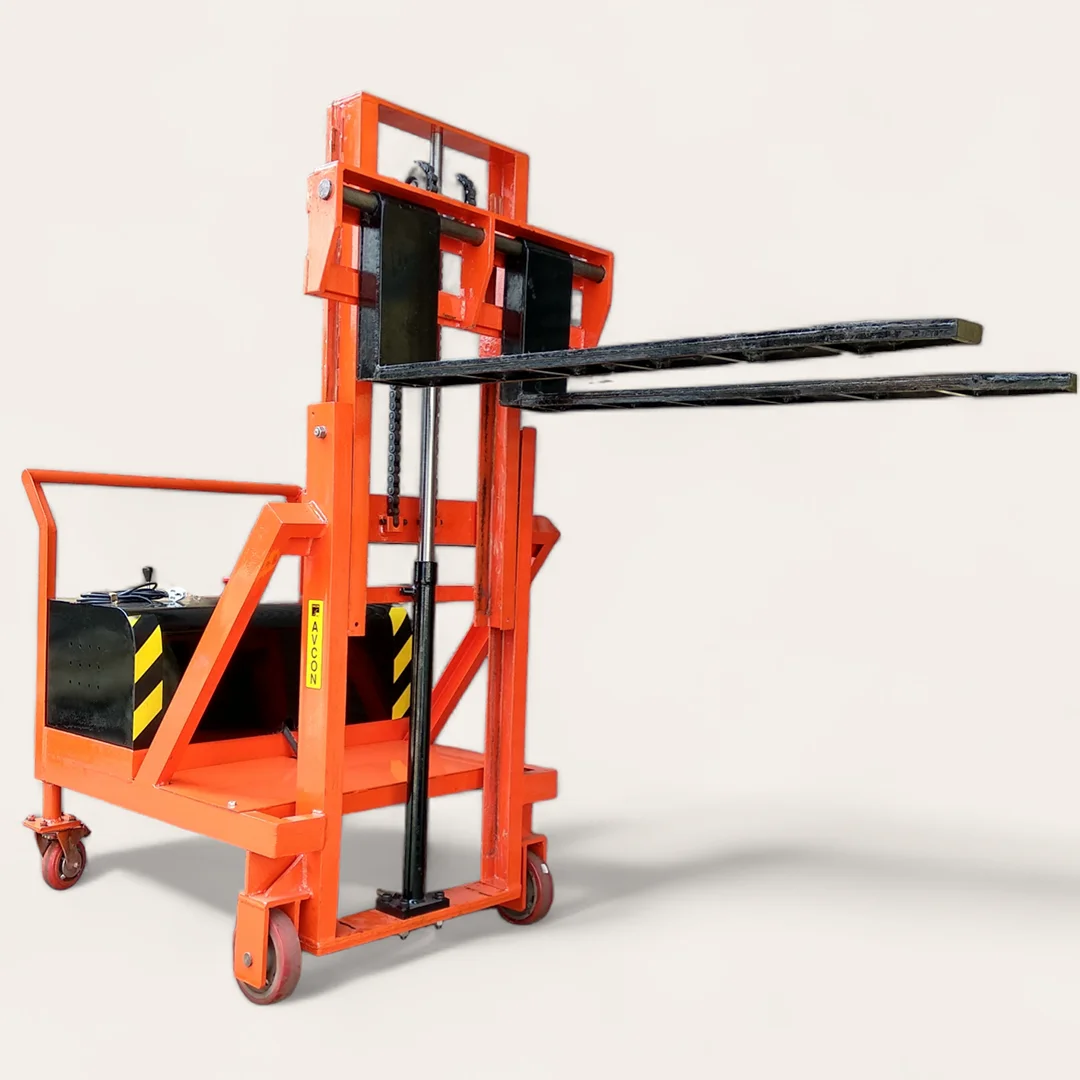
What Is a Counterbalanced Semi-Electric Stacker?
A Counterbalanced Semi-Electric Stacker is a hybrid material-handling machine combining an electric lifting mechanism with a counterweight-based chassis — all while retaining manual (pedestrian) movement. In simple terms:
-
The lifting and lowering of pallets or goods is powered electrically, typically via a hydraulic pump and motor.
-
The horizontal travel or movement (pushing/pulling) is done manually by the operator, which keeps the design simpler and more economical than a fully electric stacker.
-
A rear counterweight (counterbalance) offsets the load on the forks — this eliminates the need for straddle legs or outriggers, allowing direct pallet entry from ground level.
Because of this design, counterbalanced semi-electric stackers sit between manual stackers (fully manual) and full-electric forklifts in terms of cost, performance, and flexibility.
Why Choose a Counterbalanced Semi-Electric Stacker for Your Warehouse
✔ Versatility for Closed Pallets and Standard Pallets
Since there are no under-legs or outriggers to get in the way, the forks can enter closed-bottom pallets or low-clearance pallets directly. This makes such stackers particularly effective when handling varied or non-standard pallets — something many warehouses face.
✔ Reduced Manual Effort with Electric Lift
Semi-electric stackers carry the heavy lifting load for you. The electric hydraulic lift does the work, significantly reducing strain compared to fully manual stackers. This improves operator comfort and reduces the risk of strain-related injuries.
✔ Compact Design, Ideal for Tight Spaces
Thanks to the counterbalance design and absence of straddle legs, these stackers are more compact and easier to manoeuvre — ideal for narrow aisles, small warehouses, or container stuffing operations.
✔ Cost-Effective & Low Maintenance
Compared to full-fledged forklifts or fully electric driven machines, a semi-electric stacker offers a middle-ground: you get electric lift benefits with simpler mechanics and lower operating / maintenance costs.
Key Technical Features of a Counterbalanced Semi-Electric Stacker
Based on standard industry designs (and in line with many manufacturers’ specifications), a well-designed stacker in this category often offers:
-
Electric hydraulic lifting system — smooth lifting/lowering, minimal effort.
-
Rear counterweight chassis — to balance front load and allow direct pallet entry, no need for outriggers or straddle legs.
-
Adjustable or sliding forks — accommodates pallets of different widths or non-standard loads.
-
Ergonomic tiller or handle control — comfortable for the operator, simpler to steer and operate.
-
Compact wheelbase and manoeuvrability — suitable for narrow aisles, container stuffing, and small warehouse layouts.
-
Load capacity range typically 1 to 2 tons (1000–2000 kg) depending on model.
-
Lift height capability — many models offer lift heights around 2 to 3 m, sufficient for standard warehouse racking.
-
Simple maintenance design — fewer power components than full-electric forklifts, making servicing easier and less frequent.
Typical Applications of Counterbalanced Semi-Electric Stackers
These stackers are particularly suited for:
-
Warehouses & distribution centres handling palletized goods, especially closed pallets or low-clearance pallets.
-
Container stuffing/unloading operations where space inside containers is limited and manoeuvability is critical.
-
Manufacturing units or production floors where raw materials/components need vertical stacking but using a full forklift is overkill.
-
Retail, FMCG, pharmaceutical, or food-storage environments, where compact design, minimal emissions, and clean operation are preferable.
-
Small to medium-sized businesses seeking cost-effective material handling solutions with a balance of performance and affordability.
Advantages & Limitations: What to Keep in Mind
✅ Advantages
-
Balanced mix of electric lift and manual mobility — good for medium-duty operations.
-
Suitable for a wide variety of pallet types due to counterbalanced design and adjustable forks.
-
Lower total cost of ownership compared to full-electric forklifts; less maintenance overhead.
-
Compact footprint — very useful for warehouses with narrow aisles or limited space.
-
Faster workflows compared to manual or purely hydraulic stackers, with reduced operator fatigue.
⚠️ Limitations / Considerations
-
Since horizontal movement is manual, pushing/pulling heavy loads over long distances can still cause operator fatigue.
-
Not ideal for very heavy-duty or high-rise stacking — for heavy loads beyond ~2 tonnes or very tall racks, a full-fledged forklift or heavy-duty stacker might be necessary.
-
Requires flat, even flooring — uneven surfaces may affect stability and ease of movement, which limits outdoor or rough-floor use.
Why a Reliable Manufacturer Matters (Especially in India)
To get the full benefits of a Counterbalanced Semi-Electric Stacker, choosing a dependable manufacturer/supplier is critical. A good manufacturer ensures:
-
Precision-engineered chassis and counterbalance for stability and safety.
-
Robust hydraulic and electric systems for consistent lifting performance.
-
Adjustable forks and ergonomic controls to suit varied pallets and operators.
-
Customization options (fork size, lift height) tailored to your warehouse layout and load types.
-
Quality assurance and after-sales service — especially important in India’s diverse industrial environments with varying usage intensity and demands.
With such attention to engineering and service support, a semi-electric counterbalanced stacker becomes a long-term investment — offering reliability, efficiency, and safety over years of warehouse operations.
Conclusion: Is a Counterbalanced Semi-Electric Stacker Right for Your Operation?
If your warehouse, manufacturing unit, or distribution centre is dealing with palletized goods — especially closed or non-standard pallets — and you operate in relatively compact spaces or narrow aisles, a Counterbalanced Semi-Electric Stacker presents an excellent balance of efficiency, safety, and cost-effectiveness.
It offers the advantages of electric lifting without the complexity and cost of a full-electric forklift. For businesses across India looking for a dependable, affordable, and flexible material-handling solution, this hybrid stacker type is often a smart choice — so long as load demands, flooring, and stacking requirements are within its suitable range.
In short: for medium-duty, frequent stacking and pallet handling tasks — especially in indoor and space-constrained environments — the Counterbalanced Semi-Electric Stacker stands out as a pragmatic, efficient, and safe material handling solution.