Pay-Per-Click Advertising: Planning to Execution Guide
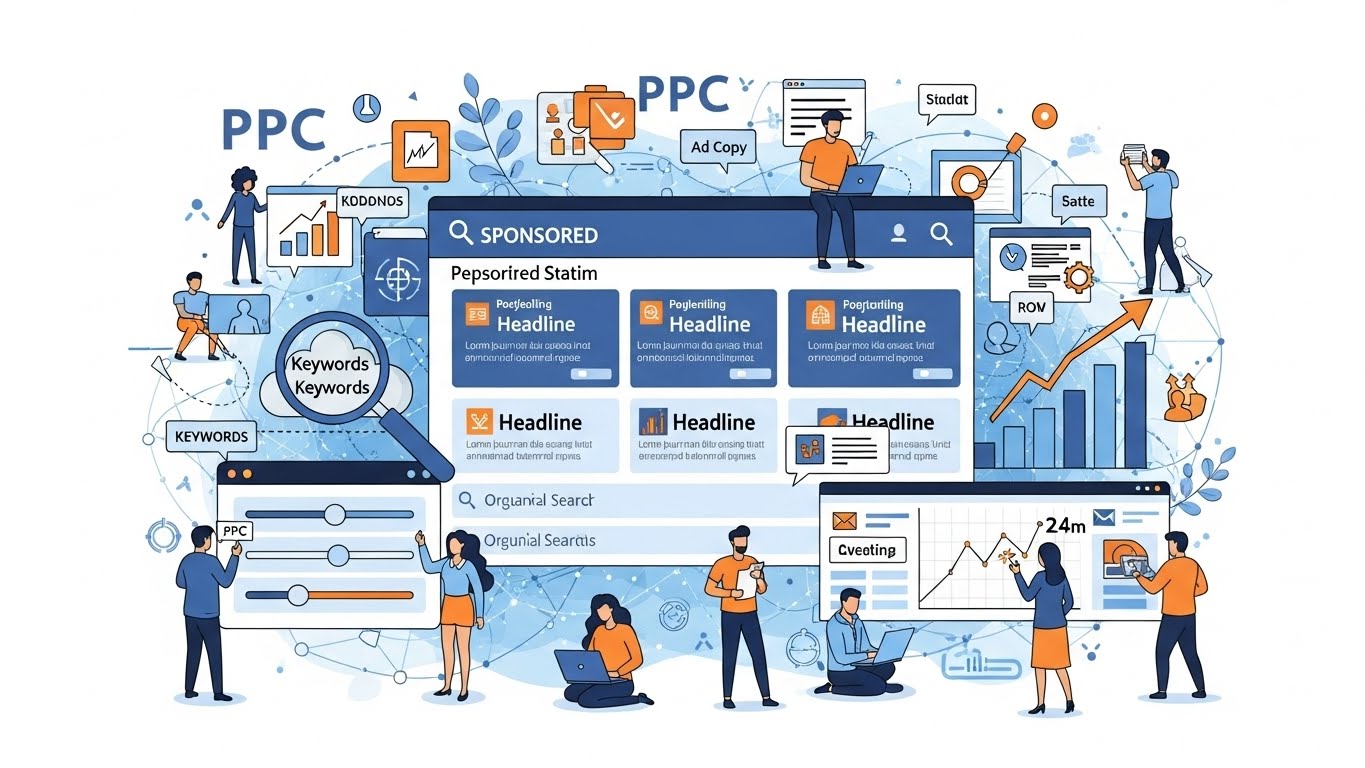
In today’s competitive digital landscape, businesses can no longer rely solely on organic reach to drive consistent growth. Brands need immediate visibility, measurable results, and complete control over their marketing spend. This is where Pay-Per-Click Advertising becomes one of the most effective digital marketing strategies.
Unlike traditional advertising methods that require upfront investment without guaranteed outcomes, PPC allows advertisers to pay only when a user takes action—most commonly, clicking on an ad. However, running profitable PPC campaigns is not about launching ads blindly. It requires a structured approach that moves from research and planning to execution, optimisation, and performance analysis.
This comprehensive guide by Adomantra walks you through the complete lifecycle of PPC advertising—from strategy creation to campaign execution—helping businesses understand how to maximise returns while avoiding common pitfalls.
Understanding Pay-Per-Click Advertising
At its core, Pay-Per-Click Advertising is a digital advertising model where advertisers bid on keywords, audiences, or placements, and pay a fee each time their ad is clicked. These ads can appear across search engines, websites, mobile apps, social media platforms, and video networks.
What makes PPC powerful is its intent-driven nature. When users actively search for products, services, or solutions, PPC allows businesses to appear at the exact moment of demand. This immediate alignment between intent and visibility is what drives high-quality traffic and faster conversions.
Key PPC platforms include search-based networks, display networks, video advertising platforms, and social media advertising channels. Each platform serves different goals, but all rely on data-driven targeting and continuous optimisation.
Why PPC Matters for Modern Businesses
PPC advertising plays a critical role in digital growth strategies for businesses of all sizes. Its importance lies in speed, precision, and accountability.
First, PPC delivers instant visibility. Unlike SEO, which takes time to show results, PPC campaigns can start generating traffic within hours of launch. Second, it offers precise targeting. Advertisers can target users based on keywords, location, device, demographics, interests, and behaviour. Third, PPC provides complete performance transparency. Every click, impression, conversion, and cost can be tracked in real time.
For businesses working with an experienced internet advertising company, PPC becomes more than just traffic generation—it turns into a scalable revenue engine.
Step 1: Goal Setting and Campaign Planning
Successful PPC campaigns begin with clear, measurable goals. Without defined objectives, even high-traffic campaigns can fail to deliver business value.
Common PPC goals include:
-
Increasing website traffic
-
Generating qualified leads
-
Driving online sales
-
Promoting brand awareness
-
Supporting product launches
Each goal influences campaign structure, bidding strategy, ad formats, and landing page design. For example, a lead generation campaign focuses on form submissions, while an eCommerce campaign prioritises purchases and return on ad spend.
At this stage, businesses must also decide whether to manage PPC in-house or partner with a professional internet advertising company that understands platform algorithms, bidding models, and performance optimisation.
Step 2: Market and Audience Research
PPC success depends heavily on understanding your audience. Before launching campaigns, advertisers must research who their customers are, what problems they face, and how they search for solutions online.
Audience research includes:
-
Identifying buyer personas
-
Analysing customer pain points
-
Understanding search intent
-
Reviewing competitor advertising strategies
This insight helps advertisers choose the right platforms and messaging. For instance, users searching for solutions often respond better to search ads, while discovery-stage audiences may engage more with display or video ads.
A well-researched audience strategy reduces wasted spend and improves conversion rates from the start.
Step 3: Keyword Research and Selection
Keyword research is the backbone of search-based PPC campaigns. Choosing the wrong keywords can result in irrelevant clicks, high costs, and poor conversions.
Effective keyword research focuses on:
-
Commercial intent keywords
-
Long-tail search terms
-
Cost vs. competition balance
-
User intent alignment
Instead of targeting high-volume keywords blindly, advertisers should prioritise keywords that indicate readiness to take action. Negative keywords must also be defined to prevent ads from appearing for irrelevant searches.
Strategic keyword selection ensures that Pay-Per-Click Advertising budgets are invested in traffic that is more likely to convert.
Step 4: Account Structure and Campaign Setup
A well-organised account structure is essential for performance control and scalability. Poor structure leads to low relevance scores, higher costs, and limited optimisation opportunities.
Best practices for campaign setup include:
-
Separating campaigns by goal or product category
-
Creating tightly themed ad groups
-
Aligning keywords with specific ad copy
-
Assigning dedicated landing pages
This structure improves ad relevance, quality scores, and overall campaign efficiency. It also makes it easier to analyse performance and scale what works.
Step 5: Crafting High-Converting Ad Copy
Ad copy is the bridge between user intent and action. Even with perfect targeting, weak ad messaging can limit results.
Effective PPC ads focus on:
-
Clear value propositions
-
User pain points and solutions
-
Strong calls-to-action
-
Trust signals like offers, pricing, or benefits
Ads should match the language users use in their searches. Consistency between keyword, ad copy, and landing page messaging improves relevance and click-through rates.
Testing multiple ad variations is essential. Continuous A/B testing helps identify which messages resonate most with the target audience.
Step 6: Landing Page Optimisation
Driving traffic is only half the battle. Conversions happen on landing pages, not ads. A poorly designed landing page can waste even the most optimised PPC traffic.
High-performing landing pages include:
-
Clear headlines aligned with ad messaging
-
Simple, focused layouts
-
Fast loading speed
-
Strong calls-to-action
-
Minimal distractions
Landing pages should be built with conversion goals in mind, whether that’s a form submission, phone call, or purchase. Collaboration between advertisers and developers ensures that PPC traffic is met with a seamless user experience.
Step 7: Budgeting and Bidding Strategy
PPC budgeting requires balance. Spending too little limits data collection, while overspending without strategy leads to inefficiency.
Advertisers must decide:
-
Daily and monthly budgets
-
Bidding models (manual or automated)
-
Cost-per-click targets
-
Return on ad spend benchmarks
Modern PPC platforms use machine learning to optimise bids, but human oversight remains critical. An experienced internet advertising company can align bidding strategies with business goals while controlling costs effectively.
Step 8: Campaign Execution and Monitoring
Once campaigns go live, real work begins. Continuous monitoring ensures that campaigns stay aligned with performance goals.
Key metrics to track include:
-
Click-through rate
-
Cost per click
-
Conversion rate
-
Cost per acquisition
-
Return on investment
Regular monitoring helps identify issues early, such as irrelevant traffic, rising costs, or declining engagement. Quick adjustments prevent budget wastage and maintain campaign momentum.
Step 9: Optimisation and Scaling
Optimisation is the most critical phase of Pay-Per-Click Advertising. Data collected from live campaigns provides insights that guide improvements.
Optimisation activities include:
-
Refining keywords and search terms
-
Adjusting bids and budgets
-
Improving ad copy performance
-
Enhancing landing page conversion rates
-
Excluding low-performing placements
Once campaigns show consistent profitability, scaling becomes the next focus. Scaling can involve increasing budgets, expanding keyword coverage, or launching campaigns on additional platforms.
Step 10: Reporting and Performance Analysis
Transparent reporting connects PPC performance to business outcomes. Advertisers must move beyond vanity metrics and focus on revenue-driven insights.
Effective reporting answers questions such as:
-
Which campaigns drive the highest ROI?
-
Which keywords generate qualified leads?
-
Where is budget being wasted?
-
What opportunities exist for growth?
Clear reporting allows decision-makers to align PPC strategy with overall marketing and sales objectives.
Choosing the Right PPC Partner
While some businesses manage PPC internally, many prefer working with a specialised internet advertising company to gain expertise, efficiency, and scalability.
A reliable PPC partner offers:
-
Strategic planning and execution
-
Platform expertise
-
Continuous optimisation
-
Transparent reporting
-
Business-focused outcomes
With the right partner, PPC becomes a predictable growth channel rather than an experimental expense.
Conclusion
From planning to execution, PPC advertising is a structured, data-driven process that rewards strategic thinking and continuous optimisation. When executed correctly, Pay-Per-Click Advertising delivers measurable growth, immediate visibility, and long-term scalability for businesses across industries.
By focusing on clear goals, audience understanding, keyword strategy, compelling creatives, and ongoing optimisation, brands can unlock the true potential of PPC. With expert guidance from Adomantra, businesses can transform paid advertising into a sustainable engine for performance-driven digital growth.
Read More: overlypost