How Much Does It Cost To Install Waterproof Laminate Flooring
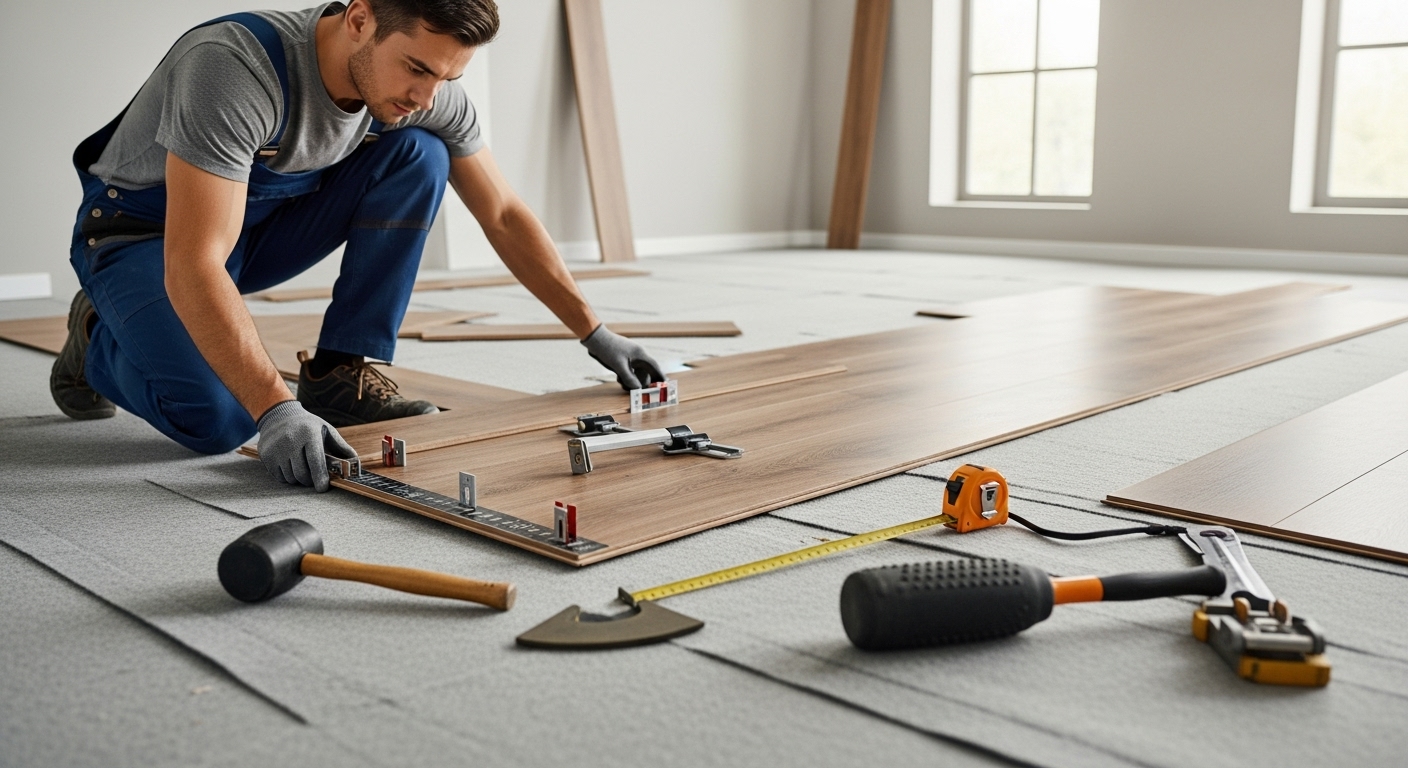
Waterproof laminate flooring installation depends on the size of the home, the preparation required, and the effort involved. All installation costs average between $7 and $15 per square foot, with materials costing $3–$6 per square foot and labor costing $3–$8 per square foot.
The average cost for a 300–500 square foot area is between $3,500–$7,000. Additional work such as removing old flooring or preparing the subfloor can add to the cost. It’s important to understand all of this because flooring is not only functional but also a long-term investment. It will discuss the major cost drivers, challenges, and feasibility factors.
In this process, you’ll get a clear idea of how costs are broken down, what impacts them, and how different circumstances impact the budget.
What Is Waterproof Laminate Flooring And Why It Matters
Waterproof laminate flooring is a laminate flooring that has been developed in such a way that it prevents water infiltration more than the other ordinary laminate. It normally comprises a multi-layered system consisting of a waterproof core, a decorative surface layer and protective top coating. Compared to conventional laminate, which may warp or swell in the moisture retentive areas, waterproof laminate does not lose its shape even in the kitchen, bathrooms and basements.
The reason why this material selection is important is that the problem of water damage is among the most typical reasons behind the need to replace the flooring in residential areas.
Knowledge of how much it costs to install the equipment will ensure the homeowners are able to make plans which will avoid future shocks of finances. Indicatively, incorrect subfloor preparation or improper installation may lead to long lasting problems however much the flooring material is waterproof in nature.
These aspects are all emphasized by a construction estimator, such as the cost of labor, the subfloor condition, and other preparation services, such as a moisture barrier or leveling, that can greatly affect the ultimate calculation.
Factors That Influence Waterproof Laminate Flooring Costs
There are several factors that make waterproof laminate flooring to cost a certain amount, which are interrelated. The knowledge of these aspects is useful in offering clarity in realistic budgeting.
1. Complexity of Room Size and Structure
The main factor that determines the cost of installation is the size of the room. Bigger rooms need additional materials and labor. These layouts that have multiple angles and staircases or transitions make installation more complex and hence more expensive.
2. Subfloor Preparation Requirement
Laminate installation requires a smooth level sub floor. Unevenness, cracks and any moisture problem should be satisfied prior to laying the flooring. Subfloor work could be sanded, a leveling compound used or a vapor barrier. Subfloors in houses of concrete or older wooden subfloors may need extra preparation which may have a considerable effect on overall cost of installation.
3. Complexity Of Labor/Rates By Region
Labor shall be different as per geographical location and local contractor rates. Urban rates tend to be higher in the hourly rates compared to the rural. There is also such dependence of labor on experience and complexity of installation like stairways, custom cuts or patterned layouts. Knowing labor needs enables the home owners to think correctly and prevent unwanted surprises.
4. Measures of Flooring Quality and Durability
Although it is in waterproof laminate, the materials vary in terms of thickness, wear layer types, and quality of construction. The denser cores are not easily dented and offer long service life whereas the top layers are thicker and therefore offer better abrasion resistance. Although we are not marketing particular brands, it is worth noting that material properties have an impact on installation practice, preparation requirements and lifecycle, which indirectly impact on cost analysis.
5. Other Installation Requirements
- Underlayment conditions: There are waterproof laminate floors which need extra underlayment to act as soundproofing or moisture barriers.
- Transition strips and moldings: Doors and other rooms may require special finishing items.
- Takes time to acclimatize to room temperature and humidity: Laminate planks typically need a couple of days of acclimatization to room temperature and humidity, a time factor that is not directly involved, yet is necessary.
Step-By-Step Overview Of The Installation Process
The installation process consists of several steps that can be installed on a step-by-step basis. Knowing the installation procedure will give one an idea of why different costs are incurred and what each involves.
- Site Assessment: Measurement of room, locate possible problems in the subfloor, layout patterns.
- Preparation of Subfloor: Old flooring may be removed and the surface leveled and covered with moisture barriers or underlayments.
- Flooring Acclimatization: The planks should be left in the room to acclimatize 48–72 hours to the room temperature and humidity.
- Flooring: It is time to start with the longest wall, and the interlocked planks must fit tightly.
- Cutting and Fitting: Cutters or saws are used to make accurate fits around walls, doorways and corners.
- Final Preparations: Add the transition strips, baseboard or moldings to have a smooth look.
- Clean-Up and Checking: To check if there are gaps in the inspection, secure the loose edges and clean up the debris to have a finished look.
The steps must be taken very seriously considering the detail which influences labor time and finally the cost.
Common Cost Scenarios
Real-life situations can be used to predict budget limits by the homeowner.
- Small Room (100–200 sq. ft.): little underfloor construction, simple plan, average number of labor hours. Costs are generally lower.
- Medium Room (200–400 sq. ft.): It may need underlayment, slight leveling, doorways and transition work.
- Large or Complex Layout (400 or more sq. ft.): The number of room transitions, staircase, and personalized cuts are seen to raise the amount of labor hours and preparation complexity.
In reality, the cost of dealing with the problems of dampness or structural anomalies prior to installation can be an important part of the overall costs, no matter the size of a room.
Budgetary Long-term Considerations
The analysis of costs should not end at the stage of installation. Homeowners should consider:
- Maintenance Requirements: Waterproof laminate does not experience water related damage that is characteristic of the traditional laminate and necessitates normal cleaning procedures.
- Life cycle: With good installation and appropriate subfloor preparation, the life cycle of the floor can be extended to 15–25 years.
- Resale Value: Durable flooring that can resist water is considered to be more attractive to a buyer and this can cover up the cost of initial investment.
Prudent budgeting of installation cost yields the flooring to be useful, strong, and needless throughout its service period.
Conclusion
The cost of installing reliable commercial flooring, including waterproof laminate, is a complex issue that must be carefully calculated based on a variety of factors such as room size, subfloor condition, job complexity, and material properties.
These variables help homeowners develop a realistic budget and be prepared for potential pitfalls before the installation process begins. That’s because, by analyzing typical conditions, preparation requirements, and labor, you’ll be able to make informed choices that guarantee performance and longevity.
Proper planning keeps unknown costs at bay while also maximizing your flooring investment to ensure you get the most for your money.
FAQs
1. What Is The Influence Of The Type Of Subfloor On The Installation Cost Of Waterproof Laminate?
The type of subfloor plays a crucial role in determining how difficult the installation would be. Moisture barriers, leveling, and smoothing may be necessary to concrete subfloors, whereas the subfloors consisting of wood should be checked on warping or gap. Correct subfloor preparation makes planks lie flat making them less prone to damaging or uneven wearing.
2. Is It Possible To Install Waterproof Laminate On Top Of The Current Flooring?
In other instances, laminate may be waterproofed by overlaying some kinds of floors such as the vinyl or tile floor, although the surface must be smooth and stable. But with a non-even surface or damaged floor it may have to be removed or leveled out thus adding to the labor and preparation requirements.
3. How Long Can The Waterproof Laminate Flooring Last?
Waterproof laminate flooring has a lifespan of about 15-25 years when maintained and installed properly. The use of rooms, moisture exposure and maintenance effects are some of the determinants of longevity and it is important to note that proper installation maximizes longevity.