Why Wholesale Jacket Suppliers Help Startups Succeed
Starting a jacket brand is one of the most exciting and most humbling things a founder can do.
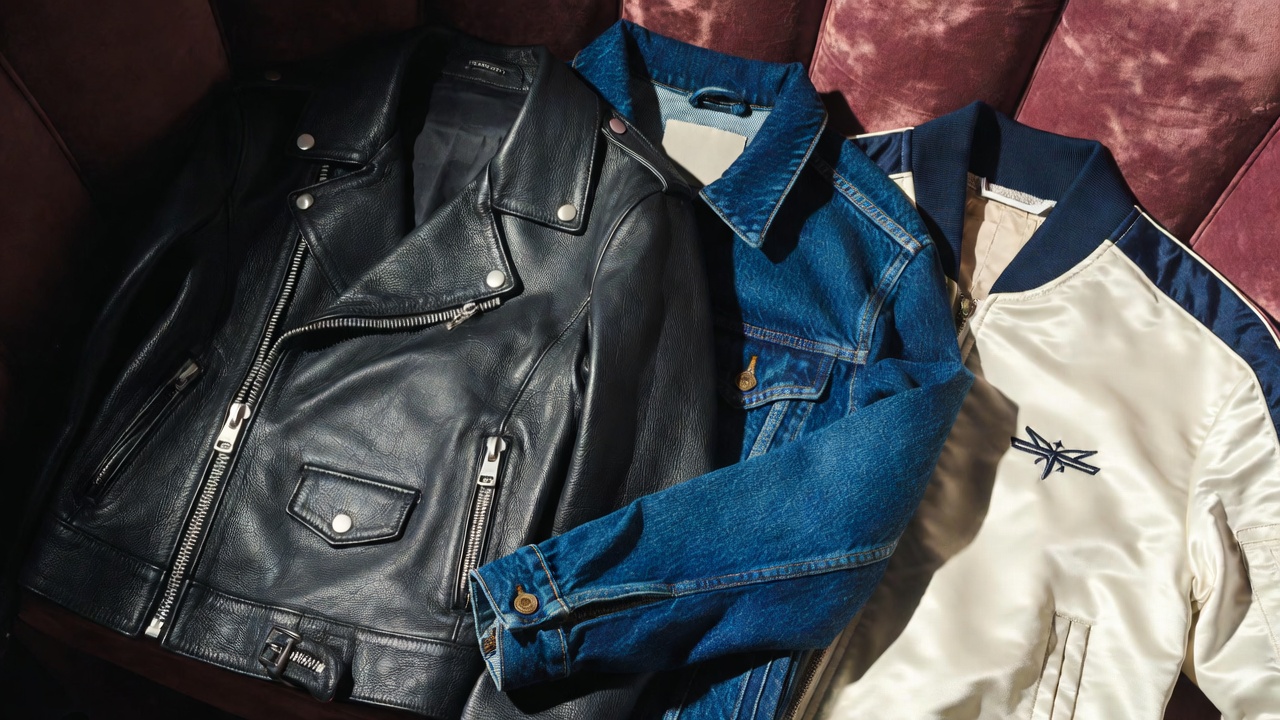
Exciting because the category has real commercial power — jackets are worn publicly, generate organic brand discovery, and create the kind of customer loyalty that compounds over time in ways most product categories simply can’t match. Humbling because the moment you start looking for a bomber jackets supplier, a bulk jean jackets manufacturer, a biker jacket manufacturer, or a wholesale manufacturer clothing partner who’ll actually work with a startup at your current order size and quality expectations — you realize quickly how much the manufacturing side of this business can work against you if you don’t know how to navigate it.
The minimum order quantities that don’t fit a startup budget. The manufacturers who are warm during the quoting stage and mysteriously harder to reach once the deposit clears. The sample that looked great and the bulk order that didn’t. The reorder that arrived with slightly different construction than the first run — not dramatically different, just different enough to make you wonder whether the sourcing relationship is actually solid or whether you just got lucky the first time.
These aren’t startup-specific problems. They’re jacket sourcing problems that hit brands at every stage. The difference is that startups have less margin — financially and reputationally — to absorb them. Getting it right from the beginning isn’t just a good idea for a startup. It’s survival-critical.
Here’s why the right wholesale jacket supplier relationship is one of the most important early decisions a startup brand makes — and how to find one worth building on.
What Startups Actually Need From a Bomber Jackets Supplier
The right bomber jackets supplier for a startup brand is one who offers flexible minimum order quantities without compromising construction standards — confirming shell fabric weight, ribbed trim lot consistency, and lining construction in writing, and providing pre-production samples from your actual materials before any bulk commitment is made.
Most startup founders approach supplier selection with the wrong first question. They lead with minimum order quantity before establishing whether the supplier can produce the quality level the brand needs. That sequence produces a list of suppliers who’ll take small orders — not a list of suppliers who’ll produce great jackets in small orders. Those are different things and it’s worth being clear on that distinction before any sourcing conversation begins.
Here’s how to approach bomber jackets supplier evaluation as a startup founder:
Quality verification before the MOQ conversation. Establish that the supplier produces consistent, quality bombers before discussing minimums. Evaluate the sample, review production history for your specific jacket style, and ask for references from brands who’ve placed multiple orders. A supplier who produces excellent jackets at 500 units is almost always more willing to discuss starting smaller with a brand that demonstrates real potential than the conversation suggests going in.
Shell fabric weight confirmed in writing. Whether the shell is satin, nylon, or a varsity wool blend, the gram-per-square-meter specification determines how the jacket hangs and communicates quality in your customer’s hands. Get this number documented and verified against the physical sample. A supplier who can’t give you the GSM of their shell fabric doesn’t know their materials well enough to be producing your startup’s first jacket collection.
Ribbed trim lot consistency at startup order volumes. The collar, cuffs, and hem band should come from the same yarn lot across the full run. For startup-scale orders, confirm specifically how the supplier manages trim lot sourcing at lower production volumes — because trim lot matching gets harder, not easier, at smaller quantities. Ask directly and listen carefully to how specific the answer is.
Pre-production sample from your actual materials. Not a showroom sample — a pre-production sample made from your specified shell fabric, your lining, your trim, and your hardware. For a startup, this sample is especially important because it’s the only reliable confirmation that the quality you’re building your brand around is achievable in this factory at the order volume you’re starting with.
Reorder pricing and quality matching from day one. When negotiating your first startup order, the conversation should include reorder pricing and how quality will be maintained on subsequent runs. Suppliers who are thinking about a long-term relationship engage with this conversation. Those focused on a transactional first order won’t — and that difference tells you more about the relationship you’re entering than any sample does.
Early-stage brands building a bomber program with private labeling and flexible starting MOQs can explore the bomber jackets supplier services at Rays Creations, where startup-scale orders are taken seriously with the same spec management applied to every production run.
How Startups Can Work With a Bulk Jean Jackets Manufacturer Successfully
Denim jackets are one of the smartest entry points into outerwear for a startup brand. Consistent demand across age groups, price points, and seasons means the sell-through risk is lower than more trend-dependent outerwear styles. The product has decades of commercial track record. And for a startup trying to establish quality credibility early, a well-sourced denim jacket is a product that holds up to scrutiny in a way that builds brand trust fast.
But bulk jean jackets manufacturer sourcing has variables that catch startup founders off guard when they haven’t been through the process before. Here’s what the evaluation needs to cover:
Fabric weight as the non-negotiable foundation. When evaluating any bulk jean jackets manufacturer as a startup, fabric weight in ounces per square yard should be the first specification you confirm — before price, before lead time, before MOQ. Denim under 10oz lacks the body customers associate with a real denim jacket. The 11oz to 14oz range gives you a jacket that holds its shape, breaks in with character, and has the hand-feel that turns a first-time buyer into a repeat customer. Above 14oz is workwear territory. Get this number on the spec sheet before any other conversation moves forward.
Wash consistency at startup order volumes. For startups placing smaller first orders, wash consistency is actually harder to manage than at larger volumes — because some wash treatments require minimum batch sizes to achieve consistent results. Ask your manufacturer directly about wash consistency management at your specific order quantity. A manufacturer who’s done this before at startup scale has a specific answer. One who hasn’t will give you a general reassurance.
Pre-shrink process documented specifically. For a startup brand whose customer base is still forming its first impressions of your quality, a sizing issue that shows up after the first wash is a reputation problem you can’t afford early on. Get the pre-shrink process documented in writing — not a reassurance that sizing will be fine, but a specific written description of the process applied to your fabric.
Interior finishing as a brand quality signal. Overlocked or flat-felled interior seams are the construction standard worth requiring. Raw seams that fray within months damage the quality perception you’re working hard to build — and they’re visible to every customer who turns the jacket inside out, which fashion customers regularly do.
Hardware specified by supplier and finish grade. For startup-scale runs especially, hardware variation between units is more likely if components aren’t locked in before production begins. Specify every hardware component — buttons, rivets, any closures — by supplier and finish grade in your production documentation before production starts.
Startups building a denim jacket line with documented fabric specs and wash-tested samples can explore the bulk jean jackets manufacturer options at Rays Creations, where smaller opening orders are accommodated without compromising construction standards.
Why Startups Benefit From Getting the Right Biker Jacket Manufacturer Early
Leather biker jackets are high-stakes territory for any brand. For a startup, the stakes are even higher — because the customer who buys a leather biker jacket from a brand they don’t yet know is making a significant trust investment based entirely on how the product presents itself and performs in the first weeks of use.
The leather grade, the hardware weight, the stitching consistency, the lining quality — every one of these details either confirms or undermines the trust your new customer is extending. And for a startup brand, that first impression is disproportionately important because you don’t yet have years of brand equity to absorb a disappointing product experience.
Getting a biker jacket manufacturer relationship right as a startup isn’t just about avoiding a bad first order. It’s about establishing the product credibility that lets the brand grow past the startup stage into something with a real reputation to build on.
Asymmetric zipper construction reveals manufacturer capability. The signature off-center front zipper on a biker jacket is technically demanding — it needs to sit flat, track straight, and close cleanly across the full front placket. For a startup evaluating a new manufacturer, this construction detail is one of the most reliable indicators of genuine leather jacket expertise. A manufacturer who gets this right has made enough leather jackets to have solved this problem. One who struggles hasn’t.
Panel stitching consistency across your full order. For startup brands with smaller initial runs, check panel stitching quality across multiple units in the production batch — not just the sample. Even stitching tension and straight seams across every unit are the construction standards worth requiring. Variation between units indicates production line inconsistency that will show up in your customer reviews.
Lining attachment and quilting as a brand quality signal. A fully attached, cleanly finished quilted lining tells your customer that the jacket was made with attention to every detail — including the ones they couldn’t see in the product photo. For a startup building a reputation from scratch, that attention to interior quality is a trust-building detail that customers who care about craft will notice and remember.
For startup brands sourcing full grain leather biker jackets with documented material grading and hardware specification on bulk orders, the biker jacket manufacturer services at Rays Creations support smaller opening orders with full spec accountability throughout the production process.
How Rays Creations Works With Startup Jacket and Apparel Brands
Rays Creations is a leather and apparel manufacturing company based in Dix Hills, New York. They work with businesses at every stage of growth — including startup brands building their first jacket line and early-stage founders establishing their initial bulk production relationships in leather goods and apparel.
Their jacket range covers leather jackets, bomber jackets, biker jackets, varsity jackets, denim jackets, and windbreakers — all with full customization including private labeling, custom hardware selection, embossing, embroidery, and lining options. Their broader apparel range covers t-shirts, hoodies, and activewear with the same customization depth available across every style.
What makes them a practical option for startup brands specifically is the combination of flexible opening MOQs, formal spec documentation on every order regardless of size, and a manufacturing approach that treats early-stage brand relationships as long-term partnerships rather than transactional small orders to be tolerated until something larger comes along.
Reach the team directly at care@rayscreations.co or call 516 528-5820. Their office is at 2 Vanderbilt Parkway, Dix Hills, NY 11746.
Before Your First Startup Jacket Order Goes In
Get a pre-production sample made from your actual specified materials — not a showroom sample, not product photos. A physical garment built to your spec in your hands before any commitment is made. Confirm leather grade, shell fabric weight, hardware brand, and wash treatment in writing before your deposit clears. Build a spec sheet with measurable standards rather than descriptive language — it becomes your quality benchmark for every future order at every order size. Get references from brands who’ve placed jacket orders at startup scale with this manufacturer specifically and follow up on at least two of them. Start with a smaller run than feels comfortable and scale once quality holds consistently across the full first batch.
The startup jacket brands that grow into something real aren’t the ones who moved the fastest or found the lowest price per unit. They’re the ones who invested in getting the sourcing relationship right before the first order — and built everything that followed on a manufacturing foundation that actually held up under the pressure of real growth.
That foundation is the whole game in the startup stage. Get it right and the brand has something genuinely worth building on. Get it wrong and you spend the next year managing the consequences of that choice instead of growing past them.