AI Oil Procurement Services for Energy Companies
Introduction
Procurement plays a critical role in the oil and gas industry. From sourcing drilling equipment and industrial components to managing service contracts and logistics, energy companies rely on efficient procurement systems to maintain operational continuity. However, traditional procurement processes in the sector are often complex, manual, and vulnerable to delays or cost inefficiencies.
Artificial Intelligence (AI) is transforming oil procurement services by introducing data-driven decision-making, automation, and predictive analytics into sourcing and supplier management. As energy companies face fluctuating commodity prices, supply chain disruptions, and increasing regulatory pressures, AI-powered procurement solutions are emerging as a strategic tool for enhancing operational resilience and cost control.
The Complexity of Oil Procurement
Oil and gas procurement differs significantly from procurement in many other industries. It involves:
- High-value capital equipment
- Specialized engineering components
- Long-term supplier contracts
- Strict regulatory and safety standards
- Global supplier networks
- Volatile pricing environments
Energy companies often manage thousands of suppliers across multiple regions. Manual procurement systems can struggle to handle such complexity, leading to inefficiencies, delays, and risk exposure.
AI oil procurement services address these challenges by integrating advanced analytics and automation into every stage of the procurement lifecycle.
What Are AI Oil Procurement Services?
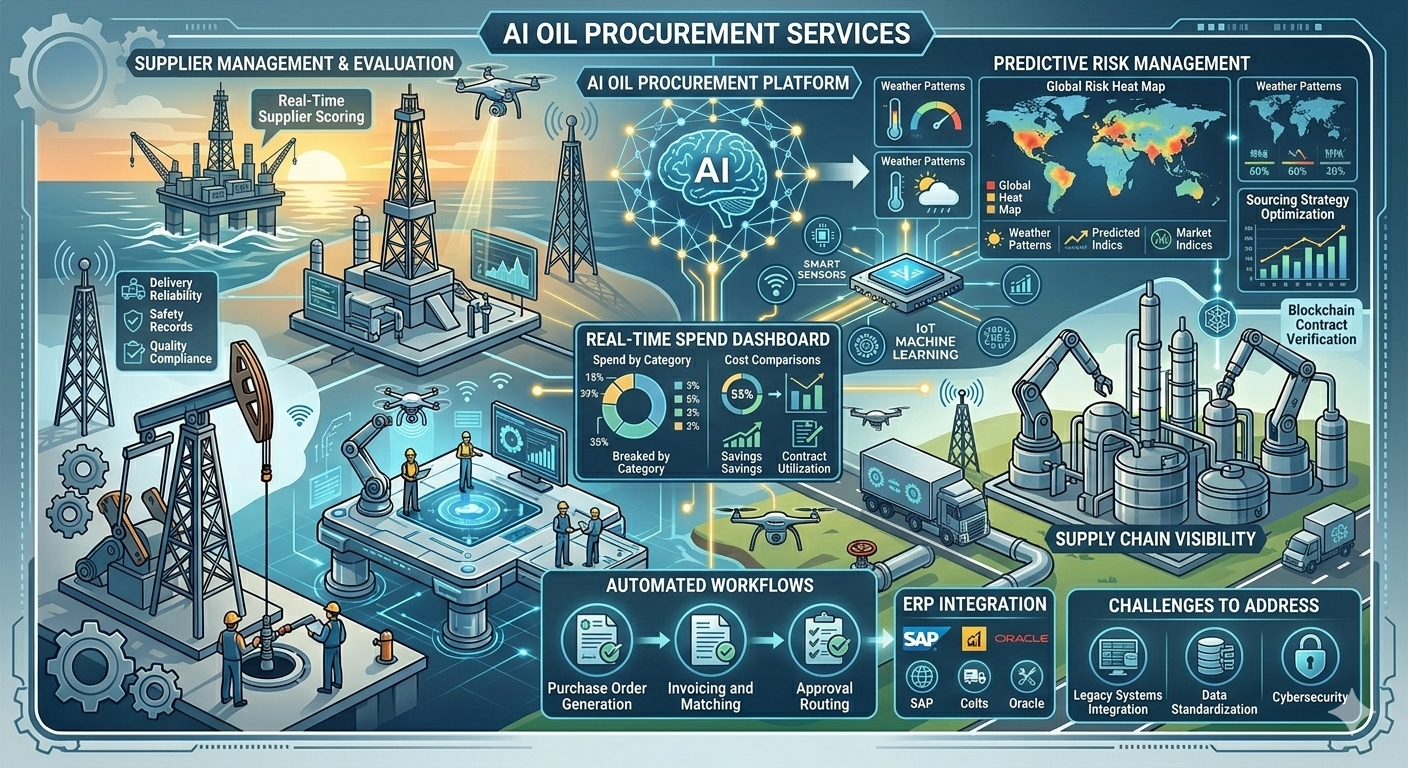
AI oil procurement services refer to digital platforms and intelligent systems that use machine learning, predictive analytics, and automation to optimize sourcing, supplier management, contract evaluation, and purchasing decisions within the energy sector.
These services typically combine:
- Automated supplier selection algorithms
- Real-time spend analysis
- Predictive risk assessment tools
- Intelligent contract management systems
- Demand forecasting models
- Workflow automation engines
Rather than relying solely on manual review and historical spreadsheets, AI systems process vast volumes of procurement data to deliver actionable insights.
Key Benefits for Energy Companies
1. Improved Supplier Selection and Evaluation
Supplier reliability is critical in oil and gas operations. Delays in equipment delivery or substandard components can halt production and increase costs significantly.
AI systems analyze supplier performance metrics such as:
- Delivery timelines
- Quality compliance records
- Pricing trends
- Financial stability indicators
- Safety certifications
By continuously monitoring these factors, AI platforms provide objective supplier scoring and risk assessments. This enables procurement teams to select vendors based on real-time performance data rather than limited historical information.
2. Predictive Risk Management
The energy industry operates in a highly volatile global environment. Political instability, trade restrictions, logistics disruptions, and commodity price fluctuations can all affect procurement processes.
AI-driven procurement services monitor external data sources, market conditions, and supplier behavior patterns to detect early warning signs of potential disruptions. Predictive analytics allow energy companies to:
- Diversify supplier bases proactively
- Adjust sourcing strategies
- Negotiate contracts based on market forecasts
- Reduce exposure to geopolitical risks
This predictive capability enhances supply chain resilience and operational continuity.
3. Automated Procurement Workflows
Oil procurement often involves multiple approval stages, documentation requirements, and compliance checks. Intelligent automation streamlines these processes by:
- Automatically generating purchase orders
- Routing approvals digitally
- Matching invoices with contracts
- Flagging discrepancies
- Ensuring compliance documentation is complete
Automation reduces administrative burden, shortens procurement cycle times, and minimizes human error.
4. Real-Time Spend Visibility
Energy companies manage significant procurement budgets. Without centralized visibility, identifying inefficiencies or overspending can be challenging.
AI-powered procurement platforms provide real-time dashboards that track:
- Spending by category
- Supplier cost comparisons
- Contract utilization
- Budget performance
Advanced analytics can identify patterns such as duplicate purchases, off-contract spending, or underutilized agreements. This improves financial transparency and supports strategic cost management.
AI in Strategic Sourcing for Oil and Gas
Strategic sourcing in the oil and gas industry goes beyond simple purchasing. It involves long-term supplier partnerships, cost optimization strategies, and value-driven negotiations.
AI enhances strategic sourcing by:
- Simulating multiple sourcing scenarios
- Comparing supplier bids using weighted criteria
- Identifying cost-saving opportunities
- Forecasting long-term demand
Machine learning models continuously refine sourcing strategies based on evolving data, enabling energy companies to align procurement decisions with operational goals.
Integration with Supply Chain and Operations
AI oil procurement services do not operate in isolation. They integrate with broader enterprise systems such as:
- Enterprise Resource Planning (ERP) platforms
- Inventory management systems
- Logistics tracking software
- Maintenance planning tools
This integration creates a unified digital ecosystem where procurement decisions align with production schedules, maintenance needs, and inventory levels.
For example, predictive maintenance systems can automatically trigger procurement workflows when equipment parts approach end-of-life. This ensures timely replacement and prevents operational downtime.
Enhancing Compliance and Governance
Oil and gas companies operate under strict regulatory frameworks, including environmental, safety, and financial reporting standards. Procurement must comply with both internal governance policies and external regulations.
AI systems enhance compliance by:
- Tracking supplier certifications
- Monitoring contract adherence
- Generating audit trails
- Detecting irregular transactions
Automated compliance checks reduce the risk of regulatory violations and strengthen corporate governance practices.
Cost Optimization and Efficiency Gains
AI-driven oil procurement services contribute to cost reduction in several ways:
- Identifying competitive pricing opportunities
- Preventing emergency procurement at premium rates
- Optimizing inventory levels
- Reducing process inefficiencies
- Enhancing negotiation leverage
By combining predictive insights with automation, procurement teams can shift from reactive purchasing to proactive cost management.
Challenges in Implementing AI Procurement Services
While AI offers substantial benefits, energy companies must address several implementation challenges:
Data Quality and Standardization
AI systems depend on accurate and structured data. Inconsistent records, fragmented databases, and outdated systems can limit effectiveness.
Integration with Legacy Systems
Many energy companies operate with legacy procurement and ERP systems. Seamless integration requires careful planning and technical expertise.
Change Management
Transitioning from manual procurement processes to AI-driven systems requires workforce training and cultural adaptation. Procurement professionals must learn to interpret AI insights and manage automated workflows effectively.
Cybersecurity Concerns
As procurement systems become digitized and interconnected, protecting sensitive supplier and financial data becomes increasingly important. Robust cybersecurity frameworks are essential.
The Future of AI Oil Procurement Services
As AI technologies continue to evolve, procurement systems in the energy sector are expected to become more autonomous and predictive.
Future developments may include:
- AI-powered negotiation assistants
- Blockchain integration for transparent contract management
- Advanced predictive pricing models
- Real-time global risk heat maps
- Autonomous sourcing recommendations
These innovations will further enhance agility, transparency, and resilience within energy procurement operations.
Conclusion
AI oil procurement services are reshaping how energy companies manage sourcing, supplier relationships, and purchasing decisions. By combining intelligent automation, predictive analytics, and real-time visibility, AI-driven systems address the complexity and volatility inherent in the oil and gas sector.
While challenges such as data integration and cybersecurity must be carefully managed, the strategic advantages of AI procurement solutions — including cost optimization, risk mitigation, and operational efficiency — make digital transformation an increasingly essential component of modern energy operations.
As the global energy landscape continues to evolve, AI-powered procurement services are positioned to play a central role in supporting sustainable, efficient, and resilient supply chains for the oil and gas industry.