Beverage Recipe Formulation Services in India
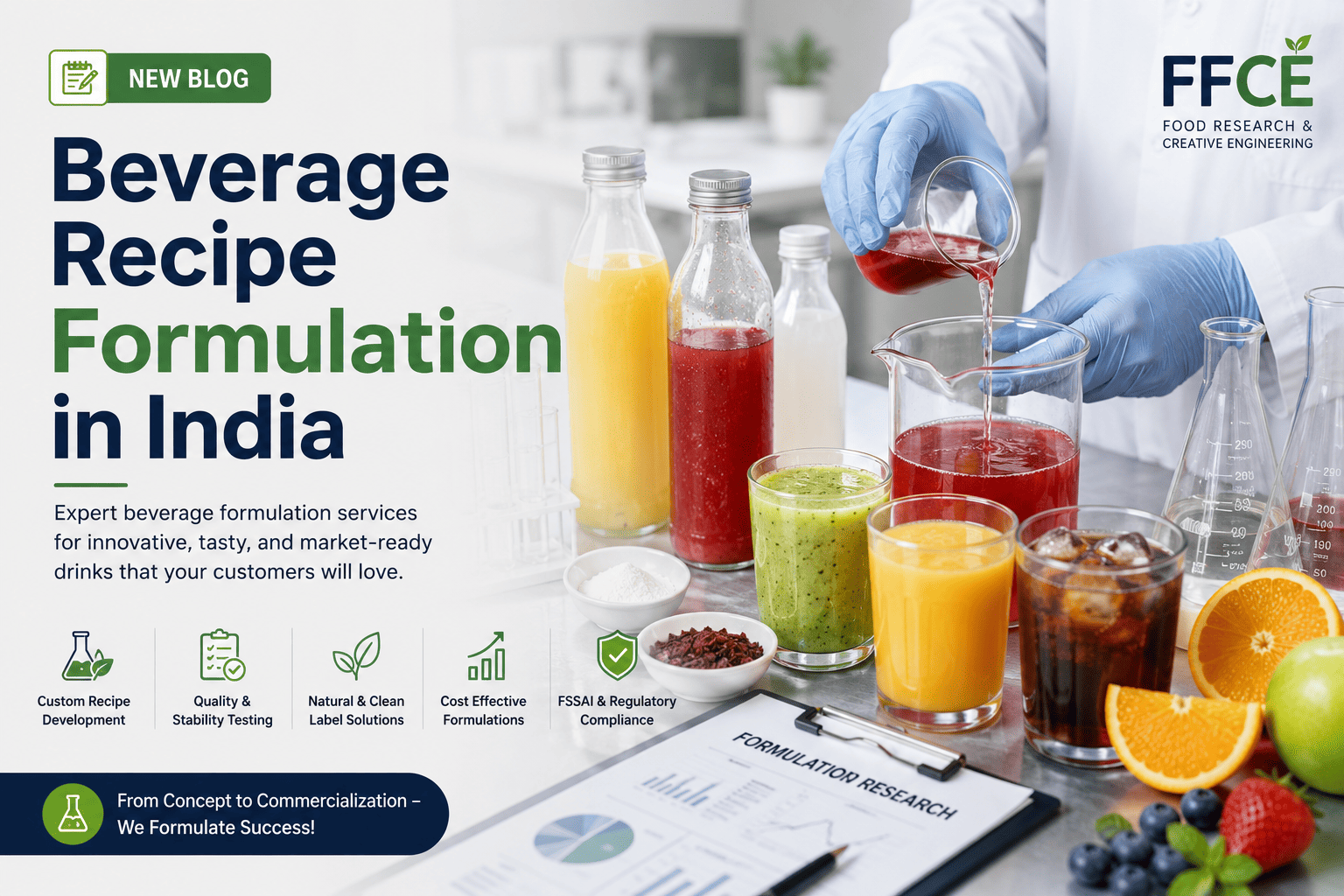
Beverage recipe formulation relies heavily on the choice of right ingredients, functionality, proportions of the constituents and the processes used to concoct a drink of desired standards. Hot drinks, soft drinks, milk drinks and alcoholic drinks are subsumed under the umbrella of beverages. The global beverage market reached to USD 1.92 trillion in 2025 and is expected to climb to USD 2.56 trillion by 2030. The India beverage market size amounted to USD 80.11 billion in 2025 and is projected to reach close to USD 154.67 billion by 2035. Innovation is important in beverage industry and this factor sets the product up for success. The burgeoning demand for beverages in India could be attributed to the rising urbanization, increasing disposable income, diverse consumer preferences, convenience and portability, focus on health-conscious selections and presence of several distribution channels. Also, these elements underpin the emerging beverage categories, thereby becoming a prerequisite of new product development.
A beverage business consultant must therefore concentrate on picking out current trends, identifying target audience, and analyzing competitors. The first step in beverage recipe formulation is the selection and souring of ingredients appropriate for the texture, flavor, and nutritional benefits of the beverage. Some important things to take into consideration are identifying the kind of drink, branding and packaging required, conducting market research in order to develop an exotic beverage. Customers place more emphasis on taste and flavor and these influence their repurchase decision. Another important factor is the texture – smoothies, juices and fruit nectar have different effects on our tongues. A suitable texture (chewy/pulpy) will influence the flavor and taste of beverages. The appropriate choice of stabilizers and additives are useful in emulsion stability. The type of packaging also contributes to maintaining the brand image. For instance, aluminum cans have a better shelf life as those can be sterilized at high temperatures than plastic ones. Prior to running the product through the production line, communicating with a food consultant for a trial production run and conducting stability studies to check changes in flavors and discoloration would be highly beneficial. The ultimate goal therefore lies in manufacturing beverages at an affordable price with superior quality. The beverage market in India offers ample opportunities for growth. The presence of a strong consumer base and changing consumers’ preferences fosters the beverage sector’s expansion. The Government of India lends support to investment, offers regulatory support and stimulates R&D activities in beverages. Promotion of healthy beverages, product diversification, strengthening supply chain management, adopting sustainable packaging methods and improving cold storage facilities will contribute to sustainable growth and enable a seamless transition from concept formulation to large-scale production.
Key Factors to Consider in Beverage Recipe Formulation
Developing a successful beverage requires a balance between taste, functionality, stability, cost, and consumer expectations. A beverage formulation should be designed not only for sensory appeal but also for commercial production and long-term stability.
1. Ingredient Selection
The right ingredients form the foundation of a successful beverage. Ingredients should be selected according to their functionality, compatibility, availability, quality, and cost.
Depending on the beverage category, formulation may involve:
- Fruit juices and concentrates
- Natural and artificial flavors
- Sweeteners
- Acidity regulators
- Stabilizers and emulsifiers
- Colors
- Functional ingredients
- Vitamins and minerals
- Plant-based ingredients
- Preservatives where applicable
Each ingredient can affect the taste, appearance, texture, stability, and shelf life of the final beverage.
2. Taste and Sensory Development
Consumers often make their first purchase based on branding and packaging, but repeat purchases depend heavily on the actual drinking experience.
A beverage formulation should therefore be evaluated for:
- Sweetness
- Acidity
- Flavor intensity
- Aroma
- Mouthfeel
- Aftertaste
- Color and appearance
Sensory trials can help identify the right balance between different ingredients and create a beverage profile that matches the target consumer.
3. pH and Acidity Control
pH is an important technical parameter in many beverage formulations.
The appropriate pH can influence product stability, flavor profile, preservation strategy, and processing requirements. Therefore, pH should be evaluated during product development rather than only after the final formulation is prepared.
A controlled formulation helps maintain consistency between different production batches.
4. Beverage Stability
A beverage may change during transportation and storage due to factors such as temperature, light, oxygen, ingredient interactions, and processing conditions.
Common stability concerns include:
- Sedimentation
- Separation
- Color changes
- Flavor deterioration
- Cloudiness
- Precipitation
- Loss of carbonation
- Texture changes
A properly designed formulation and suitable processing method can help minimize these issues.
Developing Beverages for Different Market Segments
Different consumers look for different beverage characteristics. A beverage designed for children may have completely different sensory and nutritional requirements from a sports drink, functional beverage, premium juice, or ready-to-serve drink.
Functional and Health-Oriented Beverages
The growing interest in health-focused products has created opportunities for beverages containing functional ingredients, plant-based ingredients, vitamins, minerals, protein, fiber, or other nutritional components.
However, adding a functional ingredient is not enough. The ingredient must be compatible with the beverage system and should not negatively affect taste, appearance, stability, or consumer acceptance.
Energy and Sports Beverages
Energy and sports beverages require careful consideration of ingredient functionality, flavor balance, sweetness, acidity, and processing.
The formulation should be developed according to the intended consumer group and applicable regulatory requirements.
Fruit-Based Beverages
Fruit juices, fruit drinks, nectars, and other fruit-based beverages require attention to fruit content, acidity, sweetness, pulp distribution, color, flavor, and stability.
The choice of fruit source and processing method can significantly influence the final product.
Ready-to-Serve Beverages
Ready-to-serve beverages are designed for convenience and immediate consumption. Their formulation and processing need to be compatible with the selected packaging and expected storage conditions.
From Laboratory Formula to Commercial Production
A laboratory formulation is only the beginning of beverage development.
One of the biggest challenges is successfully transferring the formula from a small laboratory batch to commercial production.
During scale-up, factors such as:
- Mixing efficiency
- Heating and cooling
- Homogenization
- Filling temperature
- Processing time
- Equipment capacity
- Ingredient addition sequence
can influence the final product.
A formula that performs well at laboratory scale may require adjustments before commercial production. Pilot trials and controlled scale-up can help identify these differences before full-scale manufacturing.
Importance of Packaging in Beverage Development
Packaging plays an important role in protecting the beverage and maintaining product quality.
The packaging format should be selected according to the product characteristics, processing method, distribution conditions, storage requirements, brand positioning, and target market.
Common beverage packaging formats include:
- PET bottles
- Glass bottles
- Aluminum cans
- Cartons
- Pouches
- Other specialized packaging formats
Packaging should be considered during product development rather than as an afterthought.
Beverage Shelf-Life Testing
Determining shelf life is an essential part of commercial beverage development.
During shelf-life evaluation, the product may be monitored for changes in:
- Microbiological quality
- pH
- Acidity
- Color
- Flavor
- Aroma
- Texture
- Physical stability
- Packaging integrity
The testing approach should be appropriate for the product and its intended storage conditions.
Cost-Effective Beverage Formulation
A commercially successful beverage must balance quality with production economics.
Ingredient selection, processing requirements, packaging, production yield, wastage, and manufacturing efficiency can all influence the final product cost.
A beverage consultant can evaluate the formulation and process to identify opportunities for cost optimization while maintaining the desired quality and consumer experience.
Why Work With a Beverage Formulation Consultant?
Developing a beverage independently can involve multiple rounds of experimentation and troubleshooting.
A professional beverage formulation consultant can provide technical support across different stages, including:
- Concept development
- Recipe formulation
- Ingredient selection
- Prototype development
- Sensory evaluation
- Stability evaluation
- Pilot trials
- Process optimization
- Scale-up
- Packaging recommendations
- Regulatory and documentation support
This integrated approach can help businesses move more efficiently from an initial beverage idea to a commercially viable product.
Beverage Formulation Process: From Concept to Market
A typical beverage development journey can be structured into the following stages:
Concept Development → Market Research → Ingredient Selection → Recipe Formulation → Prototype Development → Sensory Evaluation → Stability Testing → Pilot Production → Process Optimization → Commercial Scale-Up
Each stage plays an important role in ensuring that the final beverage is technically suitable and commercially practical.
Common Challenges in Beverage Development
Food and beverage entrepreneurs may face several challenges while developing a new drink.
Some common issues include:
- Unstable formulations
- Sedimentation or separation
- Unbalanced sweetness and acidity
- Flavor degradation
- High formulation cost
- Short shelf life
- Difficulty in commercial scale-up
- Packaging compatibility issues
- Inconsistent batch quality
- Regulatory and labeling requirements
Identifying these issues during development can save considerable time and resources during commercial production.
Conclusion
Beverage recipe formulation is a combination of food science, sensory development, ingredient technology, processing, packaging, and commercial planning.
A successful beverage should taste good, remain stable during its intended shelf life, be practical to manufacture, and meet the requirements of its target market.
Whether you are developing a juice, energy drink, sports drink, functional beverage, soft drink, mocktail premix, tea or coffee beverage, or another innovative drink, professional formulation support can help turn your concept into a market-ready product.
With the right formulation strategy, testing, process development, and scale-up approach, businesses can build beverages that deliver consistent quality while remaining commercially viable.