How Custom Engagement Rings Are Designed and Made
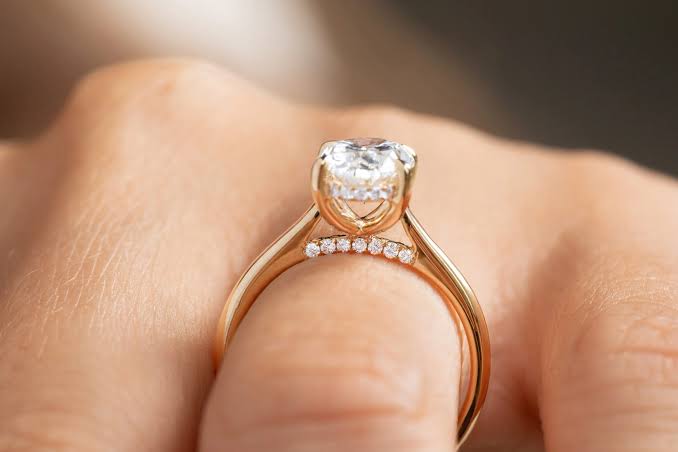
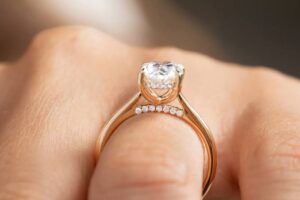
The word custom suggests a long and complicated undertaking, though most projects begin quite simply, with a reference image, a rough budget, and a shape someone has in mind. The process runs through a predictable set of stages, and understanding them in advance makes it far easier to steer. Anyone considering custom engagement rings NYC benefits from knowing what happens at each point and where the decisions are made.
The First Conversation
The opening meeting is mostly questions, and practical ones. What shape appeals, which metal, what the budget allows, whether the recipient is involved, and whether there is a date attached. A jewelry designer NYC will usually ask about budget early, because that answer determines which elements can move and by how much.
Bring reference images, and bring the ones you ruled out as well as the ones you liked. Explaining why something did not appeal often locates your taste more precisely than the pictures you saved. Bring an inherited stone if you have one, since a setting can be designed around its exact measurements. If you live out of state, this conversation works over video, and many workshops now handle a large share of their consultations that way.
The CAD Stage
The design is then built as a three-dimensional model on screen, and every measurement is fixed at this point: the seat the center stone sits in, the placement of the prongs, the width of the band, the height of the profile, and the open metalwork beneath the stone.
The stage exists so you can see the ring before it is made. Adjusting a band width on screen is straightforward, whereas altering it after casting means starting again in metal. It also clarifies details that are hard to picture from a description, such as how high the stone sits above the finger. Render times and the revisions included vary between workshops, so both are worth establishing early.
Casting and Setting
Once the model is approved, it is used to produce a wax mold, and molten gold or platinum is poured in to form the raw shape of the piece. From there, the work moves to the bench, where jewelers finish and polish the surfaces and set each stone by hand under magnification.
Final checks usually cover prong tension, symmetry, and finish. Where design and manufacturing happen in the same place, questions that come up during production can be resolved directly with the person who drew the model, which is the practical argument for working with a workshop that handles both.
Cost and Timing
Custom work is not automatically more expensive than buying a finished piece, and the comparison depends on the design. What raises cost reliably is complexity. Intricate metalwork, unusual side stone shapes, and dense pavé all add hours at the bench, and each of those hours is reflected in the price.
Timelines vary by workshop and by design, so it is worth asking for specifics rather than assuming. Ask how long the design stage takes, how long production runs after approval, and what the total looks like end to end. If there is a proposal or a wedding date involved, build in more time than the estimate suggests.
When Custom Makes Sense
Custom tends to earn its cost when:
- You have an inherited stone that needs a setting built around its exact dimensions.
- You want a combination of side stone shape and band profile that is not sold together.
- Your finger size or hand shape makes standard proportions sit awkwardly.
- You want an engagement ring and wedding band designed as a matched pair.
If something in an existing collection is already close, modifying a stock setting is often quicker and less expensive, and a designer should say so when that is the case.
Questions Worth Asking First
A short conversation with your jeweler before anything begins will tell you most of what you need to know about how a project is likely to run.
- Where the ring is made. Find out whether the design and the manufacturing happen in the same place, and who will be doing the bench work.
- Revisions. Check how many rounds of changes the quoted price covers, and what happens if you want an adjustment after approving the model.
- Return terms. A piece built entirely to your own design frequently cannot be returned, which is why the approval stage carries so much weight.
- Documentation. Confirm what arrives with the finished ring, and whether the center stone carries an independent grading report from a laboratory such as GIA or IGI.
The answers tend to be revealing in themselves. A workshop that can explain its own process clearly is usually one that is comfortable being asked about it.
For More Articles Visit: https://overlypost.com/