Denim Tears: The Brand That Turned Cotton
Denim Tears: The Brand That Turned Cotton
Introduction:
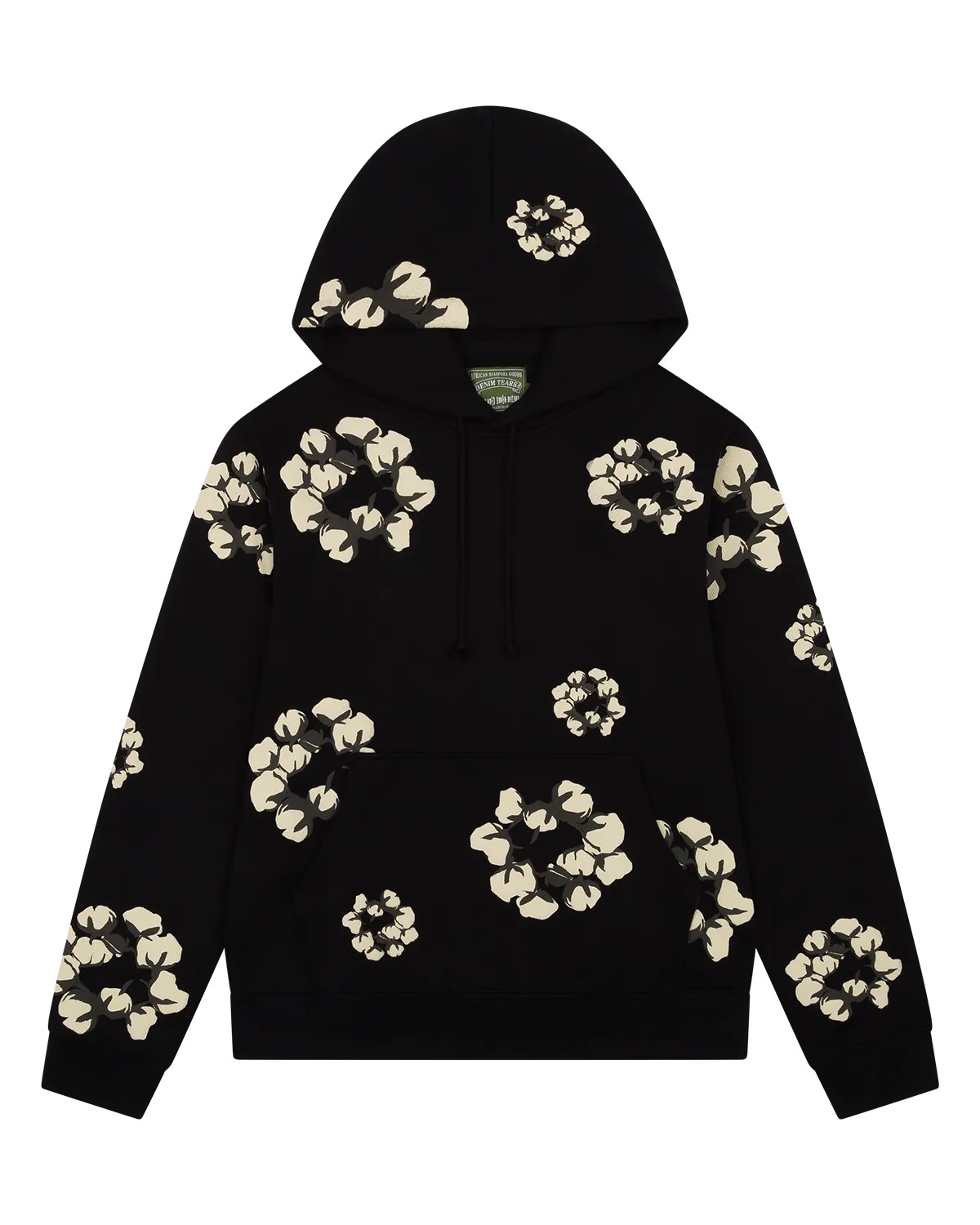
Walk down any street in New York, Atlanta, or Los Angeles, and you’ll spot it—a circle of white cotton bolls emblazoned across a hoodie or a pair of jeans. To the untrained eye, it’s just another streetwear graphic. But to those who know, that cotton wreath carries centuries of weight, pain, and resilience.
Denim Tears isn’t your typical fashion brand. It’s not trying to sell you a lifestyle or make you feel cool. It’s here to tell you something. Something uncomfortable. Something necessary.
Founded in 2019 by Tremaine Emory, Denim Tears Clothing has become one of the most culturally significant labels in contemporary fashion—not despite its political edge, but because of it. And if you’re trying to understand why this brand matters, you’ve come to the right place.
The Man Behind the Tears: Tremaine Emory’s Journey
From Jamaica, Queens to Cultural Disruption
Tremaine Emory was born in Atlanta, Georgia in 1981, but grew up in Jamaica, Queens, New York . That duality—the Southern roots and the New York hustle—shaped everything about how he sees America and its complicated relationship with race and culture.
Before Denim Tears, Emory wasn’t a household name, but he was deeply embedded in the creative world. He co-founded No Vacancy Inn with Ade “Acyde” Odunlami and Brock Korsan, a collective that started as parties and DJ sets before evolving into clothing . His advisory work with brands like Marc Jacobs, Stüssy, Off-White, and Yeezy gave him the credibility and connections that would later fuel his own venture.
In 2022, Emory was appointed creative director of Supreme—the first Black person to hold that title . It was a historic moment. Then, just eighteen months later, he left. His reason? He claimed the brand prevented him from using images by artist Arthur Jafa, including a photograph showing a Black man being lynched and another depicting whip scarring on a freed slave’s back. He called out what he perceived as “systemic racism” .
That decision—to walk away from one of the most powerful positions in streetwear—tells you everything about who Tremaine Emory is. He’s not interested in playing it safe.
What Does “Denim Tears” Actually Mean?
A Name Rooted in Personal and Collective Pain
The name Denim Tears isn’t abstract poetry. It’s personal.
Emory has explained that the name refers to his grandmother, who wore a denim apron while working . But it’s also about the collective struggle of African Americans—the tears shed in cotton fields, in factories, in spaces where Black labor built wealth for others while receiving nothing in return.
Denim itself is made from cotton. Cotton was the engine of American slavery. The tears are the human cost of that equation. Simple, devastating, and impossible to ignore once you understand it.
The Cotton Wreath: A Symbol You Can’t Unsee
What It Means
The cotton wreath is Denim Tears’ most recognizable motif—a circular arrangement of cotton bolls that appears on hoodies, jeans, jackets, and just about everything else the brand produces .
Emory designed it after visiting the Whitney Plantation, a museum dedicated to preserving the history of slavery in Louisiana . The wreath format transforms cotton from a symbol of exploitation into something closer to a memorial—a reclamation, a visual argument about how American history should be remembered .
It’s not decoration. It’s a statement.
Why It’s Everywhere (And Why Some People Want Something New)
The Cotton Wreath exploded in popularity. A$AP Rocky wore it. Bella Hadid wore it. Cardi B wore it . The sweatsuits became a certified hit, selling out online and drawing massive crowds at pop-ups. Resale prices skyrocketed—hoodies that retailed for $210 were reselling for $500 or more .
But success brought criticism too. Some fans wanted Denim Tears to evolve beyond the wreath. In late 2023, the brand released a collection called “Winter Recess” that featured a new script logo and “DT” branding instead of the wreath . The reaction was mixed. Some commenters begged for more Cotton Wreath. Others appreciated the experimentation.
Emory’s response? He’s not interested in being a one-trick pony. The wreath is important, but it’s not the only story he has to tell.
Denim Tears Collaborations That Actually Mean Something
Levi’s: The Most Natural Partnership
Levi’s and Denim Tears make perfect sense together. Denim is cotton. Cotton is the story. The first Levi’s x Denim Tears collection featured the Cotton Wreath on trucker jackets and wide-brimmed plantation hats—the latter piece described by the brand as “replicated and recontextualized after those worn in the fields during the assiduous cotton-picking process” .
Season 2 highlighted the Gullah Geechee people, who were forced to dye fabrics during enslavement to meet demand for indigo workwear. Season 3 explored Black biker culture, inspired by Martin Dixon’s 2000 book Brooklyn Kings: New York City’s Black Bikers .
Each season isn’t just a product drop. It’s a history lesson.
Converse: When Timing Changes Everything
Denim Tears’ Converse collaboration featured the Chuck 70 Hi and Low with a print influenced by Marcus Garvey’s pan-African flag and David Hammons’ 1990 work African-American Flag . But the release happened during the protests following George Floyd’s murder in 2020, and the collaboration became associated with that moment of racial reckoning.
Emory has said he’ll only work with brands he believes can support his activism . Converse, in that moment, passed the test.
Dior: When Luxury Meets History
In late 2022, Dior Homme designer Kim Jones invited Emory to guest-design a capsule collection called “Dior Tears.” Presented at Cairo’s Grand Egyptian Museum, the collection looked to Black Ivy League students of the 1950s and ’60s, paying tribute to figures like James Baldwin and Miles Davis .
It was a collision of worlds—the Parisian luxury house and the Atlanta-born provocateur—but it worked. Dior understood that Emory wasn’t there to decorate. He was there to educate.
ASICS: Georgia Red Clay
Denim Tears’ first ASICS collaboration reworked the Gel MC Plus in “Georgia Red Clay” and “Cream,” with “dirty” markings referencing the unpaved red clay roads Emory played on as a child in Harlem, Georgia .
It’s a small detail. But it’s the kind of detail that makes Denim Tears different. Every choice has a reason.
Dr. Martens: The Windrush Generation
For his 2023 Dr. Martens collaboration, Emory took on the eight-eye 1460 boot and Penton loafer, emblazoning both with a subversive Union Jack in the colors of the Jamaican flag by artist Chris Ofili .
The project honored the Windrush generation—Caribbean people who emigrated to postwar Britain to help rebuild the country between 1948 and 1973, only to face discrimination and, in some cases, wrongful deportation decades later .
Again: every product has a purpose.
The Spring/Summer 2026 Collection: “Libertas” and the True Statue of Liberty
Denim Tears’ SS26 collection, titled “Libertas,” might be its most ambitious yet . And the story behind it is one you probably never learned in school.
The Statue of Liberty’s Hidden Chains
Emory was inspired by a viral video from Dr. Joy DeGruy, a professor and researcher who discussed the true history of the Statue of Liberty. According to DeGruy, the statue was created by a French abolitionist to celebrate the end of slavery. In the original version, Lady Liberty was holding broken shackles. America didn’t want that, so they forced a revision—replacing the shackles with a book. The sculptor clandestinely moved the shackles to her feet, where they were invisible from the ground .
Emory was stunned. “What if Black folk grew up knowing this thing represented them?” he asked in an interview with Highsnobiety. “Things like that matter. Whether it’s a monument, schools, on TV, in books… representation matters” .
The Collection
The SS26 “Libertas” collection features the Cotton Wreath in new forms—oxidized studs, stripes, and floral patterns . There’s a leather jacket featuring the true Lady Libertas, shackles in hand, with the visage of a Black woman .
The collection is a bridge—to Dr. DeGruy’s work, to the truth, to a version of American history that’s been obscured and revised.
Lauryn Hill fronted the campaign, posing with five of her six children . It was a powerful image: a legendary Black artist and her family, wearing clothes that carry the weight of history.
Why Denim Tears Matters Beyond Fashion
It’s Not Just About Clothes
Denim Tears Hoodie has been featured in permanent collections at The Metropolitan Museum of Art’s Costume Institute . A brand that launched in 2019 now sits alongside garments that are centuries old. That’s not normal. That’s not supposed to happen.
But Denim Tears isn’t a normal brand.
Amanda Garfinkel, an associate curator at The Met, explained the appeal: “What attracts us most to Tremaine’s work for Denim Tears is the strength of his point of view and his mission to highlight the stories and the histories of Black Americans, his own personal history and the contributions of members of the African diaspora” .
The brand generates “tens of millions” in annual revenue and has doubled sales every year since its founding—without investors . It operates flagship stores in New York and Atlanta, with plans for Tokyo and eventual expansion to Chicago, Houston, Philadelphia, Portland, and Los Angeles .
The Criticism (Because There Always Is)
Not everyone loves what Emory does. Some critics have accused him of commercializing Black trauma, turning pain into product . The chicken bone necklace. The lynching imagery. The $2,800 cashmere sweatsuits with Swarovski crystal wreaths .
Emory’s response is characteristically direct. He’s not trying to be provocative. He’s just talking about things that haven’t been talked about before. “The real provocative thing to me,” he said, “is the lack of knowledge” .
Jonathan M. Square, an assistant professor of Black visual culture at Parsons School of Design, is a customer and a defender. “He’s taken some important stands, he hasn’t played it safe, and sticks to his values,” Square said. “We’re in a moment where people want to support a project and a brand that’s aligned with their values” .
How to Wear and Care for Denim Tears
Sizing: What You Need to Know
Denim Tears Hoodies fits true to size with a relaxed, slightly boxy cut . Hoodies and sweatpants run slightly oversized by design—size down if you want a fitted look . Denim pieces fit like the base brand they’re built on (so Levi’s collabs fit like Levi’s) .
The heavyweight cotton fleece holds its shape well over time, which is part of why the fit stays consistent after washing .
Care: Preserving the Story
Because the Cotton Wreath print carries real cultural significance, preserving it properly matters .
Washing: Turn garments inside out. Wash in cold water on a gentle cycle. Avoid rough fabrics like denim or items with zippers that can cause pilling. Skip fabric softener—it dulls printed graphics .
Drying: Air dry whenever possible. Heat is the biggest risk to printed graphics. If you must use a dryer, use the lowest heat setting and remove the garment while still slightly damp. Never dry in direct sunlight .
Storage: Fold heavyweight fleece rather than hanging it long-term (prevents shoulder stretching). Store jeans and jackets on hangers. Keep everything out of direct sunlight .
Frequently Asked Questions About Denim Tears
What does the Denim Tears cotton wreath mean?
The cotton wreath references the history of slavery and the African American experience tied to the American cotton industry, designed by Tremaine Emory after visiting the Whitney Plantation as a symbol of remembrance and cultural pride .
Who founded Denim Tears?
Denim Tears was founded in 2019 by Tremaine Emory, a creative director who has worked with Marc Jacobs, Stüssy, Off-White, Yeezy, and served as Supreme’s first Black creative director .
Is Denim Tears true to size?
Yes, Denim Tears fits true to size with a relaxed, slightly boxy cut, though hoodies and sweatpants run slightly oversized by design .
Why is Denim Tears so popular?
Denim Tears combines streetwear quality with cultural storytelling through the cotton wreath, plus high-profile collaborations with Levi’s, Converse, Dior, and ASICS, and recognition from The Met’s Costume Institute .
What is the story behind the name “Denim Tears”?
The name refers to Emory’s grandmother, who wore a denim apron while working, and the collective struggle of African Americans—denim is made from cotton, which was the engine of American slavery .
How much do Denim Tears hoodies cost?
Denim Tears hoodies typically retail around $210, though Cotton Wreath pieces resell for $300 to $550 depending on the colorway and condition .
Does Denim Tears have a physical store?
Yes, Denim Tears operates flagship stores in New York (176 Spring Street) and Atlanta (Lenox Square), with a Tokyo location planned for 2026 .
What is the Denim Tears return policy?
Denim Tears accepts returns for online store credit or exchange only within 14 days of receiving a tracking number. Items must be unworn and in original packaging. Cotton Wreath items, hats, jewelry, and special collaborations are not eligible for return .
What makes Denim Tears different from other streetwear brands?
Denim Tears approaches clothing as a form of historical documentation and cultural education rather than just aesthetic production, with every collection telling a specific story about the African diaspora .
Can I wash Denim Tears hoodies in a machine?
Yes, but turn them inside out, wash in cold water on a gentle cycle, and air dry to protect the Cotton Wreath print .
Conclusion:
Denim Tears isn’t for everyone. It’s not trying to be. If you want a brand that makes you feel comfortable, that doesn’t ask you to think, that lets you wear a logo without wondering what it means—there are a thousand other options.
But if you want clothing that carries weight, that tells a story, that makes you part of a conversation about who America has been and who it might become—Denim Tears is in a class of its own.
Tremaine Emory isn’t selling hoodies. He’s selling a perspective. And in a world where so much fashion feels disposable and empty, that’s something worth holding onto.