Types of Fall Protection Equipment Every Safety Officer Must Know
Working at height remains one of the highest-risk activities across industrial plants, EPC projects, and construction zones. A single slip can lead to severe injuries, downtime, and compliance challenges. Teams must follow safe access practices and use reliable fall protection equipment to maintain safety.
However, many incidents occur because workers lack the correct equipment or do not understand the required protection type for the task. Each job demands a specific method of support, restraint, or arrest. When the equipment does not match the task and height, the risk grows.
Safety officers must be familiar with the main types of fall protection used in industrial sites. This knowledge helps them choose the correct system for workers and maintain compliance with safety standards.
Indian Inovatix, a trusted manufacturer, supplier, and specialist, designs certified fall protection equipment for industrial and EPC environments. This guide explains the key equipment categories every safety officer should understand before planning any height-related task.
Understanding the Types of Fall Protection
Fall protection equipment supports workers through engineered systems that reduce risk during access, positioning, and movement. These systems help prevent falls or arrest the fall when prevention is not possible.
The main types of fall protection include fall prevention, fall restraint, fall arrest, work positioning, and rescue systems. Each plays a specific role in safe height work.
Fall Prevention Equipment
Fall prevention stops workers from reaching any hazard zone. It is the first choice when the site allows a barrier or safe design.
Guardrails
Guardrails create a physical barrier between workers and the edge. They prevent accidental slips and support continuous protection without requiring user input. Safety officers use guardrails for rooftops, walkways, platforms, and maintenance zones.
Covers and Temporary Barriers
Floor openings, inspection pits, and trenches need strong covers. These reduce the chance of stepping into an open area and support safe movement across the site.
Access Platforms
Permanent or temporary platforms provide a safe work zone above ground. They reduce the need for climbing and ensure stable footing for workers.
Fall Restraint Equipment
Fall restraint equipment limits worker movement so they cannot reach a fall hazard. It prevents the fall instead of controlling the fall.
Body Harness and Restraint Lanyard
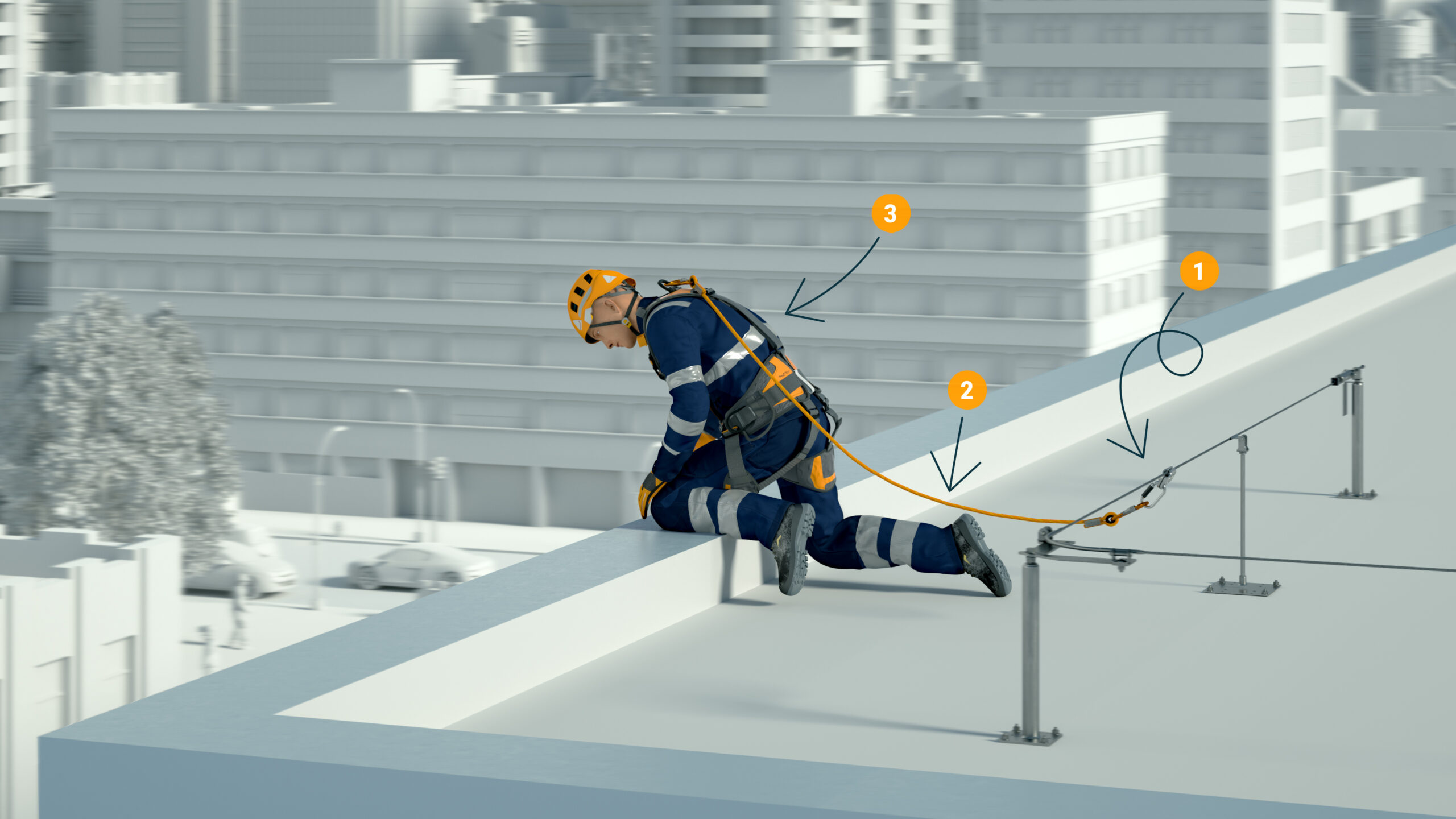
A restraint lanyard connects the harness to a fixed anchor. The length prevents workers from reaching the edge. This system suits rooftops, open platforms, and areas where the edge must be avoided.
Adjustable Restraint Lines
These lines allow controlled movement across a larger area while keeping workers away from the drop zone. They are ideal for inspection and cleaning tasks.
Fall Arrest Equipment
Fall arrest equipment protects workers when fall prevention is not possible. It ensures safe deceleration and controlled stop during a fall.
Full Body Harness
A full body harness supports the worker by distributing fall force across the thighs, shoulders, and torso. Safety officers must ensure all harnesses meet certification standards and fit the worker correctly.
Shock Absorbing Lanyards
These lanyards reduce the force transferred to the worker during a fall. They are used in general industrial maintenance and construction work.
Retractable Fall Arrest Blocks
Retractable blocks, such as the Retro-Guard from Indian Inovatix, offer fast locking and minimal free-fall distance. They are essential in areas with limited clearance and frequent worker movement. Their self-retracting cable improves mobility and reduces trip hazards.
Vertical and Horizontal Lifeline Systems
Lifelines provide continuous fall arrest support during climbing or horizontal movement.
Common applications include ladder access, rooftops, and steel structures.
Work Positioning Systems
Work positioning equipment supports the worker in a steady position so both hands remain free for the task.
Work Positioning Harness
This harness includes side D-rings designed for stable leaning positions. Workers can maintain balance while servicing poles, towers, or vertical steelwork.
Positioning Lanyards
These lanyards help workers maintain a stable working posture. They are used in telecom, power transmission, and industrial maintenance activities.
Rescue and Retrieval Systems
Every height-access plan must include a rescue method. Rescue equipment helps teams recover workers safely from confined spaces, towers, pits, or controlled fall suspension.
Tripod and Winch Systems
Tripods combined with winch systems are used for confined space entry. They help lower workers safely and retrieve them during emergencies.
Confined Space Rescue Kits
These kits include winches, retrieval lines, and body support devices. They support safe recovery during maintenance tasks in tanks, vessels, or underground chambers.
Descent and Retrieval Devices
Used for controlled lowering or lifting of workers in emergency conditions. They support safe evacuation from towers, rooftops, and elevated structures.
Choosing the Right Type of Fall Protection Equipment
Safety officers must match the equipment type to the site conditions. A risk assessment helps determine whether the task requires fall prevention, restraint, arrest, or positioning.
Factors to Consider
-
Height of work
-
Available anchor points
-
Worker mobility needs
-
Presence of edges or obstacles
-
Clearance distance under the work zone
-
Task duration and complexity
-
Rescue plan availability
By evaluating these factors, safety officers can choose the correct system and reduce unexpected risks.
Common Mistakes During Equipment Selection
Many incidents occur due to incorrect equipment choice. Safety officers should avoid the following mistakes.
Using Fall Arrest When Restraint Is Enough
Fall arrest increases risk if the site has limited clearance. Restraint systems often provide safer alternatives.
Ignoring Equipment Compatibility
Harnesses, lanyards, connectors, and anchors must work together as a complete system.
Overlooking Rescue Requirements
Using fall arrest equipment without a rescue plan increases suspension time, which can cause medical concerns.
Relying on Non-Certified Products
Only certified fall protection equipment should be used in industrial and EPC settings.
Training Requirements for Fall Protection Equipment
Workers must learn how to inspect, adjust, and attach equipment correctly. Safety officers should implement routine training for the following tasks.
Fit Testing
Workers must wear harnesses that fit securely without loose straps.
Equipment Inspection
Daily inspection of hooks, labels, straps, stitching, and connectors prevents equipment failure.
Anchor Point Selection
Workers must attach only to certified anchor points that can support required loads.
Rescue Drills
Teams should practice safe recovery procedures to reduce response time during emergencies.
Industrial Applications of Fall Protection Equipment
Fall protection equipment is used across multiple industries that face height-related tasks.
EPC and Infrastructure Projects
Steel erection, bridge work, and roofing activities require fall arrest and lifeline systems.
Power Generation and Transmission
Workers use positioning equipment and retractable blocks during tower climbing and turbine maintenance.
Manufacturing Plants
Maintenance teams rely on restraint and arrest systems for overhead crane access, conveyor inspections, and elevated repairs.
Oil, Gas, and Petrochemical Plants
Retractable blocks and rescue systems support safe access to tanks, vessels, and offshore structures.
Telecom and Tower Work
Workers depend on positioning harnesses and lifelines for vertical climbing and equipment servicing.
Case Example: How an EPC Site Improved Safety with Indian Inovatix
An EPC contractor faced delays during steel erection due to limited fall protection equipment. Workers shared harnesses and used unsuitable lanyards for certain tasks.
Indian Inovatix supplied certified harnesses, positioning lanyards, and retractable blocks for the entire crew. After implementation, the contractor reported smoother workflow, zero fall incidents, and better audit outcomes.
FAQ
1. What are the main types of fall protection?
They include fall prevention, fall restraint, fall arrest, positioning, and rescue systems.
2. Which fall protection equipment is essential for general industrial work?
Harnesses, lanyards, anchors, and lifeline systems are commonly used.
3. When should fall arrest equipment be used?
It is used when a fall cannot be prevented through restraint or design.
4. What is the role of a retractable fall arrest block?
It reduces fall distance and improves mobility.
5. Who can inspect fall protection equipment?
A trained and competent person should inspect equipment regularly.
6. Does fall restraint prevent falling?
Yes, it keeps workers away from edges.
7. Do workers need training before using harnesses?
Yes, training ensures correct use and safe adjustment.
8. What rescue systems are used for confined space entry?
Tripod and winch systems provide controlled descent and recovery.
9. Are all harnesses the same?
No, harness types vary based on fall arrest or positioning needs.
10. Why choose Indian Inovatix?
The company designs certified, durable fall protection systems suited for industrial sites.
Conclusion
Safety officers must understand the different types of fall protection to choose the right equipment and protect workers at height. Each system plays a clear role, from preventing falls to ensuring safe rescue during emergencies. By selecting the correct equipment and providing proper training, teams can reduce risk and maintain compliance across all industrial work zones.
Indian Inovatix, a trusted manufacturer, supplier, and specialist, provides certified fall protection equipment designed for demanding industrial use. These systems help teams work with confidence and stay safe during height-related tasks.
Every worker deserves safety. Equip your team with certified fall protection today. Enquire now for bulk pricing, request a quote, or customize solutions.