How Automated Scheduling Helps Meet Daily Milk Demand
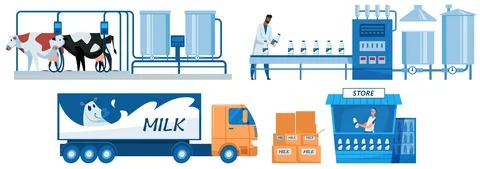
Meeting daily milk demand is a constant balancing act for dairies, distributors and retailers across Australia. Milk is a staple item, but unlike many packaged goods, it has a short shelf life, strict temperature requirements and highly predictable yet sensitive demand patterns. A missed delivery can quickly lead to empty shelves, customer complaints and wasted product. On the other hand, over-delivery can create spoilage, extra handling and unnecessary transport costs.
That is where automated scheduling becomes especially valuable. By using data to plan routes, delivery times and vehicle use more accurately, businesses can respond to daily demand with greater consistency. In practical terms, tools such as milk distribution software help coordinate orders, stock levels and delivery schedules in a way that supports freshness and reliability. When scheduling is automated, teams spend less time manually adjusting runs and more time focusing on service, compliance and customer needs.
For Australian dairy operations, this matters even more because delivery networks often cover long distances, mixed urban and regional areas, and changing weather conditions. Automated scheduling helps businesses adapt to those realities while keeping milk moving efficiently from farm to fridge.
Key points
- Automated scheduling improves delivery accuracy by matching supply with expected daily milk demand.
- It reduces waste by limiting overproduction, excess transport and product spoilage.
- It supports fresher deliveries through better route planning and timing.
- It helps dairies respond quickly to changes in orders, weather and customer behaviour.
- It improves labour use, vehicle efficiency and communication across the supply chain.
Why daily milk demand is difficult to manage
Milk demand looks simple on the surface, but it changes for many reasons. School holidays, public holidays, hot weather, local events and changing household habits can all affect how much milk is needed on a given day. Cafes, supermarkets, corner stores and institutional buyers also place different kinds of orders, which may rise or fall at different times.
In Australia, the challenge can be even more complex because delivery areas can stretch across metro suburbs, coastal communities and remote regions. A milk distributor may need to serve a city centre in the early morning and a regional town later in the day. Without a reliable scheduling system, it becomes harder to line up supply with actual demand.
Manual planning often struggles with these variables. Spreadsheets and phone calls can work for small operations, but as order volumes increase, the chance of error grows. A missed update, a delayed truck or a poorly sequenced route can have a direct impact on freshness and service levels.
How automated scheduling improves demand matching
1. It uses data to forecast needs
Automated scheduling starts with data. Historical orders, seasonal trends, customer patterns and route performance can all be used to estimate what will be needed on future days. This does not remove uncertainty, but it gives planners a much better base to work from.
For example, if a group of cafés usually orders more milk on weekdays and less on weekends, the system can reflect that pattern automatically. If a retailer regularly increases demand before a long weekend, the schedule can be adjusted in advance rather than at the last minute.
2. It reduces human error
Manual scheduling depends on people remembering every change and applying it correctly. That is difficult when dozens or even hundreds of customers are involved. Automated systems help prevent duplicated deliveries, missed stops and incorrect loading by keeping the schedule centralised and up to date.
This is particularly useful when orders change after cut-off times. Rather than relying on scattered notes or messages, the system can update the plan and make sure the right product goes to the right place.
3. It improves route efficiency
Milk is time-sensitive, so the order of deliveries matters. Automated scheduling can group nearby stops together, reduce unnecessary travel and make better use of available vehicle space. That means drivers spend less time backtracking and more time completing runs efficiently.
In practice, this can lead to fresher product on shelves. The quicker milk reaches the customer, the more likely it is to remain within the ideal cold chain and maintain quality.
Benefits for dairies, distributors and retailers
Better freshness and product quality
Freshness is central to milk distribution. Automated scheduling helps minimise delays between dispatch and delivery, which supports product quality. When routes are planned properly, milk spends less time in transit and less time waiting on docks or in loading areas.
Lower waste and fewer returns
Over-delivery can be as damaging as under-delivery. If too much milk is sent to a site that cannot sell it quickly, the product may expire before it is used. Automated scheduling helps align quantity with likely demand, reducing waste and lowering the risk of returns or write-offs.
More reliable service
Customers notice consistency. Retailers want shelves stocked on time. Cafés need milk for morning trade. Schools and hospitals need dependable supply. Automated scheduling supports that reliability by ensuring deliveries follow a predictable and well-coordinated plan.
Smarter use of labour and vehicles
Drivers, loaders and dispatch staff all benefit from clearer schedules. When routes are balanced properly, businesses can avoid underused vehicles and reduce overtime caused by poor planning. This can improve morale and make daily operations more manageable.
Practical features that support automated milk scheduling
Not every scheduling system is the same, but the most useful ones often include several practical features that suit dairy operations:
- Order integration: pulls in customer orders automatically from sales systems or portals.
- Route planning: sequences stops to save time and reduce fuel use.
- Capacity checks: matches demand with vehicle space and load limits.
- Delivery updates: keeps teams informed when changes occur.
- Reporting tools: shows which routes, days or customers create the most demand.
These features help businesses move from reactive planning to proactive planning. Instead of fixing problems after they occur, schedulers can spot issues earlier and make better decisions before product leaves the depot.
Why this matters in the Australian context
Australia’s dairy supply chain has its own pressures. Distances can be long, fuel costs can fluctuate, and weather events can disrupt transport. Heat can affect cold chain performance, while storms or flooding may force route changes at short notice. Automated scheduling helps businesses adapt faster because the system can be updated more quickly than a paper-based or spreadsheet-based process.
There is also a strong expectation for dependable local supply. Many Australian communities rely on milk being available early in the morning, especially in suburban and regional areas where daily shopping habits are built around routine. A well-planned schedule helps meet that expectation while keeping distribution practical and cost-conscious.
How to improve scheduling outcomes
Businesses looking to improve milk distribution should start by reviewing the quality of their demand data. Accurate customer records, updated order histories and clear delivery windows all make automated scheduling more effective. It also helps to review routes regularly, since customer demand can change over time.
Staff training matters as well. Even the best system works better when dispatchers, warehouse staff and drivers understand how updates are made and why timing is important. Clear communication between sales teams, operations staff and customers can prevent confusion and support smoother deliveries.
Finally, businesses should measure results. Useful indicators include on-time delivery rates, spoilage levels, vehicle utilisation and customer complaints. These figures show whether scheduling changes are genuinely improving daily milk supply.
Conclusion
Automated scheduling gives milk distributors a practical way to meet daily demand with greater accuracy, efficiency and reliability. It helps reduce waste, improve freshness, support staff and keep delivery networks responsive to changing conditions. For Australian dairy operations, where distances, weather and demand patterns can shift quickly, this kind of planning is not just convenient. It is a valuable part of keeping milk moving to the people and businesses that rely on it every day.
Frequently asked questions
What is automated scheduling in milk distribution?
Automated scheduling is the use of software and data to plan milk deliveries, routes and timings with less manual effort. It helps businesses match supply more closely to demand.
How does it reduce waste?
It reduces waste by helping distributors send the right amount of milk to the right place at the right time. This lowers the chance of overstocking, spoilage and unnecessary returns.
Can it help with last-minute order changes?
Yes. Automated systems can update schedules more quickly than manual methods, which makes it easier to adjust for late orders, cancellations or route disruptions.
Is it useful for smaller dairy businesses?
Yes. Smaller businesses can benefit from better organisation, fewer delivery errors and more efficient use of vehicles and staff. The value grows as order volumes increase.
Does automated scheduling replace human decision-making?
No. It supports decision-making by providing better information and clearer schedules. People still oversee the process and handle exceptions, but the system reduces routine manual work.