The Future of SaaS Application Development: Key Trends
Introduction
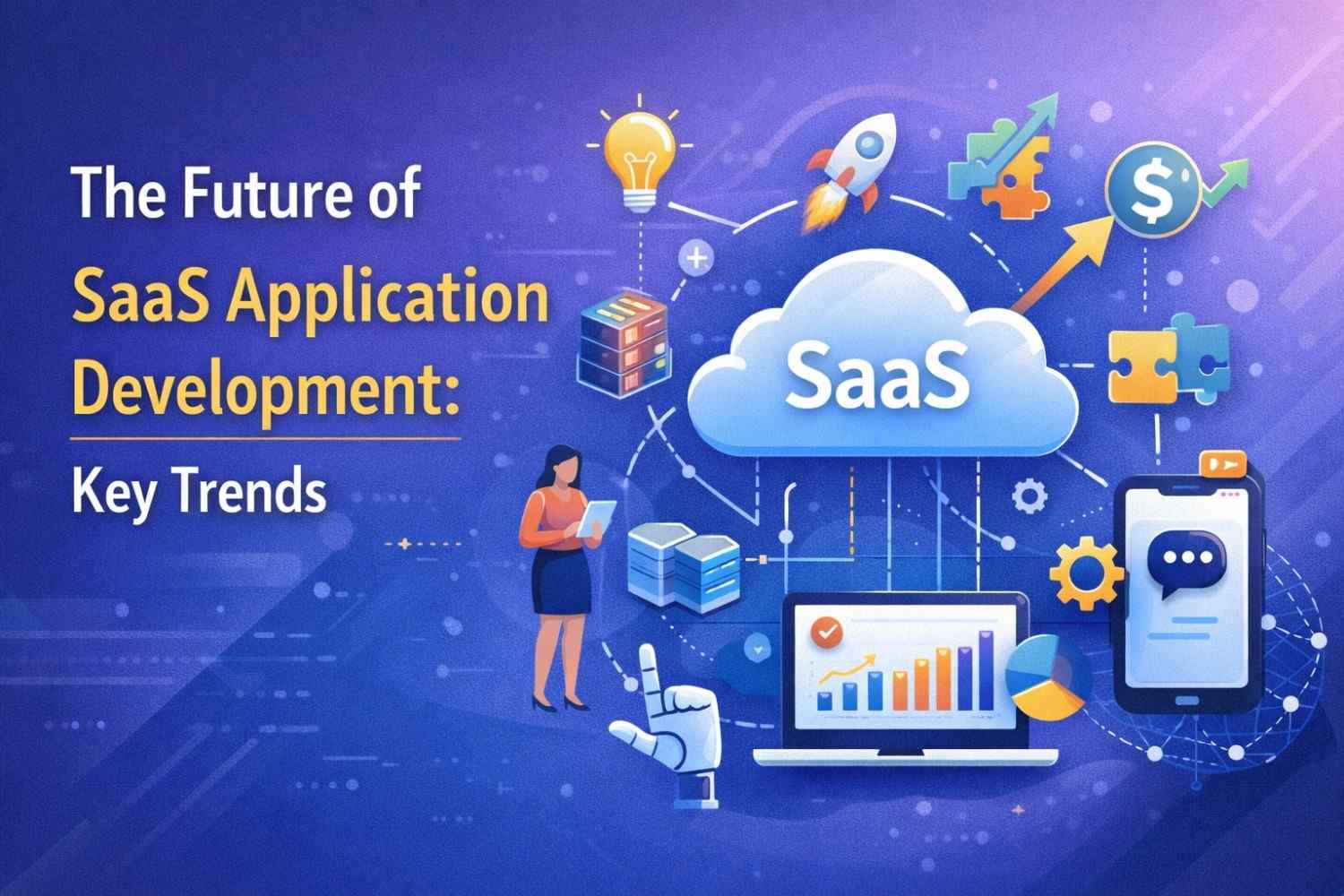
We’ve watched SaaS app development evolve from simple cloud tools into intelligent, business critical platforms and sometimes we’ve learned the hard way what works and what doesn’t. What once felt innovative now feels expected, and user patience for slow, clunky software has all but disappeared. We’re entering a phase where SaaS products must be faster, smarter, and far more intentional by design. And that’s where things get interesting. The future of SaaS isn’t just about adding features it’s about building adaptable systems that anticipate change, scale effortlessly, and deliver real value over time.
The Evolution of SaaS So Far (A Quick Backdrop)
Before we talk about the future, it helps to acknowledge how far SaaS has already come. We moved from clunky, on-premise systems to sleek, cloud-based platforms that update themselves while we sleep. Early SaaS focused on access and affordability; modern SaaS focuses on experience and intelligence. Somewhere along the way, users stopped tolerating “good enough.” And honestly, that’s a good thing. This evolution set the stage for today’s trends—where speed, scalability, and user delight are no longer differentiators, but expectations. And that’s where things start to get interesting.
Trend #1: AI-Native SaaS Is Becoming the Default
Artificial intelligence is no longer a flashy add-on—it’s becoming the backbone of modern SaaS products. We’re seeing platforms designed with AI at their core, enabling smarter automation, real-time personalization, and predictive decision-making. The most forward-thinking SaaS App Development Company isn’t asking if AI should be integrated, but how deeply. That shift matters. Users now expect software to anticipate needs, reduce manual work, and surface insights before they even know what to ask. Of course, there’s still healthy skepticism (and a few bad chatbot memories), but AI-native SaaS is clearly here to stay.
Trend #2: Vertical SaaS and Industry-Specific Solutions
Horizontal SaaS tried to be everything for everyone—and learned the hard way that specialization wins. Vertical SaaS focuses on solving very specific problems for very specific industries, from healthcare to logistics to fintech. The appeal is simple: deeper functionality, better compliance, and workflows that actually make sense. It’s like the difference between a one-size-fits-all jacket and one that’s tailored. Businesses don’t want to adapt their processes to software anymore; they want software that adapts to them. Naturally, this shift is reshaping how SaaS products are conceived, built, and marketed.
Trend #3: API-First and Composable Architectures
If monolithic SaaS platforms were castles, composable architectures are Lego sets—modular, flexible, and surprisingly powerful. API-first development allows teams to build systems that integrate seamlessly with other tools, scale faster, and evolve without major rebuilds. This approach is especially valuable for organizations working with a SaaS App Development Company to future-proof their products. Instead of rebuilding everything when requirements change (and they always do), teams can swap, upgrade, or extend components. It’s not always glamorous work, but it’s the kind of behind-the-scenes engineering that makes innovation sustainable.
Trend #4: Security, Privacy, and Trust as Core Features
Once upon a time, security was a checklist item. Today, it’s a selling point. With rising data regulations and increasingly savvy users, SaaS platforms are being judged on how well they protect information—not just how many features they offer. Zero-trust models, stronger encryption, and transparent data policies are becoming standard. And frankly, they should be. Trust is hard to earn and easy to lose (ask any company that’s had a breach headline). In the future of SaaS, security won’t live in the background—it will be part of the product story itself.
Trend #5: Low-Code and No-Code Meet Pro-Code
Low-code and no-code platforms promised to “replace developers,” which—spoiler alert—didn’t quite happen. Instead, they’ve become powerful companions to traditional development. These tools allow faster prototyping, empower non-technical teams, and free developers to focus on complex logic and architecture. The future isn’t low-code versus pro-code; it’s collaboration between the two. When used thoughtfully, this combination speeds up innovation without sacrificing quality. And yes, developers still matter—arguably more than ever—just with better tools and fewer repetitive tasks.
Trend #6: UX, Accessibility, and Human-Centered SaaS
We’ve all used software that technically works but feels like it was designed by someone who’s never met a human. Thankfully, that’s changing. Modern SaaS places user experience, accessibility, and inclusivity front and center. Clean interfaces, intuitive flows, and accessible design aren’t “nice to have” anymore—they’re table stakes. A strong SaaS App Development Company understands that great UX reduces churn, boosts adoption, and builds loyalty. The future belongs to SaaS products that respect users’ time, attention, and diverse needs. Because software should feel helpful, not exhausting.
How These Trends Are Changing the Role of SaaS Builders
As SaaS evolves, so does the role of the people building it. Developers are no longer just implementers; they’re collaborators, problem-solvers, and product thinkers. Teams work closer to business goals, customer feedback, and long-term strategy. Cross-functional collaboration isn’t optional—it’s essential. This shift can feel uncomfortable at first (change usually does), but it leads to better products. When technical decisions align with user needs and business outcomes, SaaS stops being just software and starts becoming a real growth engine.
What Businesses Should Prepare for Next
For businesses, the future of SaaS application development demands proactive thinking. Choosing the right architecture, prioritizing security early, and planning for scalability aren’t things to postpone. Companies should invest in platforms that can evolve, integrate, and adapt as markets shift. It’s also critical to choose partners who understand both technology and strategy. SaaS success isn’t about launching fast—it’s about staying relevant. And while no one can predict everything, preparing for flexibility is the safest bet in an industry that changes as fast as this one does.
Conclusion
The future of SaaS isn’t about chasing every new trend—it’s about building software that lasts. AI, composable systems, security, and thoughtful design are shaping a smarter, more human-centered SaaS landscape. And while the pace of change can feel overwhelming (trust me, I’ve tried to keep up), it’s also full of opportunity. The SaaS products that succeed next won’t just work well—they’ll think ahead, adapt quickly, and genuinely serve the people using them. And that feels like a future worth building toward.
FAQs
What is the future of SaaS application development?
The future of SaaS application development centers on AI-native platforms, composable architectures, stronger security, and human-centered design. SaaS products will become more intelligent, industry-specific, and adaptable to changing business needs.
How does AI impact SaaS platforms?
AI enhances SaaS by enabling automation, personalization, predictive analytics, and smarter decision-making. Instead of reacting to user input, AI-powered SaaS platforms proactively surface insights and optimize workflows.
Why is vertical SaaS growing so quickly?
Vertical SaaS addresses specific industry challenges, offering deeper functionality, better compliance, and tailored workflows. Businesses prefer solutions built for their exact needs rather than generic platforms.
How should companies choose a SaaS development partner?
Companies should look for technical expertise, industry understanding, strong security practices, and a collaborative approach. Long-term scalability and strategic alignment matter more than speed alone.