What Makes a Metal Slitting Saw Suitable for Industrial Cutting?
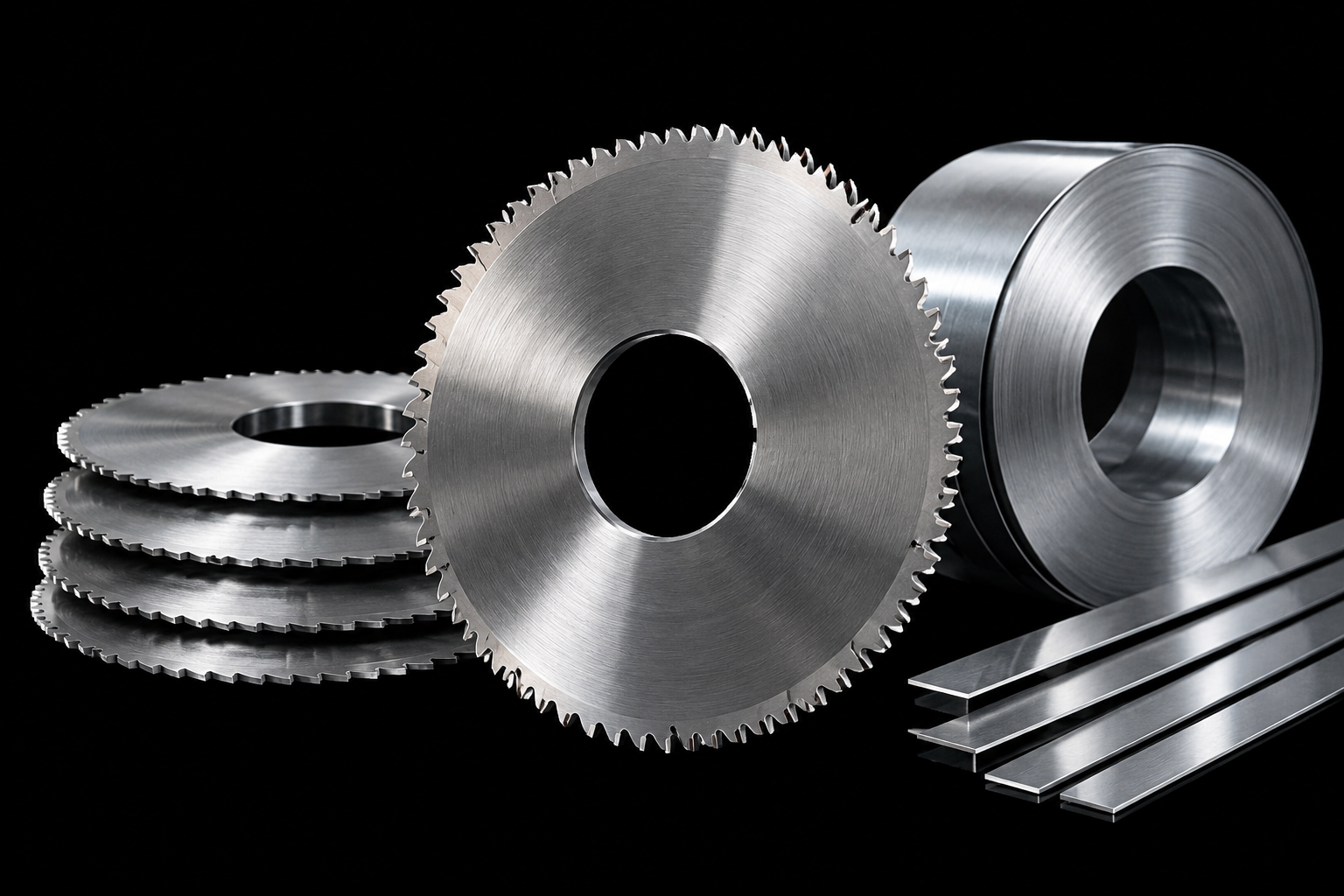
A metal slitting saw handles some of the most demanding cutting jobs on a production floor, from tube cut-off to sheet slotting and deep grooving in hardened material. Not every disc that looks like a slitting saw performs the same way under load. Material grade, hardness, dimensional accuracy, and tooth geometry decide whether a metal slitting saw holds its edge across a full production run or wears out within the first few hundred cuts.
Indian manufacturing plants running milling machines, screw machines, and slitting lines process a wide range of materials, including mild steel, stainless steel, aluminium, and hardened alloys. Each material places different demands on the saw, and a plant that understands which properties matter avoids costly downtime from chipped teeth or inaccurate cuts. Manufacturers such as Maxwell Slitter Industries produce slitting saws across several tool steel and carbide grades, since no single specification suits every cutting job across these industries.
Material Grade Decides Wear Resistance
The steel or carbide grade behind a slitting saw sets the baseline for how long it holds a sharp edge. HSS M2 handles general-purpose cutting on mild steel and aluminium. HSS-Co M35 suits stainless steel and harder alloys, since its cobalt content raises resistance to heat generated during the cut. Powder-metal grades work well on abrasive materials and long production runs, since their fine, uniform carbide structure resists chipping better than standard HSS. Solid carbide handles hardened steel and high-speed operations, where HSS would dull quickly.
A plant that matches the grade to the material avoids two common outcomes: a saw that wears too fast on abrasive stock, or a saw that costs more than the job requires when a lower grade would perform just as well.
Hardness and Uniformity Across the Disc
A quality metal slitting saw typically falls in the 63 to 66 HRC range after multi-stage hardening and tempering. This range gives the saw enough hardness to resist wear without becoming brittle under load. Uniform hardness across the full disc matters as much as the peak figure, since a soft spot on one section of the saw wears faster than the rest and produces uneven cuts over time.
In-house vacuum hardening, rather than outsourced batch treatment, keeps hardness consistent from the centre of the disc to the outer edge. This consistency reduces the risk of premature chipping in sections that received less uniform heat treatment.
Dimensional Accuracy and Runout
Slot-width accuracy determines whether a finished part meets its drawing dimension. A slitting saw built to close tolerances, often within a few thousandths of a millimetre, cuts a slot that stays within specification across the full length of the run. Flatness and concentricity matter equally: a saw that runs out of true, even by a small margin, produces a dished or wandering slot instead of a straight one.
Plants that check runout figures, typically within 0.02 mm total indicator reading, before installing a new saw catch problems before they show up as scrapped parts on the production floor.
Tooth Form Matched to the Application
Tooth geometry affects chip clearance, cut depth, and surface finish. Fine-tooth saws suit thin, shallow slots where finish quality matters. Staggered-tooth saws suit deeper or wider cuts, since the alternating bevel improves chip flow and reduces heat build-up. Coarse-tooth saws suit soft or gummy materials that clog fine teeth quickly.
A saw with the wrong tooth form for the job rubs against the material instead of cutting cleanly, which raises heat and shortens tool life even when the material grade and hardness are correct.
Documentation and Traceability
A metal slitting saw supplied with a mill test certificate and a dimensional inspection report gives a plant a documented basis for quality checks rather than a visual inspection alone. These records typically confirm the raw material heat number, hardness test results, and post-grinding measurements. Plants sourcing saws for export-linked production also request compliance declarations where the end application calls for them.
Bringing These Factors Together
A metal slitting saw performs reliably in industrial cutting when its material grade matches the application, its hardness stays within range and remains uniform across the disc, its dimensional accuracy and runout meet the drawing requirement, and its tooth form suits the material and depth of cut. Reviewing these factors before an order goes ahead reduces the risk of chipped teeth, inaccurate slots, and unplanned downtime on the production line.
Manufacturers such as Maxwell Slitter Industries document hardness, dimensional, and material data as part of the production process, giving plants the records needed to verify these factors without extra correspondence. A plant that builds these checks into its purchasing process protects both cutting accuracy and the production schedule that depends on it.