Native vs. Non-Native Plants: Planting Choices Using EcoPlot
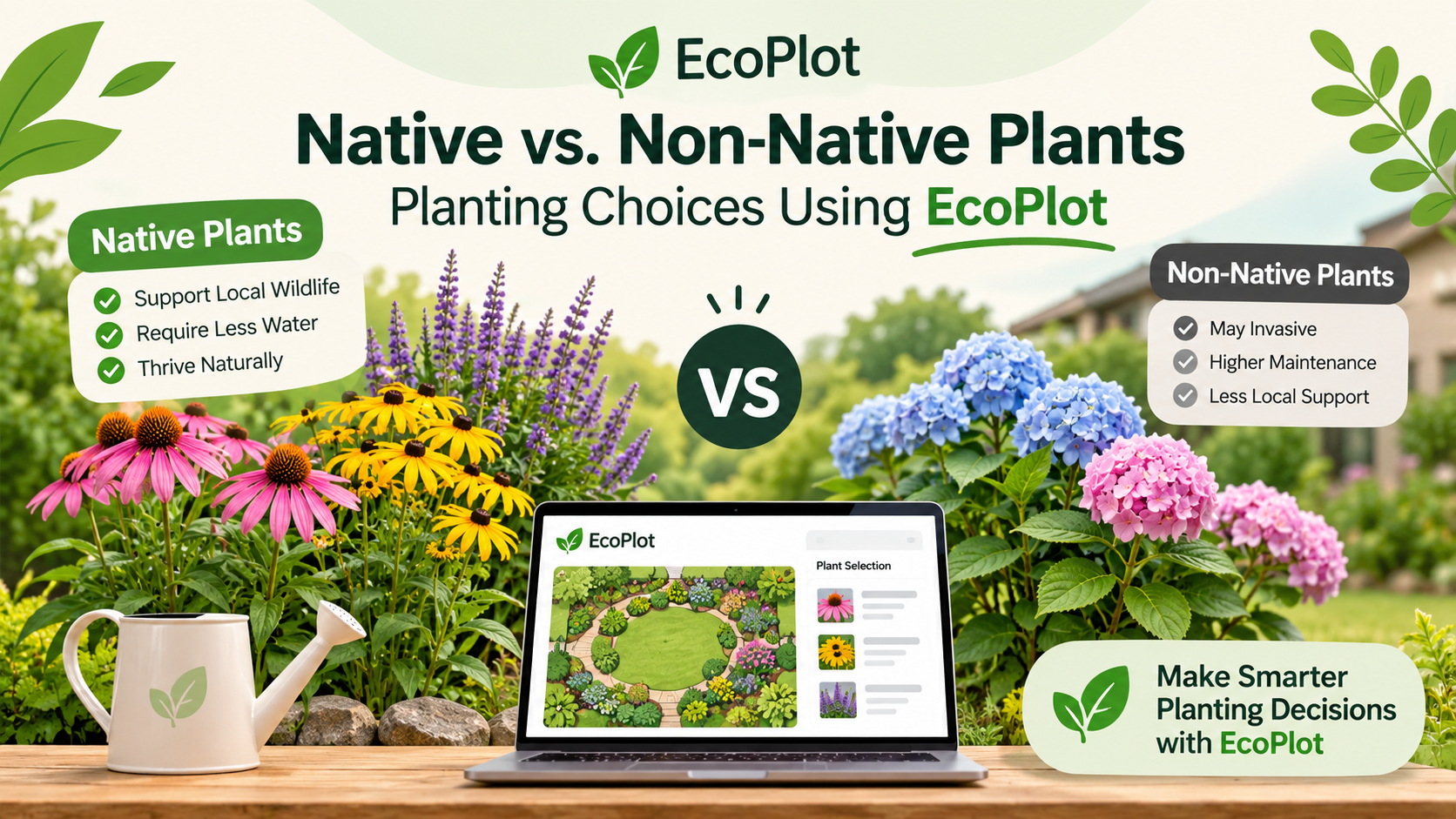
Choosing what to plant is one of the most important decisions any gardener, farmer, or landowner makes. The plants you choose shape the look of your land, how much care it needs, and how much wildlife it can support. One of the most common questions in that decision is whether to choose native or non-native species. The answer is not as simple as saying natives are always good and non-natives are always bad. Both have a place, and the right choice depends on your goals, your site, and the species involved. This article explains the differences, the trade-offs, and how EcoPlot, an app from MillPont, can help you make informed planting choices.
Defining Native, Non-Native, and Invasive
A native plant is one that occurs naturally in a particular region and has developed there alongside local wildlife, soils, and climate over a long period. What counts as native depends on location. A plant native to one part of a country may not be native to another.
A non-native plant, sometimes called an introduced or exotic plant, has been brought to a region by people, either deliberately or by accident. Many familiar garden flowers, vegetables, and crops are non-native.
An invasive plant is a non-native species that spreads aggressively beyond where it was planted and causes harm to the environment or economy. Only a small share of non-native plants become invasive, but those that do can be very damaging.
What Native Plants Offer
Native plants have several advantages. Because they are adapted to local conditions, many need less watering and less fertilizer once established. They are often more resistant to local pests and diseases, which can mean less time spent on maintenance.
The biggest benefit is ecological. Native insects have evolved alongside native plants, and many depend on specific plants for food. Some caterpillars, for example, can feed on only a small group of native plant species. Those insects in turn feed birds, bats, and other animals. Planting natives helps rebuild these food webs, especially in landscapes where much of the original vegetation has been lost.
For farmers who want to track pollinators and native species on farmland, native wildflower strips and hedgerows are one of the most effective ways to increase both pollinator numbers and variety.
When Non-Native Plants Make Sense
Non-native plants are not automatically a problem. Most food crops are non-native in many regions, and agriculture depends on them. Many ornamental plants are well-behaved, provide nectar for pollinators, and add color and interest to gardens.
Non-native plants can make sense when they fill a specific need: a crop for food or income, a hardy plant for a difficult urban site, or an ornamental that is known not to spread. The key is choosing non-natives carefully, avoiding known invasive species, and watching for any signs of spread into surrounding areas.
Questions to Ask Before You Plant
Before choosing plants for a new bed, field margin, or landscape project, a few questions help guide the decision:
- What is the goal? Food production, wildlife habitat, erosion control, beauty, privacy, or a mix?
- What are the site conditions? Sun, shade, soil type, drainage, and exposure all narrow down suitable plants.
- Is the plant native to this specific region? Check local sources, not just general lists.
- Could it become invasive here? Some plants are harmless in one region and invasive in another.
- What wildlife will it support? Consider flowers for pollinators, seeds and berries for birds, and leaves for insect larvae.
- How much care will it need? Water, feeding, pruning, and pest control all add up over time.
Making Room for Natives on Working Farms
Farmers do not need to replace productive fields with native plants to see the benefits. Many of the most valuable native plantings happen on land that produces little anyway: field corners that are awkward to farm, steep banks, strips along watercourses, and margins beside hedgerows. Planting these areas with native wildflowers, grasses, and shrubs can support pollinators and natural pest predators that benefit the crops nearby.
Native hedgerows and shelterbelts offer further advantages, giving livestock shelter from wind and heat, reducing soil erosion, and providing nesting sites for birds. On grazing land, adding a mix of native species to pastures can improve resilience in dry spells.
The key is to plan these areas as part of the farm rather than as an afterthought, choosing species suited to the soil and site, and recording how they perform over time.
Buying Plants and Seed Responsibly
Where plants come from matters as much as which plants are chosen. Seed and plants grown from local or regional sources are often better adapted to local conditions than stock of the same species grown far away. Reputable native plant nurseries and seed suppliers can usually say where their material originated.
It is also worth checking that plant purchases do not bring unwanted passengers. Potted plants can carry weed seeds, pests, or even fragments of invasive species in their soil. Inspecting new plants before planting, and avoiding wild collection of seed without permission, helps protect both your land and the wider landscape.
How EcoPlot Supports Planting Decisions
EcoPlot by MillPont brings several useful tools together for planting decisions. The app provides information on native and invasive species, which helps users check whether a plant they are considering is native, non-native, or a known invasive concern.
Users can map their land on satellite imagery and select specific areas, then record the plants and wildlife already present. Species identification helps them find out what is growing on their land now, which is often the best starting point for deciding what to add or remove. Soil test reports can be uploaded, so planting choices can take soil conditions into account.
The app’s AI-powered ecological recommendations and landscape design features can suggest suitable plants and layouts based on the information recorded. For farmers, this kind of biodiversity app for farmers helps connect planting choices with wider goals like supporting pollinators or creating wildlife corridors. For conservation teams, a habitat mapping tool for land managers shows where native habitat is strongest and where replanting would help most.
Measuring the Results After Planting
Planting is only the beginning. The real test is how the new plants perform and what they bring to the land. Recording observations after planting, such as how well plants establish, which insects visit them, and which birds appear, shows whether the choices are working.
EcoPlot’s field journals and plant and wildlife observations make this follow-up easier. Notes and records tied to specific areas build a history of each planting over time. After a few seasons, landowners can compare areas planted with natives against other areas and see the difference in wildlife activity for themselves. Those comparisons are often the most convincing argument for expanding native plantings in the years ahead.
Conclusion
Native and non-native plants both have roles to play, and informed planting choices depend on goals, site conditions, and a clear understanding of which species are native, which are safe non-natives, and which are invasive. Native plants generally offer stronger support for local wildlife and often need less care once established, while carefully chosen non-natives can serve specific purposes. By combining species identification, native and invasive species information, mapping, soil data, and planting recommendations, EcoPlot helps gardeners, farmers, and landowners choose plants with confidence and track the results over time.