Reception Dresses: The Case for a Second Look on Your Wedding Day
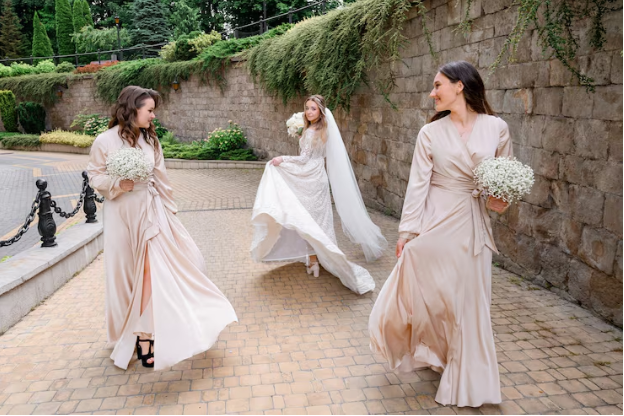
The tradition of the bridal reception change has moved from the exclusive preserve of fashion-forward celebrities to a mainstream wedding planning choice. More brides are choosing to wear two looks on their wedding day — a formal gown for the ceremony and a second dress for the reception that allows for comfort, dancing, and a different visual chapter of the celebration. Reception dresses have become their own distinct category in bridal fashion, with design intent built around what a bride actually needs during a reception: ease of movement, wearability over hours, and a look that photographs beautifully from the first dance to the final song.
Why Brides Are Choosing a Reception Change
The reasons are practical as much as aesthetic. A heavily structured ballgown or cathedral train is spectacular for the ceremony but can become limiting during a reception. Sitting through dinner in a fully boned, floor-length gown for four hours is not the same experience as wearing it for a 30-minute ceremony. The reception change solves this without asking the bride to sacrifice the bridal gown moment she has planned for.
The second look also creates a distinct visual transition in the day — the reception becomes its own event with its own energy, not simply a continuation of the ceremony. Photographs and video footage from the reception have a different character when the bride appears in a new look, giving the wedding documentation a natural arc and variety that many couples appreciate in retrospect.
What Makes a Great Reception Dress
The ideal reception dress is designed for movement and sustained wear. It should be shorter than the ceremony gown in most cases — a midi or mini length removes the floor management challenges of a full-length train during dancing. The silhouette should be relaxed enough to allow for full range of motion without pulling, riding up, or requiring constant adjustment.
Construction matters for sustained comfort over three to five hours of dancing and activity. A reception dress with appropriate support built in — whether through a structured bodice, built-in shapewear, or a quality lining — performs better over the evening than a dress that requires external undergarments that shift or become uncomfortable over time.
Style Directions in Reception Dresses
The most popular direction for reception dresses is a sleek, minimalist silhouette that contrasts with a more elaborate ceremony gown. A bride who walks the aisle in a full ballgown creates a striking visual transition when she reappears in a tailored column or a slip-style mini. The contrast is part of what makes the moment work.
Embellished minis — with sequin, beading, or feather trim — are a strong choice for receptions where the emphasis is on the party. They are unambiguously fun, photograph well under reception lighting, and allow for unrestricted movement on the dance floor. Structured midi dresses in ivory or champagne are a more sophisticated direction for brides who want elevated formality maintained through the reception.
Coordinating the Two Looks
The ceremony gown and the reception dress do not need to match, but they should share a visual relationship. A common approach is to maintain the same color story — both in white, ivory, or champagne — while shifting the silhouette and embellishment dramatically. Another approach is to introduce a complementary color for the reception dress: a blush or pale gold that relates to the ceremony palette without replicating it.
Accessories should be reconsidered for the reception look rather than simply carried over. The veil is removed for the reception in most cases. Jewelry can be adjusted — simpler for a high-embellishment reception dress, more substantial for a minimalist slip silhouette. Shoes that were chosen for ceremony aesthetics over comfort can be swapped for something more dance-appropriate.
Planning the Change Logistics
The reception change requires logistics planning that is easy to overlook during the excitement of dress selection. A designated changing space at the venue needs to be arranged and communicated to the venue coordinator and the wedding party. The timeline should account for the change without cutting into key reception moments — the first dance, the cake cutting, and the bridal party dances.
A trusted bridesmaid or maid of honor should be briefed on their role in facilitating the change. This includes knowing where both dresses are stored at the venue, managing any bustle or fastening on the ceremony gown that needs to be addressed before storage, and helping the bride into the reception dress efficiently so she reappears on schedule.
Conclusion
Reception dresses represent one of the most enjoyable planning decisions in contemporary bridal fashion. The freedom to choose a second look — different in silhouette, energy, and practical design from the ceremony gown — gives the bride two distinct moments across the wedding day and makes the reception genuinely more comfortable without sacrificing style. The investment is modest relative to the ceremonial gown, and the impact across the photographs and the experience of the evening is significant.