How S.G. Tasz Blends Humor and Horror in Dark Fantasy Fiction
Dark fantasy, by nature, tends to lean into dread — ancient evils, moral ambiguity, and worlds where hope is scarce. But S.G. Tasz has built a career on proving that darkness and comedy aren’t opposites; they’re two sides of the same storytelling coin. Across multiple series, this indie author has mastered a rare balancing act: making readers laugh out loud one page and unsettled the next, without either tone undercutting the other.
This ability to blend humor and horror isn’t a gimmick — it’s the defining signature of S.G. Tasz’s work, and it’s a big part of why readers keep coming back.
Comedy as a Coping Mechanism for Characters
One of the clearest ways S.G. Tasz merges humor and horror is through character voice. Rather than treating dark situations with constant solemnity, the author’s protagonists often use sarcasm, self-deprecation, and dry wit as survival tools — a very human (or monstrous) response to genuinely terrifying circumstances.
Take Adina Venture, the narrator of the Death by Miss Adventure series. She’s a “Deathwalker” who dispatches dangerous people through elaborately staged accidents, all while quipping about her estranged family, her crow-conspirator sidekick, and her complicated feelings toward the Chief Inquisitor she’s magically bound to. The horror is real — murder, magical interrogation, memory extraction — but Adina’s voice keeps the reader engaged rather than overwhelmed. Her humor doesn’t erase the danger; it makes the danger bearable, both for her and for the reader.
This technique mirrors a very real psychological truth: people facing horrifying situations often reach for humor as a defense mechanism. By giving characters that same instinct, S.G. Tasz makes even supernatural horror feel emotionally grounded and believable.
Satire as a Horror Delivery System
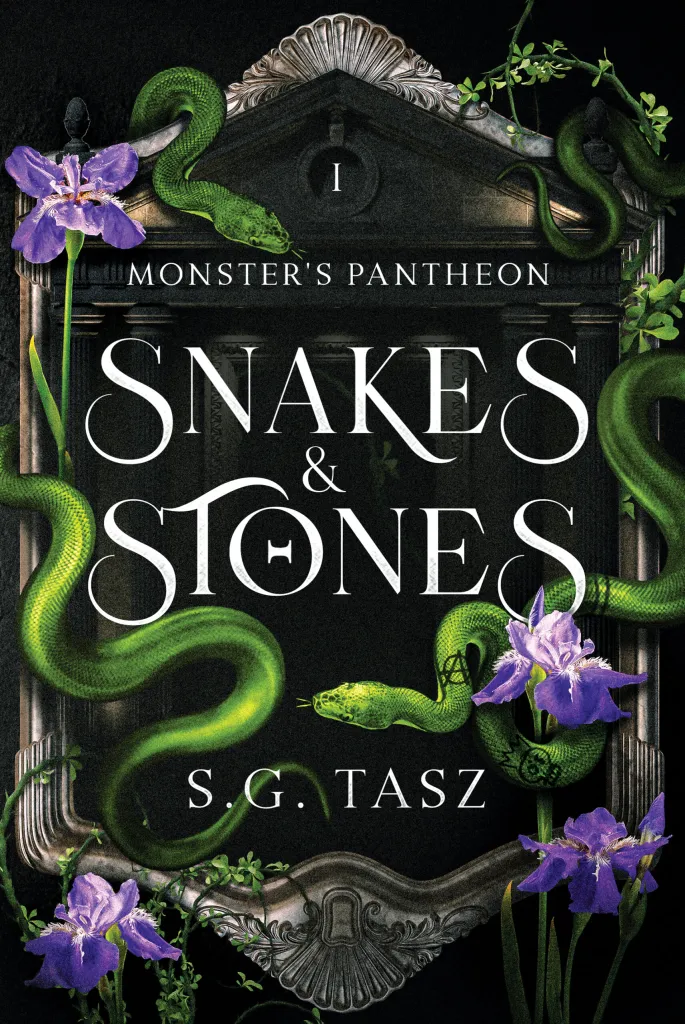
In Snakes & Stones, the first book in The Monster’s Pantheon Trilogy, S.G. Tasz takes the humor-horror blend in a different direction: satire. The premise itself is darkly funny — the Greek gods haven’t disappeared, they’ve simply rebranded. Mount Olympus is now a boardroom. Worship has become market share. Hermes runs social media influence campaigns. Athena controls civic infrastructure. It’s absurd, and it’s meant to be.
But underneath the satire is something genuinely unsettling: a commentary on unchecked power, surveillance, and the commodification of belief. The comedy of “corporate gods” makes the horror of near-total divine control easier to swallow at first — and then harder to shake once the implications sink in. This is satire functioning exactly as it should: humor as the hook, horror as the payload.
Medusa herself embodies this duality. She’s framed with wit — a fugitive monster hiding from both mortals and gods, sarcastic about her circumstances — but her backstory is tragic by design: ruined by one god, cursed by another, punished for being made into the monster everyone fears. The humor doesn’t soften that tragedy; it makes readers care about the character before the horror of her history fully lands.
Setting the Tone Through Atmosphere
S.G. Tasz’s Dead Mall series shows yet another approach: using a mundane, almost comedic setting — a nearly abandoned shopping mall — as the backdrop for genuine horror. There’s inherent dark humor in the idea of teenagers trapped overnight in a dying retail space, surrounded by empty storefronts and free nachos from a best friend nicknamed “resident edge lord.” It’s a relatable, slightly funny slice-of-life setup.
Then the horror creeps in. The “slow death of retail” becomes literal, and what starts as an ordinary night shift spirals into something far more dangerous. By anchoring the story in something familiar and even nostalgic — the decline of American malls — S.G. Tasz lulls readers into comfort before pulling the rug out. That contrast, comedy first and horror second, is what makes the scares land harder.
Why This Balance Works
Blending humor and horror is notoriously difficult to execute well. Lean too far into comedy, and the stakes feel hollow. Lean too far into horror, and the story risks becoming relentlessly bleak. S.G. Tasz manages to walk this line by rooting the humor in character and voice rather than treating it as comic relief bolted onto a serious plot.
This matters because tone consistency is what separates memorable dark fantasy from forgettable genre fiction. Readers of authors known for blending wit with darker themes recognize this same technique — using humor not to distract from darkness, but to illuminate it. S.G. Tasz fits comfortably into that tradition, offering stories that are darkly funny without ever losing their emotional weight.
It also broadens the author’s appeal. Readers who might shy away from pure horror are drawn in by the humor, while readers seeking real stakes and genuine dread aren’t disappointed once they’re in. It’s a strategy that makes S.G. Tasz’s books accessible without sacrificing depth — a difficult needle to thread, but one this author consistently manages across very different series and settings.
A Signature Worth Following
Whether it’s a snarky assassin bound to a magical Inquisitor, a satirical pantheon of corporate gods, or teenagers trapped in a haunted mall, S.G. Tasz’s stories all share this same DNA: sharp humor used as a lens for horror, not an escape from it. That consistency across genres — urban fantasy, mythological satire, paranormal horror — is a rare feat, and it’s what makes S.G. Tasz’s growing catalog worth following closely.
For readers who want fantasy that makes them laugh before it makes them flinch, S.G. Tasz’s blend of dark comedy and genuine horror offers exactly that experience — book after book.