What Makes Large Rigid Boxes Different from Standard Packaging?
I picked up a rigid box for the first time without really thinking about it, honestly. It was holding a bottle of something, I don’t even remember what anymore, but I remember the weight of it in my hands. It didn’t bend when I gripped the sides. It didn’t feel like it was one drop away from folding in on itself. That’s the part that stuck with me. Most boxes you handle every day give a little, and this one just didn’t.
That’s really the whole difference in a nutshell, but it’s worth actually unpacking why that happens, because rigid boxes aren’t just “thicker cardboard.” The construction, the purpose, even the way they’re meant to be used all diverge from standard packaging pretty early on.
Where the Difference Actually Starts
Standard packaging, the folding cartons and corrugated mailers most products ship in, is built around a single sheet of material that gets scored, folded, and glued into shape. It’s efficient, it’s cheap to produce, and it collapses flat for shipping and storage, which is a big part of why it dominates so much of the market.
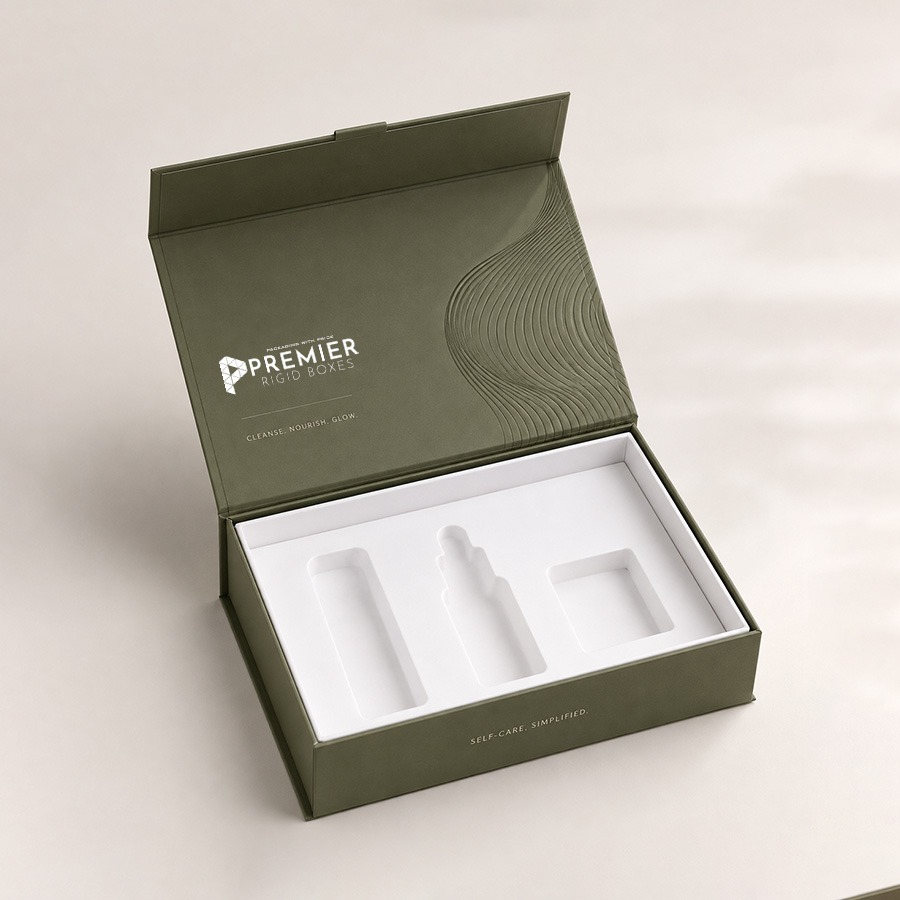
Rigid boxes work differently from the ground up. They’re built around a dense paperboard core, often several times thicker than what you’d find in a folding carton, and that core gets wrapped in a separate decorative paper or fabric layer. The two pieces are assembled, not folded from one continuous sheet. That’s why a rigid box holds its shape on its own, even empty, sitting on a shelf with nothing inside it. Try that with a standard folding carton and it just sags.
It’s a Weight Thing, Not Just a Feel Thing
People notice the heft of a rigid box before they notice anything else about it, and that’s not an accident. The thicker board adds real weight, and weight reads as quality almost instinctively, even before someone’s consciously thinking about it. That’s part of why rigid boxes shows up so often in categories where the unboxing moment matters as much as the product itself – electronics, jewelry, premium cosmetics, that sort of thing.
But it’s not purely psychological. That extra density genuinely means better protection. A large rigid box holds its structure under pressure in a way thinner material just can’t, which matters a lot once you’re dealing with bigger, heavier, or more delicate items that standard packaging tends to struggle with at scale.
Size Changes the Math, Too
Here’s where large rigid boxes specifically start to pull away from smaller rigid packaging, not just standard cardboard. Once you scale a box up, the structural stakes go up right along with it. A small rigid box can get away with a thinner core and still hold its shape fine. A large one can’t. The board has to be thick enough and the corners reinforced well enough that the box doesn’t warp or sag under its own size, let alone whatever’s sitting inside it.
That’s why manufacturers pay closer attention to internal bracing and corner construction as dimensions’ increase. It’s a different engineering problem than a small jewelry box faces, even though both fall under the same “rigid box” label.
Product Information Overview
| Feature | Description |
| Packaging Type | Large rigid boxes, rigid setup boxes |
| Common Materials | Dense paperboard core, decorative outer wrap |
| Typical Uses | Electronics, gift sets, apparel, premium retail items |
| Customization Options | Size, shape, foil stamping, embossing, magnetic closures |
| Printing Techniques | Offset printing, digital printing, foil stamping |
| Finishing Options | Matte, gloss, soft-touch lamination, spot UV |
| Ideal Industries | Electronics, cosmetics, luxury goods, corporate gifting |
| Structural Options | Two-piece lid and base, magnetic closure, drawer-style |
| Lead Time | Typically 2 to 4 weeks depending on customization |
Why Brands Pay More for Something That Doesn’t Look Necessary
On paper, rigid boxes cost more to produce than standard packaging, sometimes noticeably more, and they don’t stack or ship flat the way folding cartons do, which adds to shipping costs on top of that. So there has to be a real reason brands choose them anyway, and there is one – it’s about what the packaging is doing beyond just containing the product.
Standard packaging protects and transports. Rigid packaging does that too, but it’s also making an argument about the product itself before anyone’s even opened it. That solid, substantial feel is doing marketing work. It’s telling the customer, without a single word of copy, that what’s inside was worth building something sturdy around. Brands sourcing a custom large rigid box wholesale are usually chasing exactly that effect at scale, where the cost difference per unit shrinks but the impression it leaves stays just as strong.
It’s Also About What Standard Packaging Can’t Really Do
There’s a practical side to this too, separate from the branding angle. Larger or heavier products, sets with multiple components, anything with an awkward shape – these often just don’t hold together well in standard folding cartons. The material isn’t built for it. A large rigid box, with its separate lid and base construction, can be engineered around the product itself in a way a single folded sheet of corrugate really can’t manage.
That’s part of why rigid packaging shows up so often for gift sets and multi-item bundles. The structure gives designers room to build compartments, inserts, and dividers that keep everything organized and protected, without relying on the material itself to do all that structural work the way standard packaging has to.
Final Thoughts
The gap between large rigid boxes and standard packaging isn’t really about one being “better” across the board. Standard packaging earns its place through cost and efficiency, and for a huge share of products, that’s exactly what’s needed. Rigid boxes solve a different problem – protecting bigger, heavier, or higher-value items while making a quiet statement about quality at the same time. Once a brand actually needs both of those things at once, the extra cost of going rigid tends to stop looking optional and starts looking like the obvious call.
Frequently Asked Questions
What actually makes a box “rigid” instead of standard?
It comes down to construction. Rigid boxes use a thick paperboard core wrapped in a separate outer layer, assembled rather than folded from one sheet, which is why they hold their shape without any product inside them.
Are large rigid boxes worth the extra cost compared to standard cardboard?
For heavier or higher-value products, generally yes. The added protection and the premium feel tend to justify the cost difference, especially in categories where presentation affects how the product is perceived.
Can large rigid boxes still ship efficiently?
They don’t collapse flat the way standard cartons do, so shipping and storage costs run a bit higher, but modern manufacturing has made the boxes themselves sturdy enough to handle transit well.
Do rigid boxes only make sense for luxury products?
Not exclusively, though that’s where they show up most. Any product that’s bulky, delicate, or benefits from a stronger unboxing impression can be a good fit for rigid packaging.