Forged Flanges India: Components, Materials & Manufacturing
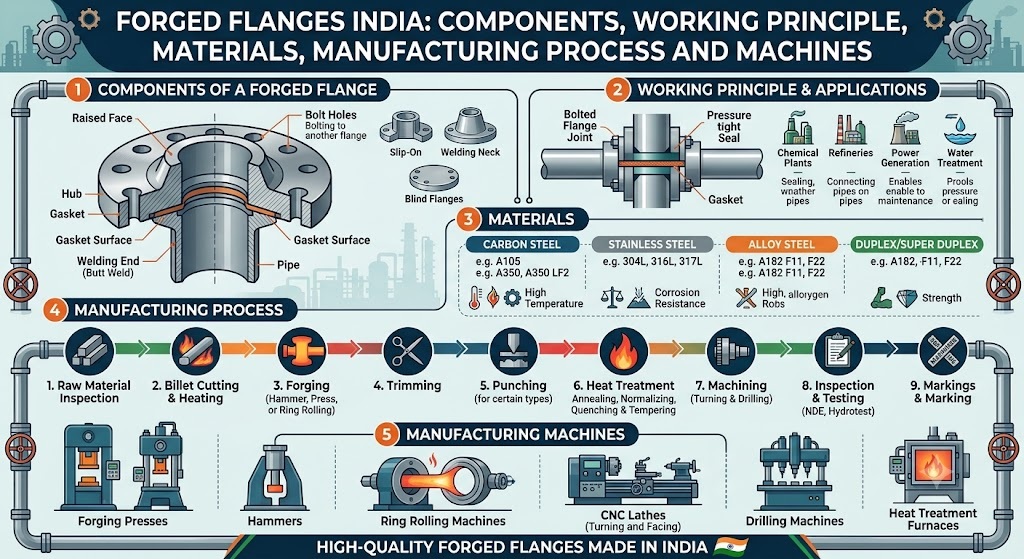
A forged flange is a component that has been created by heating up a metal and putting it under pressure to connect two different pipes or valves together. A forged flange consists of screw holes along with an opening in the middle to merge pipes or equipment together. Its components consist of a flange body, bore, bolt holes, annular sealing face, hub, and pipe connection area. A forged flange serves to join two similar flanges via screws and a gasket in order to create a sealed joint that can withstand high pressure, temperature, and mechanical loads. The process of forging a flange involves heating the metal and putting it under pressure in order to achieve the desired shape. The flange blank then undergoes treatment involving machining, drilling, finishing and inspection of the dimensions and standards.
The principal raw materials are carbon steel, stainless steel, alloy steel, duplex steel, and other metals fit for engineering use, which is determined by the working environment. The choice of material is based on the following parameters: pressure, temperature, ability to resist corrosion, strength, and requirements of an industry. The production cycle of forged flanges India includes cutting, heating, forging, heat treatment, shot-blasting, machining, drilling, facing, and quality inspection. In terms of machines used, these might be those intended for cutting billets or forging presses (or hammers) as well as furnaces, CNC lathes, CNC machining centers, drilling machines, and equipment for inspecting dimensions.
Forged Flanges: Advantages, Applications, Purchasing Considerations and Manufacturer Selection
Flanges made through forging boast remarkable strength, durability, and resistance to tension, pressure and temperature due to their fine grain structure. Furthermore, forging ensures efficient sealing and a long life span of equipment in extremely demanding applications such as piping and industry. Forged flanges are used in many industries like oil and gas refineries, petrochemical industries, hydro power generation units, water treatment plants, chemical processing factories, and several civil engineering sectors. They are important for connecting pipelines, valves, pumps, and pressure vessels while providing secure joints that are resistant to pressure and other factors.
It is advisable to determine the type of flange needed, its size, pressure rating, as well as the grade of material, dimensions, and type of facing before ordering a flange. Also consider the operating temperature, corrosion conditions, compatibility with equipment to be connected, and overall cost among other factors. Opt for manufacturers who have good machining and forging capabilities, knowledgeable technical staff, and good quality control procedures in place. Check their material traceability, ability to provide certifications, testing equipment, and production capability along with ability to customize orders.
Guide in Selecting Forged Flanges Suppliers in India
When selecting a forged flanges India it is imperative to check their material and production capabilities along with their certifications and standing in the industry. Besides, consider the quality of their products, ability to customize, and their delivery system.
It is essential to investigate their testing methodologies, so the supplier would be able to guarantee a good customer experience, including proper tracking of materials and corresponding to customer specifications. Forged flange manufacturers should have relevant certificates, such as ISO 9001, that prove the quality management system in place and compliance with the ASME, ASTM, and ANSI standards. Depending on the type of industry, manufacturers may also need to possess additional certificates, inspection reports, materials certificates, and have third-party tests.
The producers of forged flanges have the capability of producing those parts with specific grades of materials and their special dimension, pressure ratings, and meeting the requirements set by the relevant applications. It is necessary to mention that purchasing the flanges directly from the manufacturers allows getting the possibility of customize them according to the requirements of the client, getting proper quality control, technical support, etc.