Buy Fire Brick Direct from Manufacturer, Cut Middlemen Costs
Introduction to Fire Bricks and Their Importance
When industry operates under extreme heat conditions, normal building materials fail to withstand such conditions, observes a renowned expert. Fire bricks act as unseen guards in these applications by resisting high temperatures daily without weakening. If you’re currently searching for refractory materials, a crucial consideration is to purchase fire bricks directly from the factory.
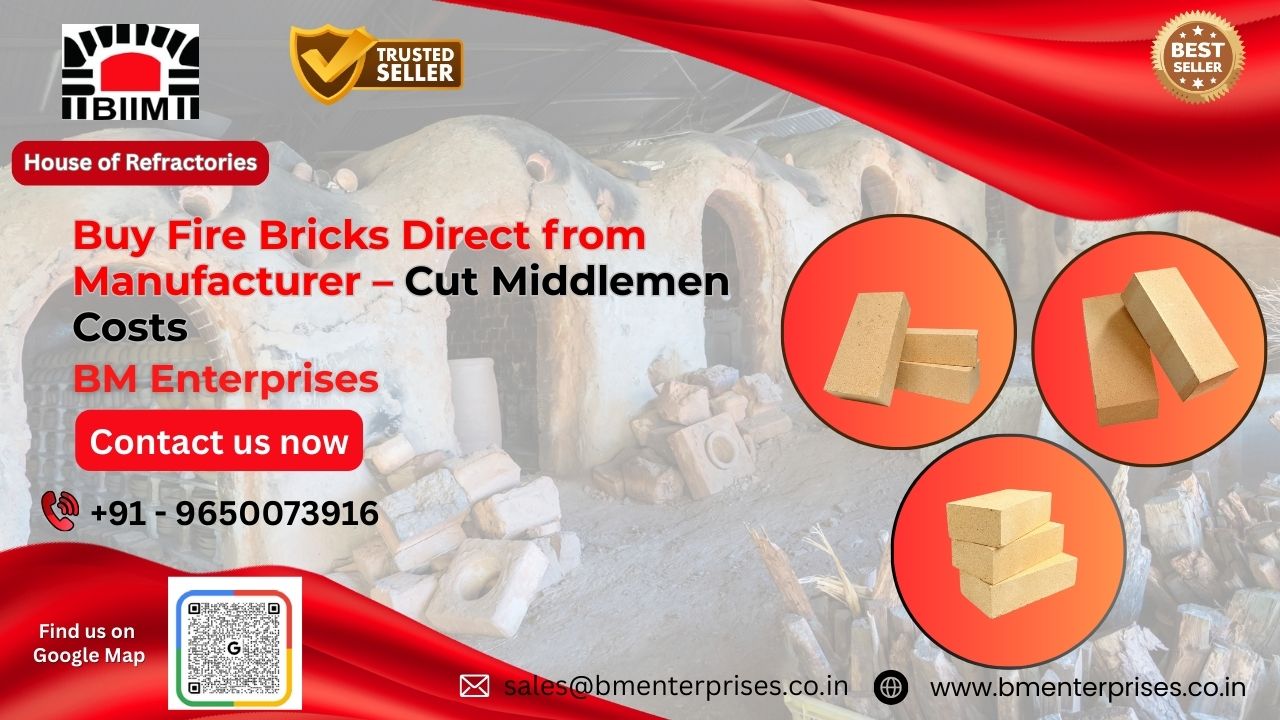
BM Enterprises makes this possible in a simple, clear, and cost-effective manner by incorporating fire bricks directly from the manufacturer, thereby reducing the expenses incurred by various industries through unnecessary middlemen.
What Are Fire Bricks?
Fire bricks, or refractory bricks, are a type of specially manufactured brick that can withstand extremely high temperatures, as well as thermal shock and chemical attack. Whereas common bricks can, upon being placed in continuous heat, lose shape, strength, and insulation, fire bricks remain unaffected. Think of them as the armor that protects furnaces, kilns, and boilers from failure.Why Fire Bricks Are Critical in High-Temperature Applications
In the processes involved in industries like steel, cement, power, and ceramics, the operating equipment is under immense thermal stress. Fire bricks line up and contain the heat to improve energy efficiency and ensure safety during operation. The proper selection of fire bricks is not only a matter of durability but of long-term operational reliability.Key Features of Refractory Fire Bricks
- High temperature resistance suitable for use in extreme heat environments.
- Resistant to thermal shock, thus eliminating breakage from quick temperature changes.
- High strength to ensure longevity when used in industrial furnaces or kilns.
- Low thermal conductivity. This promotes energy efficiency and retention of heat.
- It has good resistance to chemical and slag attacks in severe operational conditions.
Applications of Refractory Fire Bricks
- It is used for lining furnaces, kilns, and ovens in the steel and metal industry.
- Mainly used in cement rotary kilns, clinker coolers, and preheaters.
- Can be used in boilers, incinerators, and power plants.
- Employed in foundries for ladle service, reheating furnaces, and melting furnaces.
- Particularly suited to ceramic kilns, glass melters, and heat treatment machines.
Technical Specifications of Refractory Fire Bricks
- Al₂O₃ Content: 30%–70% depending on grade and application requirement.
- Maximum Service Temperature: 1,400°C – 1,700°C for continuous operation.
- CCS: 200–400 kg/cm², and the cold crushing strength is accordingly high, ensuring a very high load-carrying capacity.
- Bulk Density: 1.9–2.4 g/cm³ offers an optimal balance of strength and insulation.
- Apparent Porosity: 18%–24%. Improved thermal efficiency and durability.
- Thermal conductivity at 1,000°C is within the range of 1.0–1.5 W/m·K, which diminishes the dissipation of heat.
- Refractoriness (PCE): Cone 30–34, depending on chemical composition.
- PLC: ±0.5% to ±1.0% at high temperatures.
- MOR (Modulus of Rupture): The resistance to breaking under load is 40–70 kg/cm² at room temperature.
- Sizes Available: Standard 230 × 114 × 75 mm, with optional sizes available on request.