Custom Aluminum Signs vs Acrylic: Which Wins?
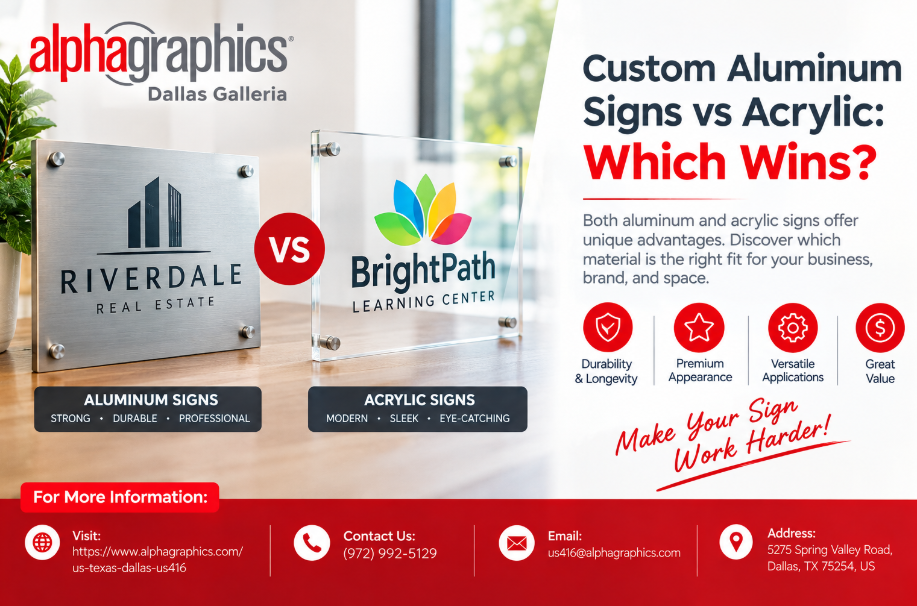
Choosing between custom aluminum signs and acrylic signs depends on your location, budget, and branding goals. Aluminum usually wins for outdoor durability, weather resistance, and long-term business signage. Meanwhile, acrylic offers a sleek, polished appearance that works especially well indoors and in premium retail environments. Both materials deliver professional results, but each serves different purposes. Understanding their differences helps businesses choose signage that looks appealing, lasts longer, and supports their marketing objectives.
What Is the Difference Between Custom Aluminum Signs and Acrylic Signs?
Custom aluminum signs use metal panels to display business names, logos, directions, and promotional messages. They offer a sturdy structure and handle demanding outdoor conditions well. Therefore, businesses often choose aluminum for storefronts, building identification, parking areas, and directional signage.
Acrylic signs use a rigid, plastic-like material with a smooth, glass-like finish. They create a contemporary appearance and work well in offices, reception areas, showrooms, and retail interiors. Additionally, acrylic supports several finishes, including transparent, frosted, colored, and backlit designs.
The main difference comes down to function and appearance. Aluminum emphasizes durability and practicality, while acrylic focuses on visual refinement and design flexibility.
Which Material Performs Better Outdoors?
Outdoor signs face sunlight, rain, wind, dust, and changing temperatures. Consequently, material selection plays an important role in maintaining their appearance.
Custom aluminum signs are a dependable choice for many outdoor applications. Aluminum resists rust because it naturally forms a protective oxide layer. Manufacturers can also apply coatings and finishes that improve weather resistance. As a result, aluminum signs often suit businesses that need reliable, long-lasting exterior displays.
Acrylic can also work outdoors when manufacturers select suitable grades and installation methods. However, it may scratch, crack under impact, or experience weather-related changes depending on its formulation and exposure. Strong impacts and improper mounting can create additional problems.
For outdoor applications, consider these factors:
Weather exposure: Aluminum generally suits exposed locations and changing weather conditions.
Impact risk: Aluminum typically handles everyday knocks better than rigid acrylic.
Sunlight: Both materials need appropriate finishes to maintain their appearance.
Maintenance: Regular cleaning helps preserve either material over time.
Therefore, aluminum is usually the stronger option for exterior signs exposed to demanding conditions. However, the final choice should reflect the specific environment and product specifications.
Which Sign Material Looks Better for Business Branding?
Appearance matters because signage often creates a customer’s first impression. Fortunately, both materials offer attractive branding possibilities.
Aluminum delivers a clean, professional appearance that suits modern businesses, industrial facilities, restaurants, and retail storefronts. Businesses can customize panels with printed graphics, lettering, colors, and finishes. Moreover, aluminum works well for directional signs and building identification.
Acrylic provides a smooth, refined finish that can make branding feel more premium. Its glossy surface and transparent options create visual depth. In addition, acrylic can support illuminated displays that enhance logos and lettering.
Consider acrylic for office reception signs, product displays, and stylish interior branding. On the other hand, choose aluminum when you need a practical sign with a professional appearance.
AlphaGraphics Dallas Galleria offers print and signage solutions for businesses seeking consistent visual communication. When comparing materials, discuss the sign’s purpose, placement, and desired finish before finalizing your design.
How Do Cost, Installation, and Maintenance Compare?
The total cost of a sign includes more than its initial purchase price. Material thickness, dimensions, graphics, mounting hardware, installation, and maintenance can all affect the final budget.
Aluminum signs often provide strong long-term value for outdoor applications. Their durability can reduce the need for frequent replacement. However, thicker panels, specialized coatings, and complex mounting systems may increase initial costs.
Acrylic signs vary in price according to thickness, finish, fabrication, and lighting requirements. Basic acrylic displays may suit modest budgets. Conversely, custom-cut shapes, layered lettering, and illuminated designs can increase production costs.
Installation also depends on the intended location. Exterior signs may require secure mounting, suitable supports, and professional installation. Indoor acrylic signs may need standoffs, wall fixtures, or specialized hardware.
To make a practical decision, compare:
- Initial manufacturing and installation costs.
- Expected service life in the intended environment.
- Cleaning requirements and potential repair expenses.
- Design complexity and branding requirements.
- Local regulations and mounting restrictions.
An experienced exterior signage company can help evaluate these factors before production begins. AlphaGraphics Dallas Galleria can also help businesses explore signage options that align with their branding and practical needs.
Custom aluminum signs and acrylic signs each offer distinct advantages. Aluminum generally suits outdoor environments, while acrylic excels in stylish interior applications. Ultimately, the best choice depends on your location, design preferences, budget, and expected lifespan.
Before ordering, compare material specifications and installation requirements. For guidance on professional signage and coordinated branding, contact AlphaGraphics Dallas Galleria to explore options that fit your business goals.
Frequently Asked Questions
- Are custom aluminum signs better than acrylic signs for outdoor use?
Generally, yes. Aluminum handles outdoor exposure well and offers strong resistance to corrosion. However, suitable coatings, installation, and product specifications still matter.
- Do acrylic signs look more premium than aluminum signs?
Acrylic often provides a sleek, polished appearance. Nevertheless, aluminum can also look premium with the right finish, graphics, and design.
- Which material requires less maintenance?
Both materials need occasional cleaning and inspection. Aluminum often performs well outdoors, while acrylic requires care to prevent scratches and surface damage.
- Can aluminum and acrylic signs display custom logos?
Yes. Both materials support customized branding, including logos, lettering, colors, and graphics. Production methods depend on the design and intended application.
- Which material should a small business choose?
Choose aluminum for durable exterior signage and acrylic for refined indoor displays. If your business needs both, combining the materials can create a consistent visual identity.