How to Minimize Large Pores: Causes, Tips & Products
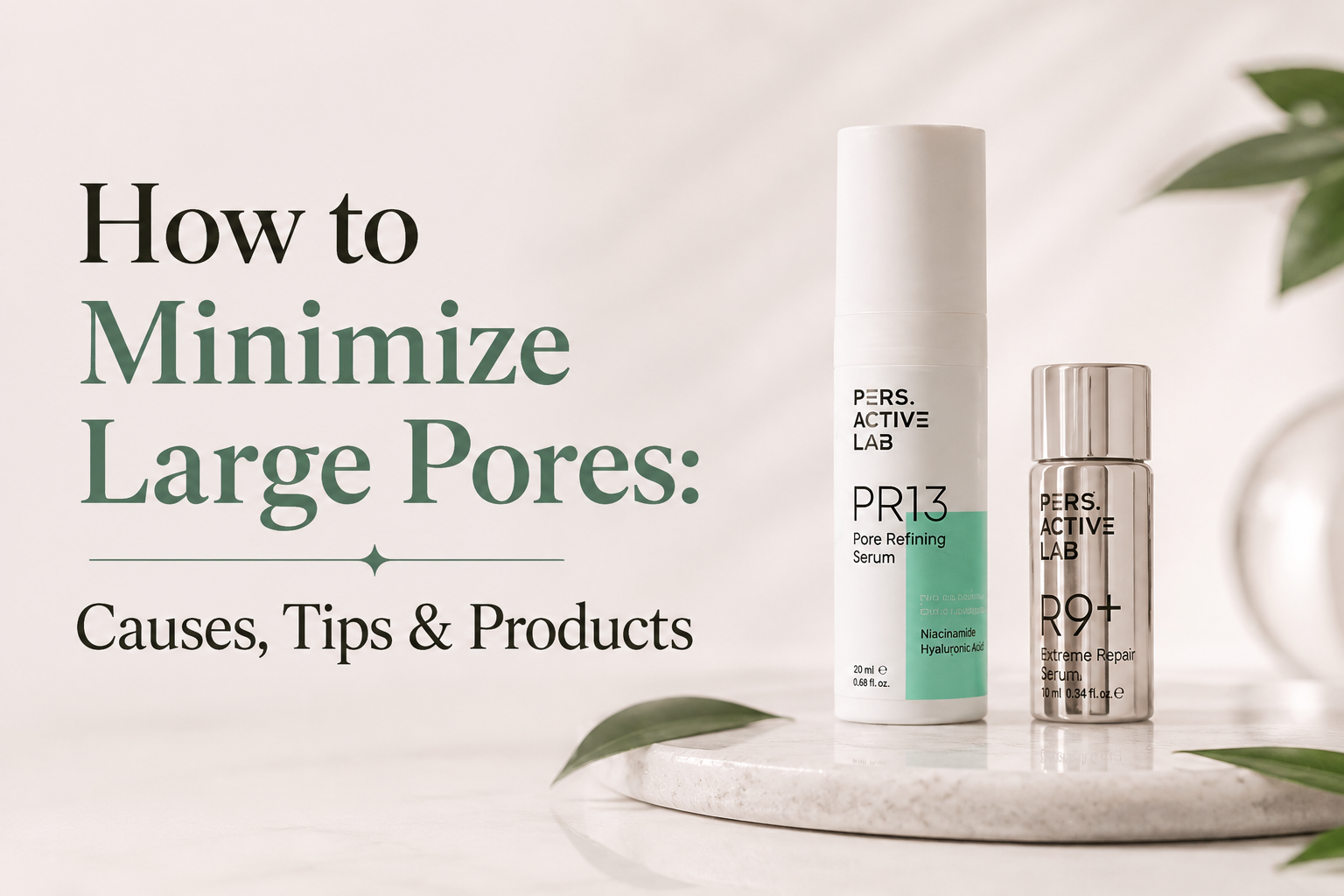
Large pores look smaller when oil stays under control, dead skin gets cleared regularly, and skin gets enough support to stop pores from stretching out further. Pore size itself doesn’t actually shrink, but keeping pores clean and the surrounding skin firm makes a real visible difference. This is exactly where a pore minimizing serum fits in; it targets oil and buildup directly, so results show up faster than habit changes alone.
Why Pores Appear Larger in the First Place
Pore size is largely genetic, but several daily factors make pores look bigger than they naturally are:
- Excess oil production – Oily skin stretches pore openings, making them more visible, especially around the nose, forehead, and chin.
- Clogged pores – A buildup of dead skin cells, oil, and debris fills the pore opening and pushes its walls outward.
- Sun damage – UV exposure breaks down collagen around the pore, reducing the skin’s elasticity and causing pores to sag open.
- Aging – As skin loses firmness with age, pores lose the structural support that once kept them tight.
- Thick, comedogenic products – Heavy creams and pore-clogging makeup trap debris inside pores, making them stretch and appear larger.
Since these causes overlap, most routines need to work on oil control, exfoliation, and skin firmness together rather than tackling just one factor.
Daily Tips to Minimize the Appearance of Large Pores
A few consistent habits make a measurable difference over a few weeks:
- Cleanse twice a day with a gentle, non-comedogenic cleanser to remove oil and debris before they settle into pores.
- Exfoliate two to three times a week using a mild chemical exfoliant, since over-exfoliating strips the barrier and can trigger more oil production as a response.
- Use non-comedogenic products across the board, including sunscreen and makeup, to avoid feeding pore congestion.
- Apply a pore tightening serum after cleansing to support skin firmness and reduce how visible pores look under normal lighting.
- Wear sunscreen daily to protect the collagen structure around pores, since UV damage is one of the more overlooked causes of pore stretching over time.
Skipping sunscreen undoes a lot of this effort, since sun damage weakens the exact collagen support that keeps pores looking tight in the first place.
What a Pore Tightening Serum Actually Does
A pore tightening serum works by combining a few categories of ingredients that each target a different part of the problem:
- Niacinamide regulates oil production and supports the skin barrier, reducing the shine that makes pores stand out.
- Salicylic acid penetrates into the pore lining to clear out oil and debris, which is often the biggest single factor in how large a pore looks.
- Astringent botanicals, like witch hazel or green tea extract, offer a mild tightening effect on the surrounding skin.
- Collagen-supporting ingredients, like peptides, help maintain the structural firmness that keeps pores from sagging open over time.
SkinPal builds its pore-focused serum around this combination, treating oil control and skin firmness as two separate but connected problems rather than relying on one ingredient to do all the work.
Repair Before Treatment: Why the Barrier Comes First
Oily, congested skin often gets treated aggressively, with multiple exfoliants and strong actives layered together. This usually backfires. A stressed skin barrier tends to overproduce oil as a defensive response, which makes pores look larger rather than smaller.
A repair-first approach treats the barrier before pushing more actives onto it. SkinPal’s formulation order calms and stabilizes the skin first, so oil production regulates naturally before introducing stronger pore-clearing ingredients. This sequence reduces the rebound effect that often comes with over-treating oily or congested skin.
The Power of Fewer, More Precise Actives
Layering five or six different pore-focused products at once tends to irritate skin rather than clear it. Irritated skin produces more oil, and more oil means larger-looking pores, so an aggressive routine can work directly against its own goal.
A serum built around a small number of well-dosed actives generally performs better than a crowded routine. SkinPal formulates with this in mind, keeping active ingredient counts low and concentrations precise, so skin gets consistent results without the irritation that comes from over-treatment.
Tracking Pore Improvement Over Time
Pore visibility changes gradually, and it’s easy to miss small improvements just by looking in a mirror each day. Taking a photo under the same lighting every one to two weeks gives a clearer sense of actual progress. Some skin platforms, including SkinPal, use AI-driven skin analysis to score oiliness, texture, and pore visibility over time rather than relying on a single snapshot. This kind of tracking also flags early irritation before it becomes a bigger setback, which matters when introducing any new pore-focused active.
Lifestyle Factors That Affect Pore Appearance
A few daily habits influence how visible pores look, independent of any product used:
- Diet – Diets high in refined sugar and dairy have been linked to increased oil production in some people, which can worsen pore visibility.
- Touching the face – Transferring oil and bacteria from hands to face throughout the day adds to pore congestion.
- Pillowcase hygiene – Washing pillowcases weekly reduces the buildup of oil and product residue that transfers back onto skin overnight.
- Hydration – Dehydrated skin can overcompensate by producing more oil, which indirectly makes pores look larger.
None of these replace a proper serum, but ignoring them slows down visible improvement even with the right product in place.
Realistic Timelines for Visible Change
Most people notice less oiliness and a smoother texture within two to three weeks of consistent use. Fuller improvement in pore appearance, including reduced congestion and firmer-looking skin, generally takes six to eight weeks. Since pore size itself is genetic, the goal is consistent visible improvement rather than permanent shrinkage.
Switching products frequently in search of faster results usually resets this progress, since skin needs a stable routine to regulate oil production and clear congestion properly.
When to See a Dermatologist
Home care manages most cases of enlarged, congested pores, but a few signs call for professional input:
- Pores stay consistently inflamed, red, or painful.
- Congestion turns into repeated cystic acne rather than typical blackheads.
- No visible improvement appears after two to three months of consistent, correct care.
- Skin reacts with ongoing irritation despite using gentle, non-comedogenic products.
Persistent congestion or inflammation is worth a dermatologist’s opinion rather than months of product experimentation. Dermatologist-reviewed formulas, like the ones Skin Pal develops, offer a safer starting point, but a dermatologist remains the right call for anything that doesn’t respond to consistent home care.
Manufacturing Standards Matter
Formulation consistency depends on where and how a serum is produced. Skincare made under strict quality control, such as Taiwan-based manufacturing standards, tends to perform more consistently batch to batch, which matters for a product used daily over months. Skin Pal follows this standard, since inconsistent formulation is one of the quieter reasons a serum that worked well initially stops delivering results later.
Final Takeaway
Large pores don’t shrink permanently, but consistent oil control, gentle exfoliation, and a well-formulated pore-minimizing serum make a measurable difference in how visible they look day to day. Treating the skin barrier first, keeping the routine focused on a few precise actives, and staying consistent over several weeks produces better results than an aggressive, ever-changing routine. Skin Pal’s approach follows this order: directly calm and support the skin, then target oil and congestion, which holds up better over time than chasing a quick fix.
Frequently Asked Questions
Can pores actually shrink permanently?
No. Pore size is largely determined by genetics and doesn’t change permanently. What can change is how clogged or stretched a pore looks, which is why cleaning and supporting the skin around it makes such a visible difference.
Do ice cubes or cold water actually tighten pores?
Cold water causes a brief, temporary tightening effect on the skin’s surface, but it doesn’t change pore size or provide any lasting improvement. It works better as a short-term cosmetic step than a treatment.
Do pore strips help with large pores?
Pore strips remove surface debris from blackheads but don’t address the oil production or collagen support that causes pores to look larger over time. They offer a quick cosmetic result rather than a long-term fix.
Does drinking more water reduce pore size?
Hydration supports overall skin function, but it doesn’t directly shrink pores. Dehydrated skin can overproduce oil as a response, so staying hydrated indirectly helps by reducing that oil-driven congestion.
Is it normal for pores to look bigger with age?
Yes. As skin loses collagen and elasticity over time, pores lose the structural support that once kept them tight, which is a normal part of skin aging rather than a sign of poor skincare.
Why do pores look larger after using a heavy moisturizer?
Thick or comedogenic moisturizers can sit inside pores and contribute to congestion, making them appear more stretched. Switching to a lighter, non-comedogenic formula usually resolves this within a few weeks.
What ingredients actually help with visibly large pores?
Niacinamide, salicylic acid, and peptides are commonly recommended, since each addresses a different part of the problem: oil regulation, pore-clearing exfoliation, and collagen support, respectively.