Mulch vs Gravel Landscaping: Which Is Better for Your Yard?
Almost every homeowner has to decide between mulch and gravel landscaping. Both materials cover the bare soil and make a yard look finished. But they play very different roles.
Mulch is organic matter. Made of wood, bark or other parts of plants. Gravel is stone; It comes in lots of sizes and colors and never breaks down.
So which is the best? It is contingent upon what the area is for. A flower bed calls for something different from a walkway. This guide looks at the appearance, maintenance, drainage, cost, soil health and durability so that you can choose the right material for each location.
By the end you will understand how mulch vs gravel landscaping plays out in every part of your yard.
What Is Mulch?
Mulch is a protective layer you spread over soil. It holds moisture, blocks sunlight from weed seeds, and keeps roots cooler. As it breaks down, it feeds the soil.
That last point matters. Mulch does not just sit on top of the ground. It works with the soil to build a healthier base for plants. When you weigh mulch vs gravel landscaping, this living quality is mulch’s biggest advantage.
Common Types of Mulch
- Wood mulch: Chipped or shredded wood. It is affordable and easy to find.
- Bark mulch: Pieces of tree bark. It often lasts a little longer than fine wood chips.
- Cedar mulch: It has a pleasant smell and resists some insects.
- Hardwood mulch: Shredded oak, maple, and similar trees. It breaks down at a steady pace and feeds the soil.
- Colored mulch: Wood dyed red, brown, or black. It gives a bold look, but the color fades in strong sun.
Where Is Mulch Commonly Used?
Homeowners spread mulch where plants grow. Common spots include:
- Garden beds
- Around trees
- Flower beds
- Vegetable gardens
- Residential landscaping, such as front yard planting areas
Each of these spots benefits from moisture control and soil protection. Mulch also gives them a neat, finished edge.
What Is Landscape Gravel?
Landscape gravel is crushed or naturally rounded stone that sits on top of soil. Unlike mulch, it does not decay. It stays in place for years, which makes it popular for paths and dry areas.
Gravel also gives a clean, structured look. Many homeowners choose it for modern yards. Still, the mulch vs gravel landscaping decision rarely comes down to looks alone.
Common Types of Landscape Gravel
- Pea gravel: Small, smooth, rounded stones. They feel comfortable underfoot.
- River rock: Larger, smooth stones. They work well in dry creek beds and borders.
- Crushed stone: Angular pieces that lock together. They make firm paths and driveways.
- Decomposed granite: Fine granite that packs down tight. It suits paths and patios.
- Decorative stone: Specialty rock chosen mostly for color and style.
Where Is Gravel Commonly Used?
Gravel works best where people walk, water flows, or few plants grow. Common spots include:
- Walkways
- Drainage areas
- Driveways
- Garden borders
- Rock gardens
- Low maintenance landscape beds
Mulch vs Gravel Landscaping: Key Differences
Here is the quick comparison. Each factor shows how the two materials stack up.
Appearance
- Mulch: Natural and garden friendly
- Gravel: Clean, decorative, and structured
Maintenance
- Mulch: Needs periodic replacement
- Gravel: Generally lasts longer
Soil health
- Mulch: Adds organic matter as it breaks down
- Gravel: Does not add organic matter
Moisture retention
- Mulch: Good
- Gravel: Low
Drainage
- Mulch: Moderate
- Gravel: Excellent
Weed control
- Mulch: Helps suppress weeds
- Gravel: Helps suppress weeds with proper installation
Durability
- Mulch: Needs replacement over time
- Gravel: Long lasting
Upfront cost
- Mulch: Usually lower
- Gravel: Can vary by stone type
Best for
- Mulch: Garden beds and plants
- Gravel: Paths, drainage, and low maintenance areas
These differences show why mulch vs gravel landscaping has no single winner. Mulch gives plants what they need. Gravel gives hard working areas what they need.
Mulch vs Gravel for Drainage
Water moves through gravel quickly. The gaps between stones let rain drain downward instead of pooling on top. That is why contractors use gravel around downspouts, French drains, and low spots.
Mulch drains at a moderate pace. Loose mulch lets water soak in. Fine, shredded mulch can pack down and slow that process.
Heavy rain adds another problem. Light mulch can float and wash away, especially on a slope. Gravel stays put much better, though small stones can shift on steep ground too.
Site grading still matters. A yard that slopes toward your house will flood no matter what covers the soil. Soil type matters as well. Clay holds water, while sandy soil releases it fast. Gravel on top of clay does not fix a clay problem.
So for mulch vs gravel for drainage, gravel is the stronger pick. Drainage is one of the biggest factors in mulch vs gravel landscaping, but good grading should come first.
Mulch vs Gravel for Weed Control
Neither material stops weeds completely. Be careful with anyone who promises that. Here is how the two compare:
- Weed suppression: Both materials block sunlight from seeds in the soil below. A thick layer works better than a thin one.
- Installation depth: Aim for about 2 to 3 inches of either material. Thin layers let weeds poke through.
- Landscape fabric: Fabric helps under gravel because it keeps stone and soil from mixing. Under mulch, fabric can block organic matter from reaching the soil, so many gardeners skip it.
- Maintenance requirements: Mulch needs a fresh top up each year or two. Gravel needs occasional raking to keep it level and clean.
- Weed growth between gravel: Leaves, dust, and dirt settle between stones over time. Seeds then sprout in that debris, even above the fabric.
Pull weeds early, before they set roots. In the mulch vs gravel landscaping debate, weed control is closer to a tie than most people expect.
Which Is Better for Plant Beds?
Mulch is generally the better choice for plant beds. It holds moisture near the roots. It also breaks down slowly, which feeds the soil and improves its structure.
Here is how mulch helps each type of plant:
- Flowers: Mulch keeps roots cool and moist, so blooms stay healthier between waterings.
- Shrubs: A mulch layer protects shallow roots from heat swings.
- Trees: Mulch reduces lawn competition and holds water around the root zone. Keep it a few inches away from the trunk.
- Vegetable plants: Mulch steadies soil moisture and adds organic matter each season.
Gravel behaves differently around plants. Stones soak up heat and pass it to the soil. In a hot summer, that can stress tender roots. When plants are the priority, mulch vs gravel landscaping favors mulch.
Which Is Better for Low Maintenance Landscaping?
Gravel can be the better choice when your main goal is less work. It does not rot, so you do not have to replace it every year. A good gravel bed can look the same for a long time.
Gravel fits these goals especially well:
- Long term durability: Stone holds up to foot traffic, rain, and sun.
- Less frequent replacement: You top it up now and then instead of redoing it.
- Walkways: Firm, stable stone makes a clear path.
- Decorative rock beds: Gravel pairs nicely with boulders and tough plants.
- Xeriscaping or water conscious landscaping: Gravel suits dry style gardens that use drought tolerant plants.
Low maintenance does not mean no maintenance, though. You still need to rake, pull weeds, and clean off leaves. For paths and dry beds, mulch vs gravel landscaping leans toward gravel.
Mulch vs Gravel Cost: Which Is More Affordable?
Prices change by material, amount, and location, so I will not quote one fixed number. Instead, look at the full picture. Several cost factors decide which option fits your budget:
- Material cost: Mulch usually costs less per cubic yard. Gravel varies a lot, from basic crushed stone to pricey decorative rock.
- Delivery: Both materials are heavy. Buying in bulk and having it delivered often costs less than buying bags.
- Installation: Mulch is easy to spread by hand. Gravel often needs edging, fabric, and a prepared base.
- Labor: Gravel jobs take more time and effort, so labor costs can run higher.
- Replacement frequency: Mulch needs refreshing every year or two. Gravel rarely needs replacing.
- Long term cost: Gravel can cost more upfront but save money over the years.
In short, mulch is easier on the wallet at the start. Gravel can win over time. When you compare mulch vs gravel landscaping costs, think about how long you plan to keep the space.
Mulch vs Gravel in Hot and Wet Climates
Warm, humid areas like Houston put both materials to the test. Long summers and sudden downpours change how each one performs.
- Heavy rainfall: Storms can wash light mulch out of beds. Gravel holds its place better, though stones can still shift on slopes.
- Drainage: Gravel moves water away from foundations and low spots. That helps a lot in a city with flat land and heavy rain.
- Summer heat: Gravel absorbs heat and can warm the soil around plants. Mulch keeps the soil cooler.
- Moisture retention: Mulch slows evaporation, which saves water in hot weather.
- Material movement: Choose heavier bark chunks over fine mulch in storm prone areas. Use larger gravel on slopes.
- Decomposition: Heat and humidity speed up decay, so mulch breaks down faster in warm climates.
- Maintenance: Expect to refresh mulch more often. Expect to rake and clean gravel after big storms.
The takeaway is simple. Mulch vs gravel landscaping in a hot, wet climate works best when you match each material to its job. Use gravel where water needs to leave. Use mulch where plants need to stay cool.
When Should You Choose Mulch?
Choose mulch when you want:
- Better moisture retention
- Healthier garden soil
- A natural appearance
- Protection around plants
- Seasonal landscape refreshes
Mulch makes sense for any area where living plants are the main feature.
When Should You Choose Gravel?
Choose gravel when you want:
- Better drainage
- A long lasting surface
- Lower replacement frequency
- Decorative stone landscaping
- Walkways or borders
- Low maintenance landscape areas
Gravel makes sense for any area where function matters more than plants.
Can You Use Mulch and Gravel Together?
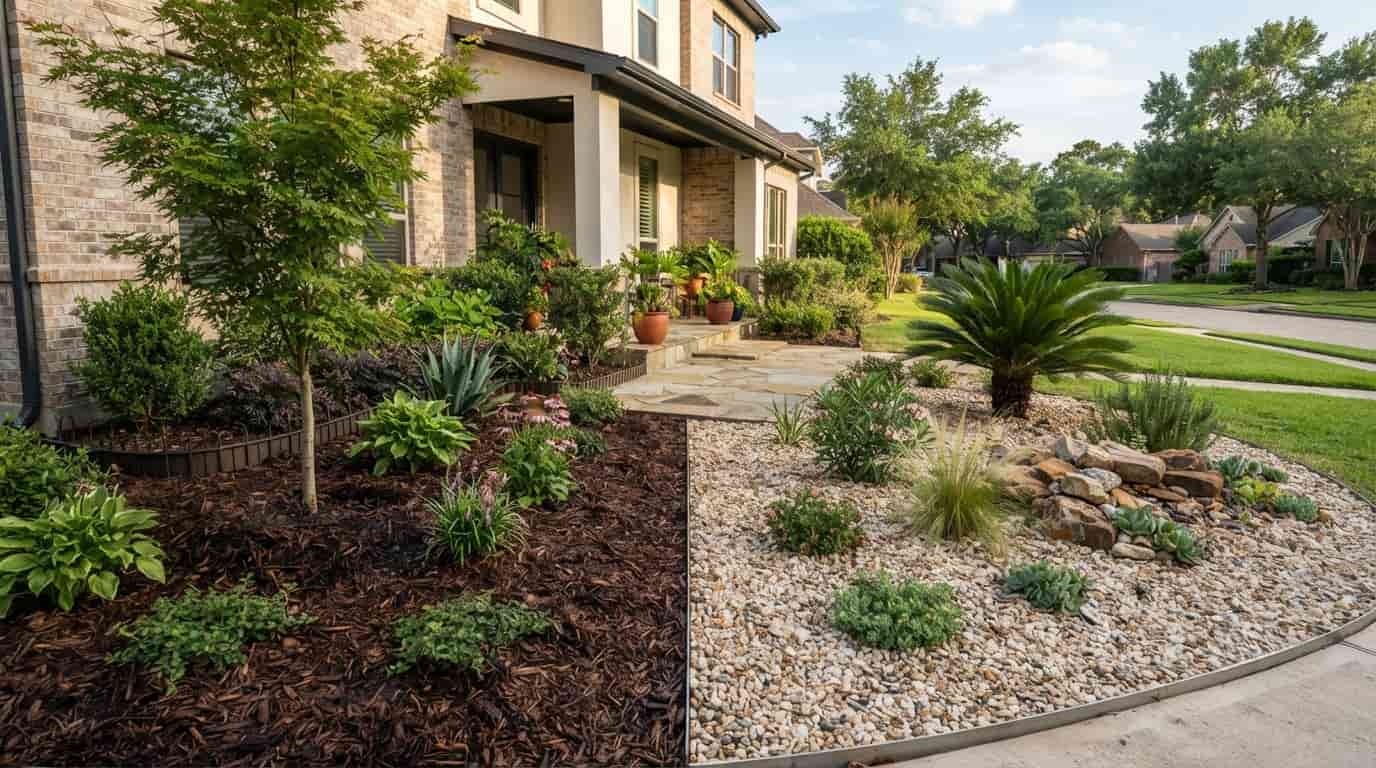
Yes, and often you should. Many of the best yards use both materials in different zones. The key message is simple: you do not always have to choose one.
Here are a few practical ways to combine them:
- Gravel pathways with mulched garden beds: The path stays firm and clean, while the beds stay rich and moist.
- Gravel drainage zones around planting areas: Stone carries extra water away from roots.
- Gravel borders around mulch beds: The stone edge keeps mulch from spilling onto walkways.
- Different materials for different zones: Use each one where it performs best.
This approach turns the mulch vs gravel landscaping question into a design plan instead of an either or choice.
Conclusion: Mulch or Gravel?
Choose mulch for plant focused areas and soil improvement. Choose gravel for drainage, pathways, and longer lasting low maintenance areas.
The right choice depends on how you use the space, not on which material is better overall. Once you see mulch vs gravel landscaping as a question of purpose, the decision gets much easier.
If you are ready to start your project, Cowboy Topsoil can help you choose and order the right materials for your yard.
For seamless guest post opportunity, visit Overly Post, and promote your content.