Supplier Returns Software for Better Tracking and Control
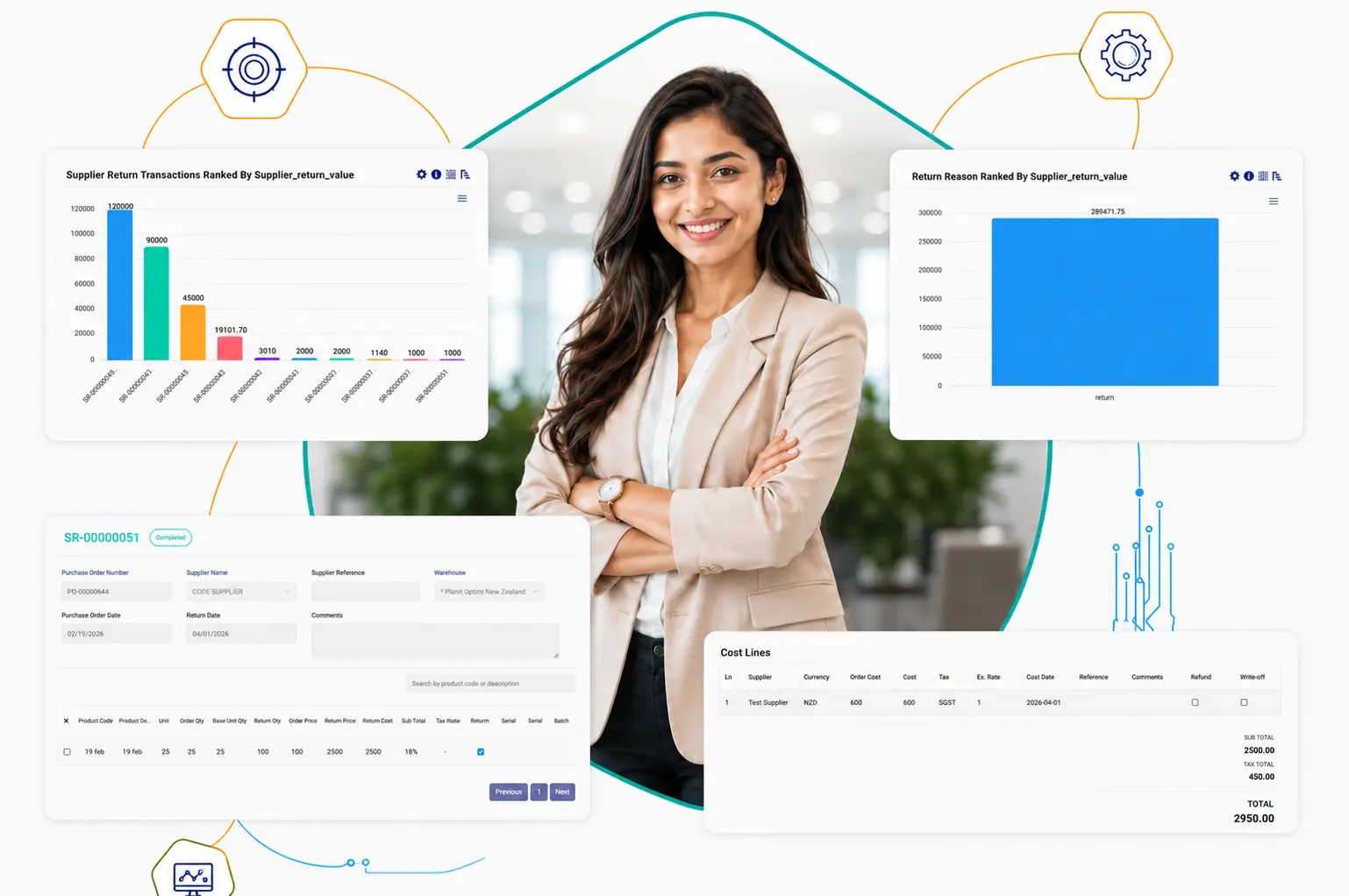
Managing supplier returns is an often-overlooked part of modern inventory and supply chain operations. Businesses may have efficient purchasing, warehousing, and sales processes, yet still lose time and money when damaged, incorrect, expired, defective, or excess goods need to be returned to suppliers. Without a structured process, returned products can remain in warehouses, paperwork can become difficult to reconcile, and businesses may struggle to recover the correct credit or replacement.
As supply chains become more complex and businesses work with suppliers across different regions, organizations need greater visibility into every movement of inventory. Supplier Returns Software can help businesses organize return requests, track products, document reasons, monitor supplier responses, and maintain accurate inventory records from initiation to final resolution.
Why Supplier Returns Need Better Management
Supplier returns are not simply about sending unwanted products back. A typical return can involve warehouse teams, procurement staff, suppliers, finance departments, transport providers, and quality-control personnel.
When these teams rely on spreadsheets, emails, paper documents, or disconnected systems, important information can be missed. A returned product might leave the warehouse without the corresponding inventory adjustment, while a supplier credit note may arrive weeks later and be difficult to match with the original transaction.
Research published in Management Science found significant inventory record inaccuracies in a large retail dataset, demonstrating why accurate transaction recording and inventory controls matter.
A structured supplier-return process helps businesses establish a clear record of:
- What product was returned
- How many units were returned
- Why the products were returned
- Which supplier received them
- When the return was shipped
- Whether the supplier accepted the return
- Whether replacement stock or credit was issued
- What financial adjustment was completed
This visibility can significantly improve operational control.
What Is Supplier Returns Software?
Supplier Returns Software is a digital solution designed to manage the complete lifecycle of goods returned to suppliers. Instead of treating returns as isolated transactions, the software connects return activities with inventory, purchasing, supplier information, warehouse operations, and financial records.
For example, if a warehouse receives 100 units and discovers that 12 are damaged, the system can help create a supplier return for those 12 units. The returned quantity can then be reflected in inventory records while the return remains available for tracking until the supplier provides a replacement, refund, or credit.
This creates a more consistent workflow and reduces dependence on manual recordkeeping.
Key Features That Make Supplier Returns More Efficient
1. Centralized Return Management
Businesses can create and manage supplier return transactions from one centralized system. Teams can record product details, quantities, return reasons, supplier information, and supporting notes without maintaining multiple spreadsheets.
Centralization also makes it easier for authorized users to review the current status of each return.
2. Real-Time Return Tracking
A return should not disappear from the system once it leaves the warehouse. Tracking helps businesses monitor whether a return is:
- Draft
- Approved
- Ready for dispatch
- In transit
- Received by supplier
- Awaiting replacement
- Awaiting credit
- Completed
This provides procurement and warehouse teams with better visibility into outstanding returns.
3. Accurate Inventory Adjustments
Inventory accuracy is essential because return transactions directly affect available stock. An effective system can help ensure that quantities associated with supplier returns are recorded consistently.
This is particularly important for businesses managing thousands of SKUs across multiple warehouses. Inventory inaccuracies can affect purchasing decisions, stock availability, replenishment, and financial reporting. Research on supply-chain inventory accuracy has also highlighted how discrepancies between physical inventory and system records can increase operational costs.
4. Return Reason Tracking
Not every supplier return has the same cause. Businesses may return products because of:
- Manufacturing defects
- Incorrect quantities
- Wrong products
- Damaged packaging
- Quality issues
- Expired or short-dated stock
- Specification mismatches
- Overstock or agreed supplier arrangements
Recording return reasons helps businesses identify recurring supplier or product problems rather than treating every return as an isolated event.
5. Supplier Performance Visibility
Return data can provide useful insights into supplier performance. If a particular supplier repeatedly sends defective products, incorrect quantities, or damaged shipments, management can identify the pattern through historical records.
Businesses can evaluate suppliers using indicators such as:
- Return frequency
- Defect rate
- Resolution time
- Credit processing time
- Replacement performance
- Quantity discrepancies
This information can support more informed supplier negotiations and purchasing decisions.
How Supplier Returns Software Can Reduce Business Losses
Returns create several potential costs beyond the value of the product itself. Employees need to inspect products, prepare documentation, arrange transportation, update inventory, communicate with suppliers, and reconcile financial adjustments.
The wider reverse-logistics challenge is substantial. McKinsey reported that consumers returned nearly $1 trillion of merchandise in the United States in 2024, while retailers spent an estimated $200 billion annually to recover value from returned goods.
Although supplier returns are different from consumer returns, the broader lesson is relevant: returns require structured processes if businesses want to recover maximum value.
Supplier Returns Software can help reduce avoidable losses by:
- Reducing manual data entry
- Improving inventory visibility
- Preventing duplicate return records
- Monitoring unresolved supplier credits
- Identifying recurring quality issues
- Improving return documentation
- Supporting faster reconciliation
- Providing historical return data for supplier evaluation
Turning Return Data Into Better Supplier Decisions
One of the biggest advantages of digital return management is the ability to use historical information for decision-making.
Suppose a company discovers that one supplier consistently accounts for a high percentage of damaged-product returns. Instead of relying on assumptions, procurement managers can review return records, product categories, quantities, dates, and reasons.
This data can help businesses ask better questions:
Is the supplier’s packaging adequate?
Are products being damaged during transportation?
Are specifications being communicated correctly?
Is the supplier delivering the correct quantity?
Are certain SKUs generating unusually high return volumes?
Answers to these questions can support supplier improvement programs and potentially reduce future return volumes.
Why Faster Returns Matter in a Global Supply Chain
For international businesses, supplier returns can become more complicated because products may move between countries, distribution centers, third-party logistics providers, and supplier facilities.
Long return cycles can tie up working capital and warehouse space. They can also delay replacement inventory or financial credits.
A digital return workflow provides a centralized source of information that authorized teams can access regardless of their location. This is especially valuable for organizations operating across multiple warehouses, countries, currencies, or supplier networks.
Modern reverse logistics is increasingly being treated as an important part of supply-chain strategy rather than simply an administrative function.
Building a More Controlled Returns Process
Technology alone does not guarantee better returns management. Businesses should also establish clear internal procedures.
A practical supplier-return workflow can include:
- Identify the issue – Record the product and reason for return.
- Verify the transaction – Match the product with the relevant purchase or receipt.
- Approve the return – Confirm that the return meets internal and supplier requirements.
- Update inventory – Record the appropriate inventory movement.
- Dispatch the goods – Arrange transportation and retain relevant documentation.
- Track supplier receipt – Monitor when the supplier receives the returned products.
- Record the resolution – Capture replacement, credit, refund, or rejection.
- Close and reconcile – Ensure inventory and financial records are aligned.
This approach makes each return traceable from beginning to end.
The Future of Supplier Return Management
As businesses adopt more connected inventory and supply-chain technologies, supplier returns are likely to become increasingly data-driven. Integration with purchasing, warehouse management, barcode scanning, inventory reporting, and supplier records can create a more connected operational environment.
Businesses can also use return data to identify patterns before they become larger problems. For example, an increase in returns for a particular SKU could trigger a quality review or supplier discussion.
The goal is not simply to process returns faster. It is to create a system where every returned item has a clear reason, location, status, financial outcome, and history.
Conclusion
Supplier returns can have a direct impact on inventory accuracy, warehouse efficiency, supplier relationships, and financial recovery. Managing them through disconnected spreadsheets and manual communication makes it harder to understand what has been returned, what is still outstanding, and what the business is entitled to receive from suppliers.
Supplier Returns Software provides a structured approach by connecting return records with inventory, purchasing, supplier management, and operational workflows. With better tracking and centralized information, businesses can reduce administrative work, improve visibility, identify recurring supplier issues, and make more informed procurement decisions.
For organizations looking to strengthen inventory control and streamline supplier return processes, PlanIT can help create a more organized and technology-driven approach to inventory and return management.
Contact PlanIT:
- Mobile: +91-9958474631
- Email: sales@plan-it.pro
For More Topics: https://overlypost.com/