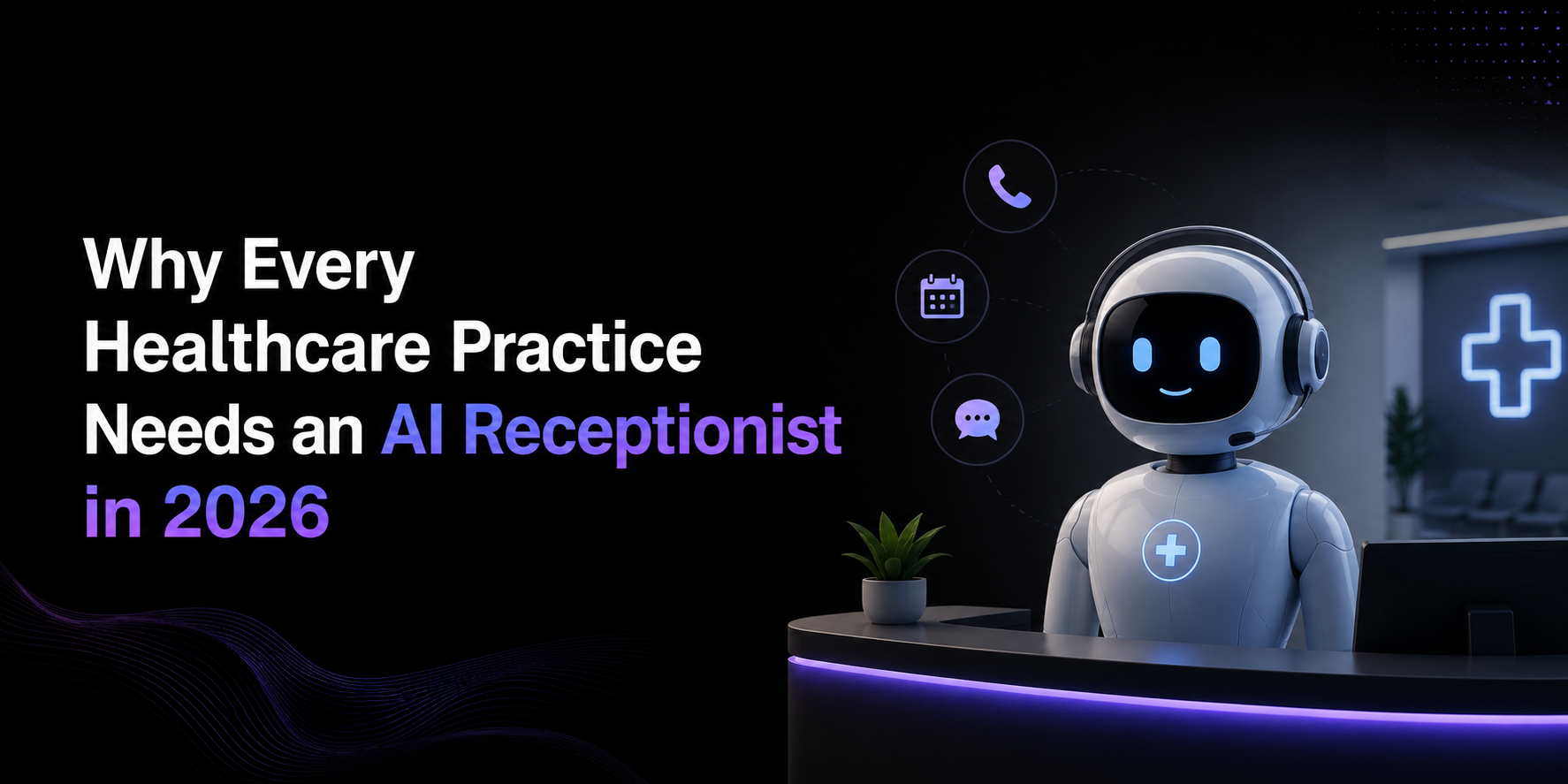
Why Every Healthcare Practice Needs an AI Receptionist in 2026
Healthcare practices today face increasing pressure to deliver faster, more convenient patient experiences while managing rising administrative workloads. Missed calls, long hold times, appointment scheduling challenges, and staff shortages can all impact patient satisfaction and practice revenue. As patient expectations continue to evolve, healthcare providers are looking for smarter ways to streamline operations without compromising the quality of care.
This is where AI receptionist healthcare solutions are making a significant difference. Powered by artificial intelligence, these virtual receptionists can answer calls, schedule appointments, send reminders, handle routine patient inquiries, and provide 24/7 support. Rather than replacing front-desk teams, they help reduce repetitive administrative work, allowing staff to focus on delivering exceptional patient care.
In this article, we’ll explore why every healthcare practice should consider an AI receptionist in 2026, the key benefits it offers, and how it can improve both operational efficiency and the patient experience.
The Problem With Traditional Front-Desk Operations
Most healthcare practices still rely entirely on human receptionists to manage:
- Incoming calls for appointments, prescription refills, and billing questions
- Scheduling and rescheduling
- Reminder calls and no-show follow-ups
- After-hours and weekend inquiries
- Insurance verification questions
The problem is simple: humans can only handle one call at a time, they need breaks, they get sick, and they’re unavailable outside business hours. Industry studies consistently show that a large percentage of patient calls to medical offices go unanswered and each missed call is a potential missed appointment, or worse, a patient who simply calls a competitor instead.
What is an AI Receptionist for Healthcare?
An AI receptionist healthcare solution is an intelligent virtual assistant that manages front-desk communication using artificial intelligence. It interacts with patients through phone calls and messaging channels, understands natural language, answers common questions, books appointments, sends reminders, and transfers complex requests to staff when necessary.
Unlike traditional automated phone systems that rely on rigid menus, AI receptionists can have natural conversations with patients, making interactions quicker and more personalized.
Common tasks include:
- Answering patient calls 24/7
- Scheduling and rescheduling appointments
- Sending appointment reminders
- Answering FAQs about clinic hours, services, and locations
- Collecting patient information
- Routing urgent calls to the right department
- Handling after-hours inquiries
Key Reasons Every Healthcare Practice Needs One in 2026
Here are the key reasons healthcare practices need an AI receptionist in 2026:
1. Never Miss Patient Calls
Many patients call outside business hours or during busy periods when staff are occupied. Every unanswered call represents a potential lost appointment or delayed care.
An AI receptionist ensures every call is answered promptly, even during evenings, weekends, and holidays.
Benefits include:
- Higher appointment bookings: Capture more patient inquiries and convert them into scheduled visits.
- Fewer missed opportunities: Ensure every potential patient receives a timely response.
- Better patient satisfaction: Reduce wait times and provide immediate assistance.
- Continuous availability: Offer reliable 24/7 support without increasing staffing costs.
2. Reduce Administrative Workload
Receptionists spend a large portion of their day answering repetitive questions and managing appointment requests.
An AI receptionist automates routine tasks such as:
- Appointment booking: Schedule patient visits quickly and accurately.
- Rescheduling appointments: Modify bookings without staff involvement.
- Answering FAQs: Provide instant responses to common patient questions.
- Insurance information: Share basic coverage and billing details.
- Clinic directions: Guide patients to the correct location with ease.
- Office hours: Instantly provide clinic hours and holiday schedules.
This allows staff to dedicate more time to patient care and complex administrative responsibilities.
3. Improve the Patient Experience
Modern patients expect quick responses and convenient communication. Instead of waiting on hold, they can receive immediate assistance for common requests, including:
- Booking appointments: Schedule visits in just a few steps.
- Changing appointments: Easily reschedule when plans change.
- Checking clinic hours: Get accurate opening and closing times.
- Finding provider information: Access doctor and specialist details instantly.
- Receiving pre-visit instructions: Get important information before appointments.
Faster, more convenient service improves patient satisfaction and builds stronger long-term relationships.
4. Reduce No-Show Rates
Missed appointments remain a major challenge for healthcare providers. AI receptionists help minimize no-shows by automatically:
- Sending appointment reminders: Notify patients before their visit.
- Confirming attendance: Verify appointments with automated confirmations.
- Processing cancellations: Free up schedules quickly when patients cancel.
- Helping patients reschedule: Fill empty slots with minimal effort.
These automated workflows reduce missed appointments, improve schedule efficiency, and maximize clinic productivity.
5. Support 24/7 Patient Communication
Healthcare needs don’t stop after office hours. Patients may need assistance late at night or early in the morning for:
- Booking appointments: Schedule visits anytime, day or night.
- Asking non-emergency questions: Get answers without waiting for office hours.
- Finding clinic information: Access addresses, hours, and services instantly.
- Requesting callbacks: Leave requests for staff follow-up when needed.
An AI receptionist provides reliable 24/7 patient support, ensuring every inquiry is handled promptly without increasing staffing costs.
6. Handle High Call Volumes Efficiently
Seasonal illnesses, vaccination campaigns, and public health events often lead to spikes in patient calls.
AI receptionists can manage multiple conversations simultaneously without increasing wait times.
Practices can maintain excellent service even during peak demand.
7. Reduce Operational Costs
Hiring additional front-desk staff increases payroll expenses.
AI receptionists automate repetitive administrative work while enabling existing teams to operate more efficiently.
This allows practices to grow without proportionally increasing staffing costs.
8. Deliver Consistent Patient Communication
Human errors can occur during busy workdays.
AI receptionists provide consistent, accurate responses based on approved clinic information, ensuring patients receive reliable answers every time they contact the practice.
9. Improve Appointment Scheduling
Manual scheduling often leads to double bookings, scheduling conflicts, and unnecessary delays.
AI receptionists integrate with scheduling systems to:
- Check availability
- Book appointments
- Reschedule visits
- Cancel appointments
- Send confirmations
The result is a smoother scheduling experience for both patients and staff.
10. Scale as Your Practice Grows
Whether you operate a single clinic or multiple locations, AI receptionists can scale alongside your organization.
As patient volumes increase, the AI continues handling conversations without sacrificing response quality or requiring major staffing increases.
What to Look for in an AI Receptionist Platform
Not all AI receptionist tools are created equal. When evaluating options, healthcare practices should look for:
- Seamless integration with existing scheduling and EHR software
- Natural, human-like conversation handling (not rigid scripts)
- Multi-channel support (voice, SMS, web chat)
- Compliance-ready data handling
- Easy customization for practice-specific FAQs and workflows
- Transparent reporting and analytics on call volume, conversion, and patient satisfaction
Final Thoughts
The healthcare practices that thrive in 2026 will be the ones that treat patient communication as seriously as they treat patient care. An AI receptionist isn’t about replacing the human touch – it’s about making sure that touch is never missed, no matter when a patient reaches out.
This is exactly the gap that platforms such as Swiftsell AI are built to close. Swiftsell AI offers a healthcare-focused AI receptionist that handles scheduling, reminders, and patient FAQs around the clock, integrates with practice management systems, and helps clinics recover the revenue that gets lost to missed calls and no-shows. For practices looking to modernize their front desk without adding staffing costs, Swiftsell AI is a solution worth serious consideration.
Frequently Asked Questions
1. What exactly does an AI receptionist do for a healthcare practice?
An AI receptionist handles incoming patient calls and messages, books and manages appointments, sends reminders, answers common questions, and routes urgent matters to human staff – all automatically and around the clock.
2. Is an AI receptionist secure enough for handling patient information?
Yes, when built specifically for healthcare. Reputable platforms are designed with data security and healthcare communication compliance in mind, unlike generic customer service bots.
3. Will an AI receptionist replace my front-desk staff?
No. It’s designed to handle repetitive, high-volume tasks so your human staff can focus on in-person patients and more complex administrative work – not to eliminate jobs.
4. How quickly can a practice implement an AI receptionist?
Most modern platforms, including Swiftsell AI, can be set up and integrated with existing scheduling systems within days rather than weeks, with minimal disruption to daily operations.
5. Can an AI receptionist actually reduce no-shows?
Yes. Automated, timely reminders combined with easy self-service rescheduling have been shown to meaningfully lower no-show rates compared to manual reminder processes.