Everything About CT Scan Price, Preparation,& Nearby Scan Centers
Medical imaging plays a vital role in diagnosing and monitoring a wide range of health conditions. Among the most commonly recommended diagnostic tools is the CT scan, a highly advanced imaging technique that provides detailed cross-sectional images of the body. Whether your doctor suspects an internal injury, infection, tumor, or other condition, understanding the CT scan price and finding a reliable CT scan near me can help you make informed healthcare decisions.
What is a CT Scan?
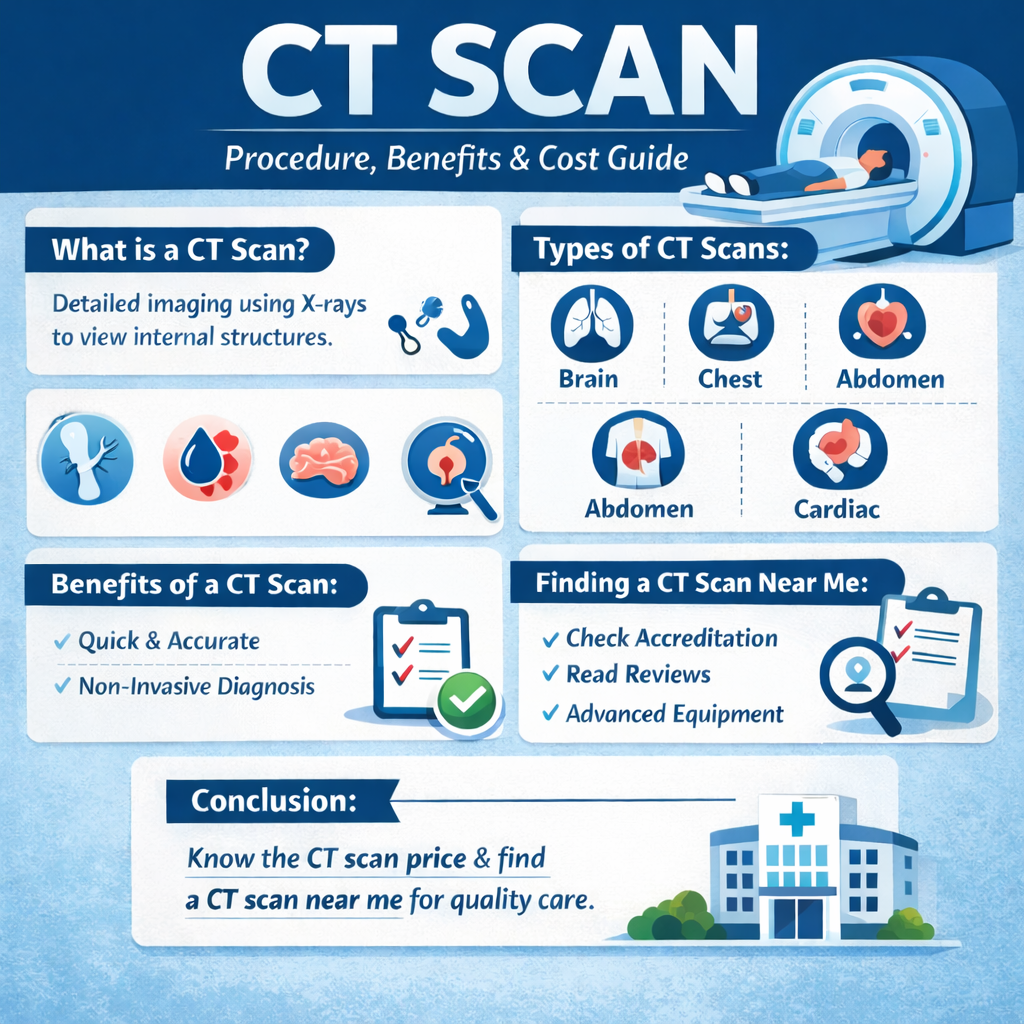
A CT (Computed Tomography) scan is a specialized imaging test that combines X-ray technology with computer processing to create detailed images of bones, blood vessels, and soft tissues. Unlike a standard X-ray, which produces a single image, a CT scan captures multiple images from different angles and combines them to form a comprehensive view of the internal structures. CT scans are commonly used to examine the brain, chest, abdomen, spine, and other parts of the body. Doctors rely on this test to detect injuries, infections, cancers, and various medical conditions accurately.
How Does a CT Scan Work?
During a CT scan, the patient lies on a motorized table that slides into a large, circular machine. The scanner rotates around the body, taking multiple X-ray images from different angles. These images are then processed by a computer to create detailed cross-sectional views.
In some cases, a contrast dye may be used to enhance image clarity. The contrast material can be administered orally, intravenously, or through injection, depending on the area being examined.
The entire procedure usually takes 10 to 30 minutes and is painless.
Types of CT Scans
There are several types of CT scans, depending on the area being examined and the purpose of the test:
1. Brain CT Scan
Used to detect stroke, brain injuries, tumors, and infections.
2. Chest CT Scan
Helps diagnose lung diseases, infections, tumors, and blood clots.
3. Abdominal CT Scan
Used to identify issues in organs like the liver, kidneys, pancreas, and intestines.
4. Cardiac CT Scan
Evaluates heart conditions and blocked arteries.
5. Whole Body CT Scan
Often used in trauma cases or for cancer screening.
Why is a CT Scan Recommended?
Doctors may recommend a CT scan for several reasons, including:
- Diagnosing bone fractures
- Detecting tumors or cancers
- Identifying internal bleeding
- Evaluating infections
- Guiding biopsy procedures
- Monitoring treatment progress
- Planning surgeries
Because CT scans provide detailed images quickly, they are especially useful in emergencies.
CT Scan Procedure: Step-by-Step
Understanding the procedure can help reduce anxiety before the test.
- Preparation: You may be asked to avoid eating for a few hours if contrast dye is used.
- Clothing: You may need to change into a hospital gown and remove metal objects.
- Positioning: You lie on the scanning table, which moves into the CT scanner.
- Scanning: The machine rotates around you while capturing images.
- Completion: Once done, you can usually return to normal activities immediately.
If contrast dye is used, you might feel a warm sensation or a metallic taste temporarily.
Benefits of a CT Scan
CT scans offer several advantages over traditional imaging tests:
- Quick and painless procedure
- Highly detailed images
- Accurate diagnosis
- Non-invasive
- Useful in emergencies
- Helps guide surgeries and treatments
Because of its speed and precision, CT scanning has become one of the most trusted diagnostic tools worldwide.
Is a CT Scan Safe?
CT scans are generally safe, but they do involve exposure to a small amount of radiation. Modern CT machines use the lowest possible radiation dose while still producing clear images. Precautions are taken for pregnant women and children, as they are more sensitive to radiation. Always inform your doctor if you are pregnant or have allergies, especially to contrast dye.
CT Scan Price: What Affects the Cost?
The CT scan price can vary depending on several factors:
- Type of CT scan (brain, chest, abdomen, etc.)
- Use of contrast dye
- Location of the diagnostic center
- Reputation and technology used
- City or region
In Delhi, the cost typically ranges from ₹2,800 to ₹18,000, depending on the type and facility. Metro cities may have slightly higher pricing compared to smaller towns. When comparing centers, it’s important to consider quality, equipment standards, and radiologist expertise rather than choosing solely based on price.
How to Find a Reliable CT Scan Near Me
Searching for a CT scan near me can provide multiple options, but selecting the right diagnostic center requires careful consideration. Here are some tips:
- Check accreditation and certifications
- Verify radiologist qualifications
- Look for advanced imaging equipment
- Read patient reviews
- Compare pricing transparently
- Confirm report delivery timelines
Choosing a trusted diagnostic center ensures accurate results and a smooth experience.
Preparation Tips Before a CT Scan
Proper preparation can improve the quality of the scan:
- Follow fasting instructions if required
- Inform your doctor about medications
- Disclose allergies, especially to iodine or contrast dye
- Stay hydrated unless instructed otherwise
- Remove jewelry and metal accessories
If you feel anxious, inform the technician. They will guide you throughout the process.
After the CT Scan
Most patients can resume normal activities immediately after the test. If contrast dye was used, drinking plenty of fluids helps flush it out of your system.
Results are typically available within 24 to 48 hours, depending on the diagnostic center. Your doctor will interpret the findings and recommend further steps if necessary.
CT Scan vs MRI: What’s the Difference?
While both CT and MRI scans provide detailed internal images, they work differently.
- CT scans use X-rays and are faster.
- MRI scans use magnetic fields and are better for soft tissue imaging.
- CT is commonly used in emergencies.
- MRI is preferred for neurological and joint issues.
Your doctor will recommend the appropriate test based on your condition.
When Should You Get a CT Scan?
You may need a CT scan if you experience:
- Severe head injury
- Persistent abdominal pain
- Unexplained chest pain
- Suspected stroke
- Cancer diagnosis or monitoring
- Trauma or accident injuries
Early diagnosis through advanced imaging can significantly improve treatment outcomes.
Conclusion
A CT scan is a powerful diagnostic tool that helps doctors identify and treat various medical conditions quickly and accurately. From detecting internal injuries to diagnosing serious diseases, this imaging test plays a crucial role in modern healthcare. Understanding the CT scan price and knowing how to find a trusted CT scan near me ensures that you receive quality care without unnecessary stress. Always consult your doctor and choose a certified diagnostic center to ensure accurate results and safe procedures.