Everything You Need to Know About MRI: Uses & Best Nearby Options
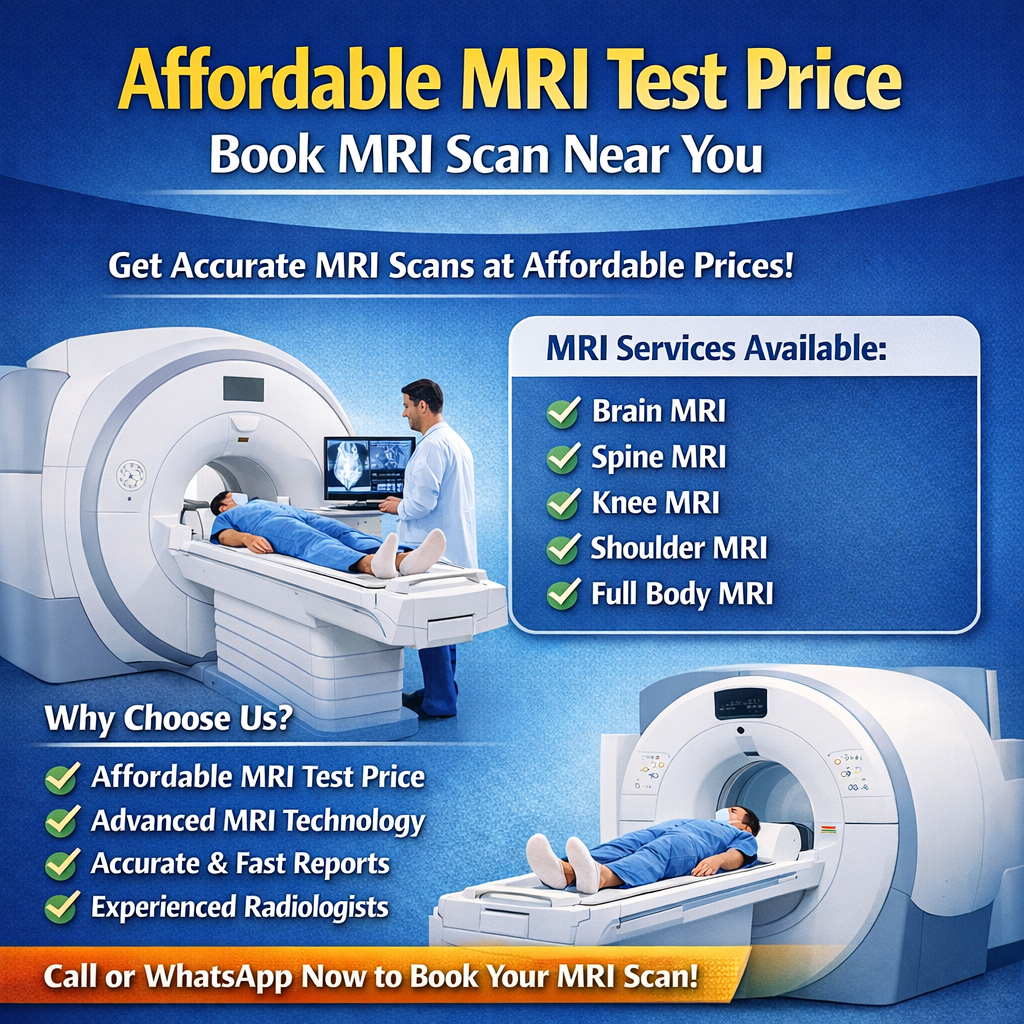
Magnetic Resonance Imaging (MRI) is one of the most advanced diagnostic tools available today. It helps doctors detect and monitor a wide range of health conditions with high precision. From identifying brain disorders to evaluating joint injuries, MRI scans play a crucial role in modern healthcare. Many patients often search for details about MRI test price and availability when planning their diagnosis.
What is an MRI Scan?
MRI is a non-invasive imaging technique that uses strong magnetic fields and radio waves to create detailed images of organs and tissues inside the body. Unlike X-rays or CT scans, MRI does not use ionizing radiation, making it a safer option for many patients.
Doctors commonly recommend MRI scans to diagnose:
- Brain and spinal cord disorders
- Joint and ligament injuries
- Tumors and abnormal growths
- Heart and blood vessel conditions
- Internal organ issues
Because of its accuracy, MRI is often preferred when detailed imaging is required.
Why MRI is Important for Diagnosis
MRI scans provide high-resolution images that help doctors detect problems at an early stage. Early diagnosis leads to better treatment outcomes and reduces complications.
Key Benefits of MRI:
- Highly detailed imaging of soft tissues
- Non-invasive and painless procedure
- No radiation exposure
- Early detection of serious conditions
- Helps in treatment planning and monitoring
This makes MRI an essential tool in preventive and diagnostic healthcare.
Understanding MRI Test Price
The cost of an MRI scan can vary depending on several factors. Many people are concerned about affordability, so understanding what affects pricing can help in making informed decisions.
Factors Affecting MRI Cost:
- Body part being scanned (brain, spine, knee, etc.)
- Type of MRI machine (1.5 Tesla or 3 Tesla)
- Use of contrast dye
- Location of the diagnostic center
- Experience and reputation of the facility
In cities like Delhi, prices may vary across centers. Comparing options and checking packages can help you find the best deal without compromising on quality.
How to Prepare for an MRI Scan
Preparing for an MRI is simple, but following instructions ensures accurate results.
Preparation Tips:
- Remove all metal objects (jewelry, watches, etc.)
- Inform your doctor about implants or medical devices
- Wear comfortable clothing
- Follow fasting instructions if contrast is used
- Stay calm and relaxed during the scan
Patients who feel claustrophobic can inform the technician in advance of assistance.
What Happens During the MRI Procedure?
An MRI scan usually takes between 20 and 60 minutes, depending on the area being examined.
Step-by-Step Process:
- You lie down on a movable table
- The table slides into the MRI machine
- The machine creates loud tapping sounds (earplugs are provided)
- You must remain still for clear images
- The technician monitors from another room
The procedure is painless, though some people may feel slight discomfort due to lying still.
Tips to Find the Best MRI Near You
Searching for an MRI near me can show many options, but choosing the right diagnostic center is important for accurate results.
Things to Consider:
- Accreditation and certifications
- Advanced MRI machines
- Experienced radiologists
- Clean and hygienic environment
- Transparent pricing
- Positive patient reviews
Choosing a trusted diagnostic center ensures reliability and better healthcare outcomes.
MRI vs Other Imaging Tests
Understanding how MRI compares with other imaging methods helps you know why it is recommended.
MRI is best suited for soft tissue imaging, such as the brain, muscles, and joints, and it does not use radiation. CT scans and X-rays, on the other hand, involve radiation and are generally better for detecting bone injuries or fractures. Ultrasound is another radiation-free option, mainly used for pregnancy and basic soft tissue evaluation.
MRI stands out because of its superior image quality and safety, especially for complex medical conditions.
Common Myths About MRI
Many people hesitate to undergo MRI scans due to misconceptions.
Myth vs Reality:
- MRI is painful
- → It is completely painless
- MRI uses harmful radiation
- → It uses magnetic fields, not radiation
- MRI is unsafe
- → It is very safe when guidelines are followed
Clearing these myths helps patients feel more comfortable.
When Should You Get an MRI?
Doctors recommend an MRI when other tests are not sufficient or when detailed imaging is required.
You may need an MRI if you have:
- Persistent headaches
- Joint pain or sports injuries
- Neurological symptoms
- Suspected tumors
- Chronic back pain
Early scanning can prevent complications and guide timely treatment.
Conclusion
MRI scans are a powerful diagnostic tool that provides detailed insights into the human body. Whether you are dealing with a medical condition or undergoing preventive screening, understanding the process and benefits is essential. Knowing about MRI test price helps you plan your healthcare budget, while searching for an MRI near me ensures you find a reliable diagnostic center nearby. Choosing the right facility and following proper preparation can make your MRI experience smooth and effective.