How Often Should Commercial Offices Be Professionally Cleaned?
Keeping a commercial office clean is about much more than appearance. A well-maintained workplace supports employee health, creates a better first impression for clients, and helps equipment and surfaces last longer. But one of the most common questions business owners and office managers ask is how often professional cleaning should happen. The answer depends on the size of the office, the number of employees, the type of work being done, and how much foot traffic the space receives.
For many workplaces, professional cleaning is not a one-time task but an ongoing part of building maintenance. Some offices need daily attention, while others may only require weekly or biweekly service. The right schedule should match the demands of the space without wasting time or money. If you are comparing office cleaning services, it helps to understand what level of cleaning your workplace actually needs before deciding on a routine.
Key points
- Cleaning frequency depends on office size, traffic, industry, and shared surfaces.
- High-use areas such as restrooms, kitchens, and lobbies usually need more frequent service.
- Daily cleaning is common for busy offices, while smaller offices may need weekly service.
- Regular professional cleaning supports employee wellness and workplace presentation.
- Seasonal changes, illnesses, and special events may require temporary schedule adjustments.
Why Cleaning Frequency Matters
Professional cleaning is not just about keeping floors polished and trash removed. In an office setting, dirt, dust, germs, and clutter build up quickly, especially in shared spaces. Desks, door handles, kitchen counters, conference tables, and restroom fixtures are all touched by multiple people throughout the day. Without a consistent cleaning schedule, these surfaces can become unpleasant and unsanitary.
In addition, a clean office can influence how employees feel about their workplace. People tend to work more comfortably in spaces that are organized, fresh, and free of visible mess. Visitors, clients, and interview candidates also notice cleanliness immediately. A tidy office suggests professionalism, attention to detail, and respect for the people who spend time there.
Factors That Determine Cleaning Needs
1. Office Size
Larger offices usually require more frequent cleaning because they have more people, more surfaces, and more areas that collect dust and debris. A small office with a handful of employees may stay manageable with weekly professional cleaning, while a multi-floor business with dozens of staff members often needs service several times a week or even daily.
2. Number of Employees and Visitors
The more people who use the office, the faster it gets dirty. A workplace with high employee turnover, frequent client visits, or regular deliveries will naturally need more attention. Shared workstations, break rooms, and conference rooms tend to show wear quickly when many people use them every day.
3. Type of Business
Some industries need stricter cleaning standards than others. A law office or marketing agency may have different needs than a medical practice, financial firm, or customer service center. Offices that deal with sensitive materials, food, or health-related concerns often need more frequent cleaning and disinfection to maintain a safe environment.
4. Workspace Layout
Open-plan offices can collect dust and germs more quickly because many people share the same air and surfaces. Private offices may be easier to maintain, but common areas such as elevators, hallways, and kitchens still need regular care. The more shared the environment, the more important routine cleaning becomes.
Common Cleaning Schedules for Offices
Daily Cleaning
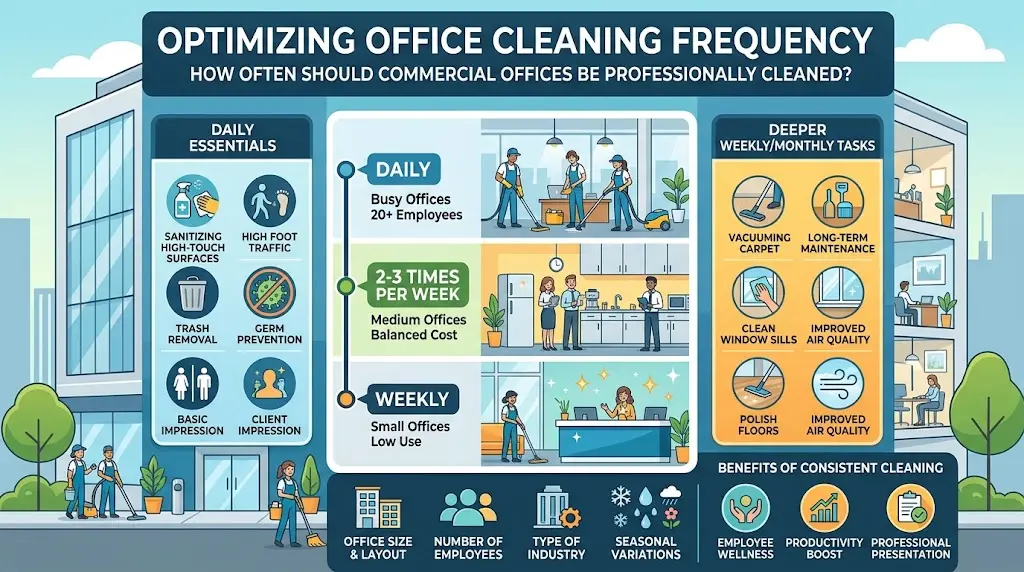
Daily professional cleaning is usually best for busy offices with heavy foot traffic, large teams, or frequent public access. This schedule often includes trash removal, restroom sanitizing, floor care, surface wiping, and kitchen cleaning. It is especially useful for workplaces that need to maintain a polished appearance every day.
Daily cleaning may also be a smart choice during flu season or other times when illness spreads more easily. High-touch surfaces such as light switches, elevator buttons, and shared phones should be cleaned regularly to reduce buildup and improve hygiene.
Two to Three Times per Week
Many medium-sized offices find that cleaning several times a week offers a strong balance between cleanliness and cost. This approach works well when the office has a moderate number of employees and some customer traffic, but not enough activity to require daily cleaning. It can keep common areas presentable while allowing deeper tasks to be done on a regular schedule.
Weekly Cleaning
Small offices with limited staff and low visitor traffic may only need professional cleaning once a week. This can be enough to handle vacuuming, dusting, restroom care, and surface cleaning if employees keep their own work areas tidy during the week. Weekly service is often appropriate for offices that are mostly private and do not experience constant use of shared spaces.
Biweekly or Monthly Cleaning
Biweekly or monthly cleaning is usually better suited to very small offices, satellite locations, or administrative spaces with minimal use. Even then, these offices still need regular upkeep between visits to avoid buildup. This schedule may not be sufficient for client-facing businesses or offices with heavy shared use, but it can work when day-to-day mess is limited.
Areas That Need the Most Attention
Not every part of an office needs the same cleaning frequency. Some spaces gather dirt and germs much faster than others, and they should be prioritized in any cleaning plan.
- Restrooms: These should be cleaned and disinfected frequently because they are high-use, high-contact areas.
- Break rooms and kitchens: Food crumbs, spills, and shared appliances make these spaces prone to bacteria and odors.
- Reception areas: These create the first impression for visitors and should stay spotless.
- Conference rooms: Shared tables, chairs, and technology should be wiped down often.
- Entryways and lobbies: Dirt from shoes and outdoor debris can accumulate quickly here.
- High-touch surfaces: Door handles, switches, railings, and shared equipment should be cleaned regularly.
How Seasonal Changes Affect Cleaning Frequency
Office cleaning needs often change throughout the year. In winter, salt, slush, and mud can be tracked indoors, especially in regions with snow and rain. In spring, pollen and allergens can settle on surfaces and affect indoor air quality. Summer can bring more humidity, odors, and increased foot traffic, while fall often introduces leaves, dirt, and outdoor debris.
Illness outbreaks can also increase the need for cleaning. During cold and flu season, or when many employees are working closely together, it may be wise to increase the frequency of disinfecting high-touch areas. Even a temporary adjustment to the regular cleaning plan can make the office healthier and more comfortable.
Signs Your Office Needs More Frequent Cleaning
If you are unsure whether your current schedule is enough, look for practical signs that the office needs more attention. These issues often show that cleaning visits are too far apart or that the tasks being done are not thorough enough.
- Trash bins fill up before the next cleaning visit.
- Restrooms begin to smell or look unkempt.
- Dust collects visibly on desks, vents, and baseboards.
- Floors show dirt, stains, or debris during the week.
- Employees complain about odors, allergies, or clutter.
- Visitors notice that reception or conference areas look untidy.
When these signs appear regularly, it is usually time to increase the cleaning schedule rather than wait for larger problems to develop.
Benefits of Consistent Professional Cleaning
A reliable cleaning schedule supports more than cleanliness. It also helps protect the workplace in several important ways. Clean offices can reduce the spread of germs, improve air quality, and make employees more comfortable at work. Over time, regular cleaning can also preserve carpets, flooring, furniture, and fixtures by preventing dirt from wearing them down prematurely.
There is also a productivity benefit. Employees often work better in organized spaces where they do not have to worry about clutter, odors, or dirty common areas. A clean environment helps people focus on their responsibilities rather than the condition of the office around them.
Choosing the Right Cleaning Schedule
The best schedule is one that fits the office’s actual needs. A business with a large staff, client visits, and shared meeting spaces may need cleaning every weekday. A smaller back-office operation may do well with weekly service and occasional deep cleaning. The goal is to maintain a healthy and professional environment without overpaying for unnecessary visits.
It can help to review the office every few months and adjust the cleaning plan as needed. Changes in staffing, seasonal weather, office renovations, or increased customer traffic can all affect how often cleaning should occur. A flexible schedule is often the most effective one.
Conclusion
There is no single answer to how often commercial offices should be professionally cleaned, because every workplace is different. The right frequency depends on how many people use the office, what kind of work happens there, and how quickly mess builds up in shared spaces. Busy, client-facing offices often benefit from daily or several-times-per-week service, while smaller offices may only need weekly cleaning. What matters most is consistency, attention to high-touch areas, and a schedule that supports both cleanliness and comfort.
By evaluating your office’s daily use, seasonal needs, and visible cleaning challenges, you can create a plan that keeps the workplace healthy, professional, and welcoming all year long.
FAQ
How often should a small office be professionally cleaned?
Many small offices do well with weekly professional cleaning, especially if the staff is limited and visitors are infrequent. If the office has shared spaces or heavier use, more frequent cleaning may be needed.
Do restrooms need to be cleaned every day?
Yes, in most commercial offices restrooms should be cleaned daily, and in some cases more than once a day. They are high-traffic areas that require regular sanitizing to stay hygienic and presentable.
Is daily office cleaning always necessary?
No. Daily cleaning is best for busy offices, but smaller or lower-traffic workplaces may not need it. The right schedule depends on usage, staff size, and the type of business.
What areas should be cleaned most often in an office?
Restrooms, kitchens, reception areas, conference rooms, and high-touch surfaces should be cleaned most often because they are used by many people throughout the day.
How can I tell if my office needs more cleaning?
If trash builds up, dust is visible, odors linger, or employees mention cleanliness concerns, it is a good sign the office needs more frequent service.