How Can ERP Software Improve Accuracy in Financial Reporting?
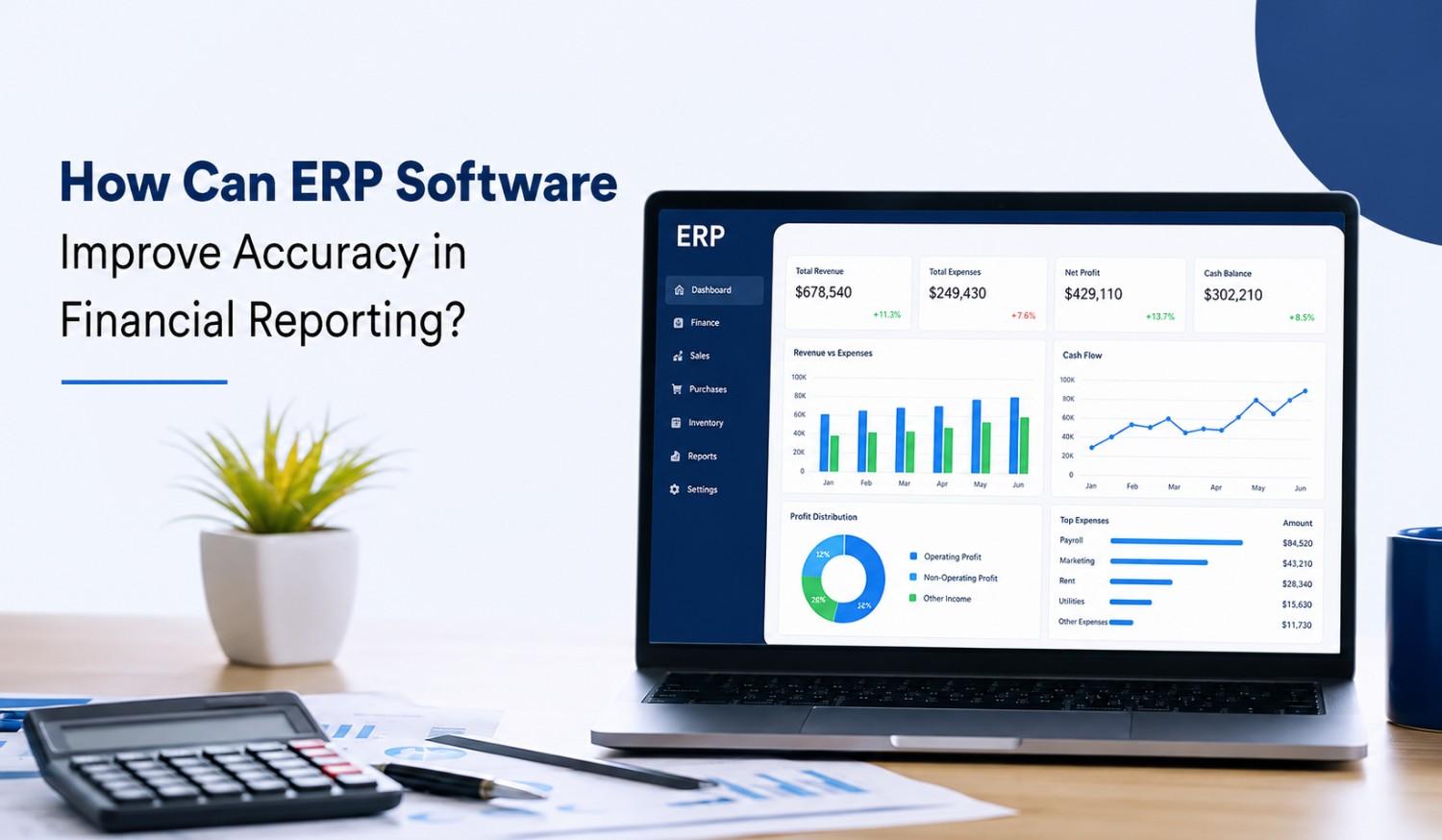
Financial reporting has never been a relaxing activity for businesses—especially when spreadsheets begin multiplying faster than office coffee mugs. One missing number, one incorrect formula, or one “helpful” manual adjustment can quietly create reporting chaos. That is exactly where ERP software changes the game. Instead of forcing finance teams to gather numbers from disconnected systems, ERP platforms bring everything together under one roof (finally, some peace and quiet for accountants). Businesses today need accurate, real-time financial data to make decisions confidently, satisfy compliance requirements, and avoid unpleasant surprises during audits. Modern ERP systems simplify reporting processes while reducing manual effort, which means finance departments spend less time fixing mistakes and more time focusing on strategy and growth.
Why Financial Reporting Accuracy Matters More Than Ever
Financial reporting accuracy is no longer just a back-office requirement—it directly affects business survival. Investors, stakeholders, auditors, and management teams all rely on clean financial data to make decisions. When reports contain inconsistencies, even small ones, businesses can face compliance penalties, budgeting problems, and damaged credibility. Many organizations still struggle with outdated processes where teams manually collect information from separate departments, creating delays and confusion. Naturally, this turns month-end reporting into a stressful marathon nobody enjoys. Accurate reporting also improves forecasting, cash flow planning, and operational transparency. In today’s competitive environment, businesses cannot afford reporting systems that operate like mystery novels with missing chapters and questionable plot twists.
Common Financial Reporting Challenges Businesses Face
Many companies still depend on disconnected software, endless spreadsheets, and manual entries to manage financial reporting. Predictably, this creates opportunities for human error, duplicate records, and inconsistent reporting formats. Departments often work independently, meaning finance teams spend hours chasing updated numbers from sales, inventory, payroll, and operations. Reporting delays become common, especially during month-end closing periods when everyone suddenly remembers urgent tasks at the exact same moment. Compliance requirements add another layer of pressure because inaccurate data can trigger audit complications or regulatory fines. Most businesses have also encountered the legendary spreadsheet named “Final_Report_v8_Updated_REAL_Final.xlsx.” Unfortunately, those file names rarely inspire confidence in financial accuracy or organizational efficiency.
How ERP Software Centralizes Financial Data
ERP software improves financial reporting by centralizing data from multiple departments into one unified system. Instead of pulling numbers from separate applications, finance teams can access synchronized information in real time. Sales, inventory, payroll, procurement, and accounting data all connect seamlessly, creating a single source of truth across the organization. This eliminates the confusion caused by outdated reports or inconsistent figures between departments. Centralized systems also improve visibility for management teams because financial insights become available instantly rather than days later. Businesses no longer need to rely on guesswork accounting or manually reconcile conflicting spreadsheets. Everything stays connected, updated, and accessible—which feels surprisingly refreshing after years of spreadsheet archaeology.
Automation Reduces Human Errors
Manual data entry may seem manageable at first, but even experienced teams make mistakes when repetitive tasks pile up. ERP systems automate routine financial activities such as transaction recording, invoice generation, reconciliation, and report creation. As a result, businesses significantly reduce calculation errors, duplicate entries, and missing information. Real-time automation ensures that every department works with updated financial records, improving consistency throughout the organization. Companies investing in ERP software development services often discover that automation saves more than time—it protects reporting accuracy during busy financial periods. Finance professionals also appreciate spending fewer late nights fixing spreadsheet formulas that mysteriously stopped working after someone “adjusted just one small thing” earlier in the week.
Real-Time Reporting Improves Decision-Making
Traditional financial reporting often relies on outdated numbers, which creates delays in decision-making. ERP systems solve this problem by providing real-time dashboards and live financial insights that management teams can access instantly. Businesses can monitor revenue, expenses, cash flow, and operational performance without waiting for manual updates. This allows leaders to identify financial trends early and respond quickly to changing market conditions. Real-time reporting also improves forecasting accuracy because decisions are based on current information rather than historical assumptions. During uncertain business periods, having immediate visibility into financial performance becomes extremely valuable. After all, making decisions with outdated reports feels slightly similar to driving while only looking in the rearview mirror.
ERP Software Enhances Compliance and Audit Readiness
Compliance requirements continue becoming more complex, and businesses cannot afford inaccurate reporting during audits or tax filings. ERP systems simplify compliance management by automatically tracking transactions, maintaining organized records, and generating accurate financial statements. Audit trails within ERP platforms record every financial activity, making it easier to identify changes and verify data integrity. This transparency improves accountability across departments while reducing stress during audits. Automated tax calculations and reporting features also help businesses stay aligned with regulatory requirements. Auditors generally appreciate systems where information is organized properly instead of scattered across folders labeled “Important_New_Final_Records.” Surprisingly enough, organized financial records tend to make audit meetings considerably less dramatic for everyone involved.
Role-Based Access Improves Data Security
Financial information is one of the most sensitive assets within any organization, which makes security a critical priority. ERP software improves data protection through role-based access controls that limit information visibility according to employee responsibilities. Finance managers, accountants, HR teams, and executives can access only the data relevant to their roles, reducing unauthorized activity and accidental changes. This structured access improves accountability because every action within the system remains traceable. Cloud-based ERP platforms also provide encrypted storage, secure backups, and advanced authentication features for additional protection. Businesses benefit from stronger security while maintaining operational efficiency. Most importantly, confidential reports avoid becoming accidental office entertainment during routine meetings or email mishaps.
Integration Between Departments Creates Better Financial Accuracy
One of the biggest advantages of ERP software is its ability to connect departments that traditionally operate independently. Sales data automatically updates revenue reports, inventory systems adjust stock valuations instantly, and payroll information syncs directly with accounting records. This seamless integration eliminates data silos and reduces inconsistencies across departments. Finance teams no longer spend hours comparing conflicting reports or manually correcting errors caused by disconnected systems. Integrated workflows also improve communication because everyone works with the same information in real time. Businesses gain more accurate financial visibility while reducing operational inefficiencies. Quite honestly, watching departments finally share accurate data peacefully feels almost suspiciously efficient at first.
AI and Analytics in Modern ERP Systems
Modern ERP systems now include artificial intelligence and advanced analytics capabilities that take financial reporting far beyond basic bookkeeping. AI-powered tools can identify unusual spending patterns, detect reporting anomalies, and generate predictive financial forecasts automatically. Businesses gain deeper insights into operational trends, customer behavior, and future budgeting opportunities. Advanced analytics also improve strategic planning because leaders can evaluate financial performance using detailed visual dashboards and real-time metrics. Instead of reacting to problems after they occur, organizations can proactively manage risks and optimize operations. ERP platforms essentially transform financial reporting from a reactive process into a strategic advantage—which sounds significantly better than spending Friday evenings manually correcting accounting discrepancies.
Scalability Benefits for Growing Businesses
As businesses grow, financial processes become more complex and difficult to manage using traditional systems. ERP software provides scalability by supporting multiple departments, locations, currencies, and reporting structures within one platform. Organizations can expand operations without constantly replacing software or creating disconnected workflows. This flexibility helps businesses maintain reporting accuracy even as transaction volumes increase. ERP systems also simplify consolidation for companies managing subsidiaries or international operations. Instead of patching together multiple tools with digital duct tape and cautious optimism, businesses gain a structured system designed for long-term growth. Scalable ERP solutions ensure financial reporting remains consistent, organized, and reliable throughout every stage of business expansion.
Choosing the Right ERP Solution for Your Business
Selecting the right ERP system requires careful planning because every business has different operational and financial requirements. Organizations should evaluate scalability, customization options, industry-specific features, and user experience before making a decision. A complicated system with poor usability often creates frustration instead of efficiency, regardless of how advanced the software appears during demonstrations. Businesses should also consider integration capabilities to ensure smooth communication between departments and existing tools. Working with experienced professionals or deciding to hire ERP developer can improve implementation success and long-term performance. The right ERP platform should simplify workflows, improve reporting accuracy, and support future growth—not introduce a completely new category of operational headaches.
Why Businesses Are Investing in ERP Systems in 2026
Businesses in 2026 are prioritizing digital transformation faster than ever before, and ERP systems sit at the center of that shift. Companies need real-time reporting, automated processes, and stronger financial visibility to remain competitive in rapidly changing markets. Investors and customers now expect organizations to operate efficiently while maintaining accurate records and transparent reporting practices. ERP systems help businesses meet those expectations without relying on outdated manual workflows. Cloud technology, AI integration, and advanced analytics continue making ERP platforms more accessible and powerful for organizations of every size. Simply put, businesses no longer view ERP software as optional infrastructure—it has become a necessary foundation for operational efficiency and sustainable growth.
Best Practices for Successful ERP Implementation
Successful ERP implementation requires more than installing software and hoping for the best. Businesses should begin with clear planning, realistic goals, and a structured migration strategy to avoid unnecessary disruptions. Employee training plays a major role because even excellent systems struggle when teams resist adoption or misunderstand workflows. Data migration should also be carefully managed to ensure historical records remain accurate and organized. Continuous monitoring after implementation helps businesses optimize processes and address operational challenges early. Partnering with experienced ERP professionals improves long-term success because implementation mistakes can become expensive surprisingly quickly. A well-executed ERP strategy transforms financial reporting into a streamlined process instead of a recurring organizational panic event.
Conclusion
Financial reporting should help businesses make smarter decisions—not create endless confusion, delays, and spreadsheet disasters. ERP software improves reporting accuracy by centralizing data, automating workflows, strengthening compliance, and providing real-time visibility into financial operations. Businesses gain better control over reporting processes while reducing human errors and operational inefficiencies. Modern ERP platforms also support scalability, advanced analytics, and secure data management, making them valuable long-term investments for growing organizations. Companies that continue relying on outdated reporting methods often spend more time fixing mistakes than analyzing performance. Meanwhile, businesses using ERP systems can focus on strategy, growth, and opportunities instead of searching for missing spreadsheet formulas at midnight.
FAQs
How does ERP software improve financial reporting accuracy?
ERP software centralizes financial data, automates reporting tasks, and reduces manual errors. This creates more reliable financial statements and improves overall reporting consistency.
Can ERP systems reduce audit complications?
Yes, ERP platforms maintain organized audit trails and transparent transaction histories, making audits faster and easier to manage.
Is ERP software suitable for small businesses?
Modern ERP solutions are scalable and can support both small businesses and large enterprises effectively.
Why do businesses invest in ERP software development services?
Businesses invest in customized ERP solutions to improve operational efficiency, automate workflows, and support unique reporting requirements.
How long does ERP implementation usually take?
Implementation timelines vary depending on company size, customization needs, and system complexity.
Does ERP software support real-time financial reporting?
Yes, ERP systems provide live dashboards and instant financial updates for better business decision-making.