How IT Infrastructure Solutions Drive Modern Business Success
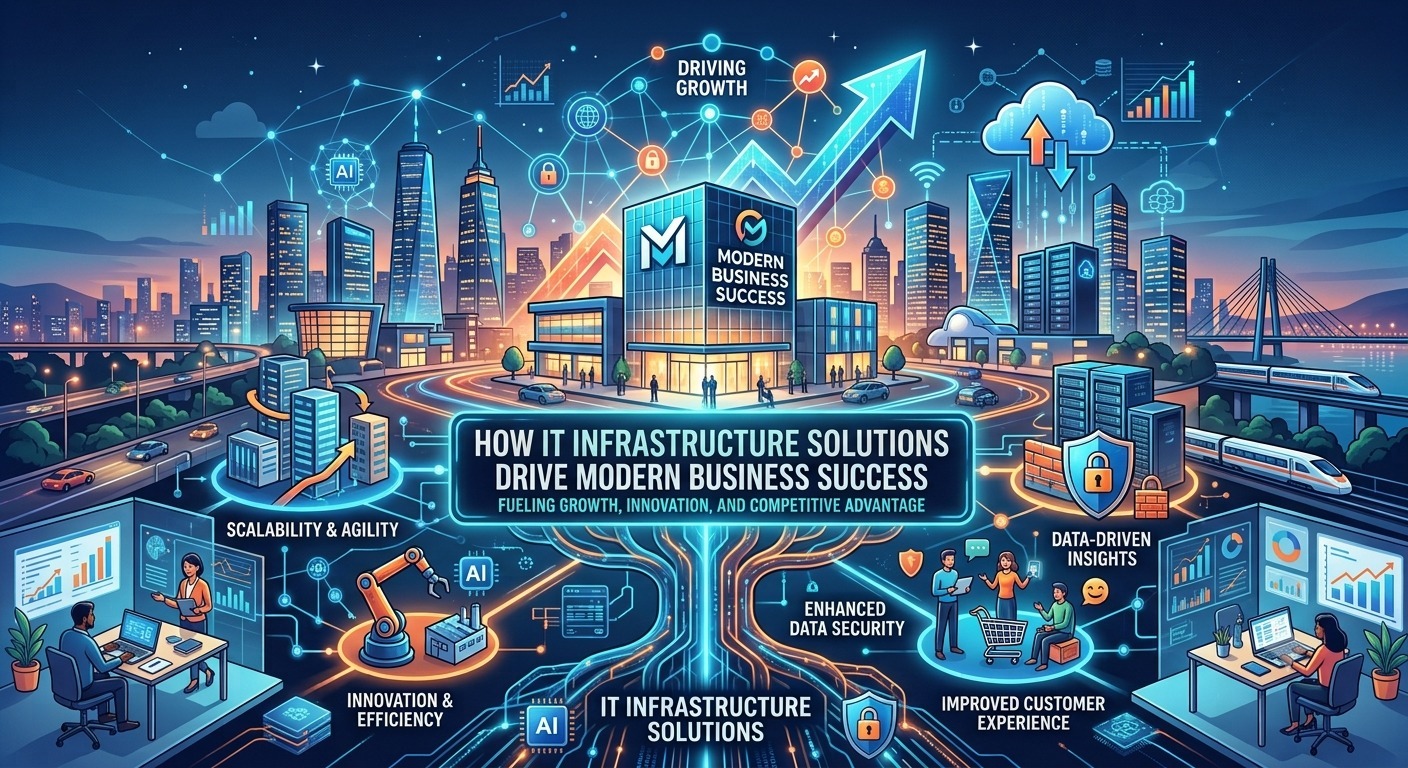
In today’s fast-paced digital economy, businesses are under constant pressure to innovate, scale operations, and deliver exceptional customer experiences. However, achieving these goals requires more than talented employees and great products. Every growing company also needs a dependable technological backbone that supports daily operations without interruption. This is where IT infrastructure solutions become essential.
From startups preparing for rapid expansion to established enterprises modernising their operations, investing in the right IT infrastructure creates a competitive advantage. Reliable systems improve productivity, strengthen cybersecurity, support remote work, and ensure business continuity during unexpected disruptions. As technology continues to evolve, companies that build a resilient infrastructure position themselves for long-term success rather than short-term survival.
This comprehensive guide explains why modern organisations depend on IT infrastructure solutions, explores their benefits, discusses common challenges, and provides practical advice for selecting the right infrastructure strategy.
Understanding What IT Infrastructure Solutions Really Mean
Every organisation relies on technology to perform everyday tasks. Employees use computers, access cloud applications, communicate through collaboration platforms, and store valuable business data. Behind all these activities is a carefully designed infrastructure that keeps systems running efficiently.
IT infrastructure solutions refer to the combination of hardware, software, networking equipment, cloud services, security systems, storage, and support processes that allow businesses to operate effectively. Rather than focusing on individual devices, these solutions create an integrated technology ecosystem where every component works together seamlessly.
A strong infrastructure provides reliable connectivity, rapid access to information, secure communication channels, and scalable resources. Instead of reacting to technology failures, businesses with modern infrastructure proactively optimise performance while reducing operational risks.
As organisations grow, infrastructure becomes even more important because increasing workloads require systems that can handle additional users, larger databases, and more complex applications without sacrificing speed or reliability.
The Hidden Cost of Weak IT Infrastructure
Many businesses underestimate how much outdated technology affects daily operations. While ageing equipment may appear to save money, hidden costs often exceed the expense of upgrading.
Frequent downtime disrupts employee productivity, delays customer service, and interrupts critical workflows. Even a short network outage can prevent staff from accessing files, processing transactions, or communicating with clients.
Furthermore, slow systems frustrate employees and reduce overall efficiency. Staff spend valuable time waiting for applications to load instead of completing meaningful work. Over time, these small delays accumulate into significant productivity losses.
Poor infrastructure also increases maintenance expenses. Legacy hardware requires more repairs, software compatibility becomes increasingly difficult, and IT teams spend excessive time troubleshooting instead of implementing strategic improvements.
Reliable IT infrastructure solutions eliminate these issues by creating stable, high-performance environments that support continuous business operations.
Supporting Business Growth Without Technology Bottlenecks
Growth brings exciting opportunities, but it also introduces new technological demands. Hiring additional employees, opening new offices, launching digital services, and serving larger customer bases all place greater pressure on existing systems.
Scalable IT infrastructure solutions allow businesses to expand without rebuilding their technology from scratch. Cloud platforms, virtual servers, and flexible networking make it possible to increase computing resources as demand grows.
Instead of purchasing expensive hardware for future capacity, organisations can scale resources gradually while maintaining excellent performance. This flexibility improves financial planning because businesses invest according to actual growth rather than estimated projections.
Moreover, scalable infrastructure ensures employees continue working efficiently regardless of how quickly the organisation expands. New users can be added easily, storage capacity can increase instantly, and applications remain responsive during periods of rapid growth.
Strengthening Cybersecurity in an Increasingly Dangerous Digital World
Cyber threats continue evolving every year. Attackers target businesses of every size because valuable information exists in organisations across every industry.
Reliable IT infrastructure solutions include multiple layers of protection that reduce cybersecurity risks significantly. Firewalls, endpoint protection, identity management, encryption, secure backups, intrusion detection, and continuous monitoring all work together to defend critical assets.
Modern infrastructure also supports Zero Trust security principles, where every user and device must be verified before accessing company resources. This approach limits unauthorised access and reduces opportunities for attackers.
Regular software updates, automated patch management, and centralised security controls further strengthen protection. Instead of relying on individual employees to maintain security, businesses create systematic defences that reduce human error while improving compliance.
Investing in infrastructure security protects financial information, intellectual property, customer records, and business reputation simultaneously.
Enabling Remote and Hybrid Work Successfully
Flexible working arrangements have permanently changed the workplace. Employees now expect secure access to business systems whether working from the office, home, or while travelling.
Modern IT infrastructure solutions make remote work both practical and secure. Cloud computing allows authorised users to access applications from virtually anywhere, while Virtual Private Networks (VPNs), multi-factor authentication, and secure identity management protect sensitive information.
Collaboration platforms integrate messaging, video conferencing, document sharing, and project management into unified digital workplaces. Consequently, distributed teams remain productive regardless of physical location.
Additionally, centralised management allows IT administrators to support remote employees efficiently. Software updates, security policies, and troubleshooting can often be performed without requiring on-site visits, reducing operational costs while improving employee satisfaction.
Improving Operational Efficiency Across Every Department
Technology should simplify work rather than complicate it. Businesses that invest in dependable IT infrastructure solutions often experience immediate improvements in efficiency because systems become faster, more reliable, and easier to manage.
Automation eliminates repetitive manual tasks such as backups, software deployments, system monitoring, and resource allocation. Employees therefore spend more time focusing on innovation, customer service, and strategic initiatives.
Integrated infrastructure also improves communication between departments. Sales teams access customer information instantly, finance departments process transactions efficiently, and management receives accurate business insights through real-time reporting.
As a result, decision-making becomes faster because leaders rely on timely information rather than outdated reports. Improved operational efficiency directly contributes to higher profitability and better customer experiences.
Reducing Downtime and Ensuring Business Continuity
Unexpected disruptions can occur at any time. Hardware failures, cyberattacks, natural disasters, software bugs, or power outages all have the potential to interrupt operations.
Reliable IT infrastructure solutions include disaster recovery planning, data redundancy, automated backups, and failover systems that minimise downtime when incidents occur.
Instead of losing valuable business information, organisations can restore critical systems quickly and continue serving customers with minimal interruption.
Business continuity planning also protects revenue by ensuring employees remain productive during emergencies. Customers appreciate dependable service, and maintaining operations during difficult circumstances strengthens long-term trust and loyalty.
Companies that prioritise resilience recover significantly faster than organisations relying on outdated technology.
Cloud Computing Is Transforming Modern Infrastructure
Cloud technology has fundamentally changed how businesses deploy and manage IT resources. Rather than maintaining large on-premises data centres, organisations increasingly combine cloud services with existing infrastructure.
Cloud-based IT infrastructure solutions provide exceptional flexibility, allowing businesses to access computing power, storage, databases, and security services on demand.
Hybrid infrastructure models offer the best of both worlds by combining local systems with public and private cloud environments. Businesses retain control over sensitive workloads while benefiting from cloud scalability.
Furthermore, cloud providers continuously invest in security, redundancy, and innovation, allowing organisations to leverage enterprise-grade technologies without making enormous capital investments.
This modern approach enables businesses to remain agile while adapting quickly to changing market conditions.
Choosing the Right IT Infrastructure Strategy
Selecting appropriate infrastructure requires careful planning rather than purchasing the newest technology available. Every business has unique operational requirements, budgets, compliance obligations, and growth objectives.
Before implementing IT infrastructure solutions, organisations should evaluate existing systems, identify performance limitations, assess security risks, and define future scalability requirements.
Working with experienced technology providers helps businesses develop customised infrastructure roadmaps aligned with strategic goals. Professional assessments identify inefficiencies while recommending practical improvements that deliver measurable value.
Businesses should also prioritise solutions offering long-term flexibility instead of short-term convenience. Scalable architecture ensures future upgrades can be implemented without replacing the entire infrastructure.
Regular performance monitoring further supports continuous optimisation as business needs evolve.
Emerging Trends Shaping the Future of IT Infrastructure
Technology continues evolving rapidly, creating exciting opportunities for businesses prepared to modernise.
Artificial intelligence now enhances infrastructure management through predictive maintenance, automated threat detection, intelligent monitoring, and resource optimisation. AI-powered systems identify potential issues before they become major problems.
Edge computing is another significant development. Processing data closer to its source reduces latency and improves performance for Internet of Things (IoT) devices, manufacturing systems, healthcare applications, and smart infrastructure.
Automation will continue expanding across infrastructure operations, reducing manual administration while improving reliability. Sustainability initiatives are also influencing infrastructure design, encouraging organisations to adopt energy-efficient hardware and environmentally responsible cloud services.
Businesses embracing these innovations will remain competitive while delivering better digital experiences for customers and employees alike.
Best Practices for Building Reliable IT Infrastructure
Creating dependable infrastructure requires ongoing commitment rather than one-time implementation.
Businesses should perform regular security assessments, maintain comprehensive backup strategies, update software consistently, and monitor system performance continuously. Preventive maintenance identifies issues before they affect operations.
Employee education also plays a crucial role. Even the most advanced IT infrastructure solutions cannot fully protect organisations if staff members ignore cybersecurity best practices. Regular awareness training reduces phishing risks, password vulnerabilities, and accidental data exposure.
Finally, organisations should review infrastructure performance periodically to ensure technology continues supporting evolving business objectives. Continuous improvement helps businesses maximise return on investment while maintaining operational excellence.
Final Thoughts
Technology has become the foundation upon which successful businesses operate. Companies that invest in reliable IT infrastructure solutions position themselves for sustainable growth, stronger cybersecurity, improved operational efficiency, and greater resilience against unexpected disruptions.
Rather than viewing infrastructure as a technical expense, business leaders should recognise it as a strategic investment that supports every department, every employee, and every customer interaction. Modern infrastructure enables organisations to innovate confidently, expand efficiently, and compete successfully in an increasingly digital marketplace.
As business environments continue changing, organisations with scalable, secure, and well-managed infrastructure will adapt faster than competitors relying on outdated systems. Investing today ensures companies remain prepared for tomorrow’s challenges while creating a solid foundation for long-term success.
Frequently Asked Questions (FAQs)
1. What are IT infrastructure solutions?
IT infrastructure solutions are integrated technologies that include servers, networking, cloud services, storage, cybersecurity, software, and support systems that enable businesses to operate efficiently and securely.
2. Why are IT infrastructure solutions important for growing businesses?
They provide scalability, improve security, reduce downtime, increase productivity, and support business continuity as organisations expand.
3. Can small businesses benefit from IT infrastructure solutions?
Absolutely. Even small businesses gain improved efficiency, stronger cybersecurity, easier collaboration, and better scalability through modern infrastructure.
4. What is the difference between cloud infrastructure and traditional infrastructure?
Traditional infrastructure relies mainly on on-site hardware, while cloud infrastructure uses internet-based computing resources. Many businesses adopt hybrid models that combine both approaches.
5. How often should businesses upgrade their IT infrastructure?
Businesses should review infrastructure annually and upgrade components based on performance, security requirements, technological advancements, and organisational growth.